


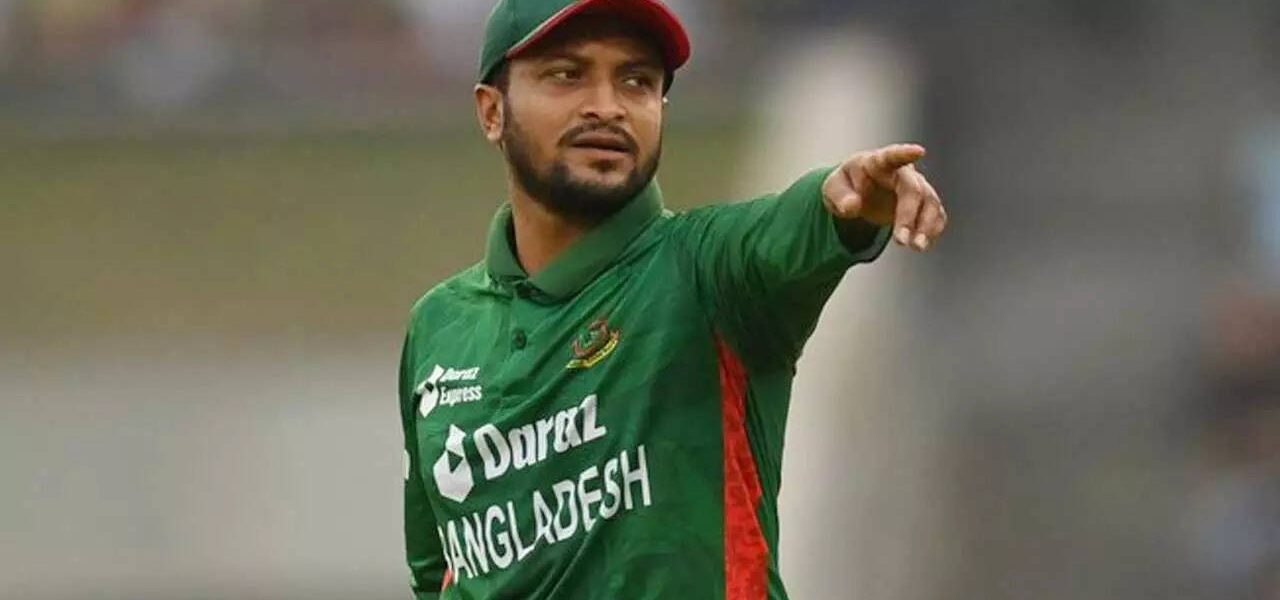
Bangladesh’s Political Pendulum Swings: Cricket Icon Shakib Al Hasan Caught in the Vortex
POLICY WIRE — Dhaka, Bangladesh — In nascent democracies, the transfer of power frequently reconfigures more than just cabinet portfolios; it redefines entire public narratives, often ensnaring...

POLICY WIRE — Dhaka, Bangladesh — In nascent democracies, the transfer of power frequently reconfigures more than just cabinet portfolios; it redefines entire public narratives, often ensnaring figures once celebrated as national treasures. Such is the precarious post-election landscape where allegiances become liabilities and past associations morph into present predicaments. For Bangladesh, this shifting tectonic plate of political fortunes has claimed its most prominent sportsman, Shakib Al Hasan—a cricketer whose bat and ball prowess once united a nation, now finds him estranged and entangled in a legal labyrinth.
It’s been nearly a year since the seismic political upheaval in Dhaka, when the Awami League government, under whose banner Al Hasan served as a Member of Parliament, was unseated. Since that August 5 denouement, the all-rounder hasn’t set foot on home soil, his return contingent, he contends, on assurances of nothing less than ‘normal security.’ Not the pomp of motorcades, he’s quick to clarify, but the fundamental promise of protection from harassment as due process—however elongated—unfurls. His bank accounts remain under freeze, a chilling economic tether that binds him while simultaneously impeding his ability to function.
“I have complete hope. I will return. I hope I can return soon,” Shakib recently asserted to Bangladeshi media outlet bdnews24.com. “I will return, go to court, fight the cases. There’s no problem. But they’ve to ensure my security.” This isn’t a plea for immunity, he insists, but for fairness. “I am not saying security means roads have to be closed for me or four police cars have to be in front of me. But there’s such a thing as normal security — that I won’t be harassed until the legal process is completed.” It’s a subtle, yet stark, distinction from a man who once navigated the glare of international cricket with nonchalant confidence.
And what a labyrinth it’s. Beyond the shadow of an alleged murder case, an FIR for which was filed against him despite his absence from the country, Al Hasan confronts a litany of accusations: stock market manipulation, investigations by the Anti-Corruption Commission (ACC), and cheque-bounce cases. He dismisses these as unfounded, questioning why, after investigations stretching over eighteen months, no concrete evidence has materialized. “My bank account has been frozen, so I cannot do that. Why is my bank account frozen? Maybe they felt it needed to be frozen for the sake of investigation. But that investigation has now been going on for a year — and a half. They’ve found nothing so far,” he pointedly remarked.
The situation casts a long shadow over Bangladesh’s judicial independence, an issue frequently raised by international observers. According to Transparency International’s 2023 Corruption Perception Index, Bangladesh ranked 108 out of 180 countries, underscoring persistent challenges in governance and judicial autonomy—a context that doesn’t exactly instill confidence in rapid, apolitical resolutions for high-profile individuals. Still, Shakib maintains that if guilt is proven, he’s ready to face trial. “If guilt is proved, take action. If nothing is found in the investigation, give clearance, release me,” he declared, perhaps with a touch of naive optimism given the political currents.
This saga isn’t unique to Bangladesh; it’s a recurring motif across South Asia and the broader Muslim world, where political transitions frequently herald a period of intense scrutiny—and often, persecution—for those aligned with the previous regime. The swiftness with which charges materialize against figures associated with a previous administration, juxtaposed with the glacial pace of resolution, often signals something beyond mere jurisprudence. “It’s a textbook illustration of political settling of scores, sadly commonplace in our region,” observed Professor Anwara Begum, a constitutional law expert at Dhaka University, offering a sharp observation on the phenomenon.
📄 POLICY WIRE WHITEPAPER PUBLISHED: PAKISTAN'S NATIONAL SECURITY POLICY PRIORITIES
👉 READ BY CLICKING HEREThe interim government, for its part, insists on impartiality. “Our commitment to the rule of law is unwavering. No individual, regardless of their past prominence, is above scrutiny, particularly when allegations of financial impropriety or serious crime emerge. These investigations are purely procedural, not political,” asserted Dr. Kamal Hossain, spokesperson for the interim government’s Law Ministry. A convenient stance, perhaps, but one that rings hollow for many critics.
Despite playing international cricket—even against Pakistan and India, with the Kanpur Test being his last—since the government change, Shakib’s personal freedom and financial stability remain in limbo. He acknowledged the fear of arrest if he returns home, conceding that “Nothing feels abnormal anymore,” a chilling testament to how quickly the extraordinary becomes quotidian in the face of political upheaval. The world of cricket, usually a bastion of sporting prowess, has become a secondary concern to the brutal realities of political survival.
What This Means
At its core, Shakib Al Hasan’s predicament serves as a potent case study in the perils of political entanglement for public figures, particularly in regions prone to abrupt governmental shifts. Economically, the freezing of assets, even if temporary, sends a deeply unsettling signal to both domestic and international investors. It suggests an environment where property rights and financial freedoms can be arbitrarily curtailed based on political winds, chilling foreign direct investment and fostering capital flight. Domestically, it erodes public trust in judicial institutions, painting them as tools of political vendetta rather than impartial arbiters of justice. This can lead to a more fractured society, less willing to engage constructively with state mechanisms.
Politically, the interim government—or any subsequent administration—risks being perceived as employing selective justice, using the legal system to neutralize perceived opponents or consolidate power. This approach, though often effective in the short term, undermines the very democratic principles it might claim to uphold. It exacerbates political polarization and sets a dangerous precedent for future transitions, creating a cycle of retribution. For Bangladesh’s international standing, the spectacle of a national icon embroiled in such politically charged legal battles can tarnish its image as a stable, predictable nation, affecting everything from trade relations to aid negotiations. And in a globalized world, a country’s reputation for rule of law is often as consequential as its economic indicators. Such precariousness isn’t confined to a single geography; it’s a global cautionary tale.