

Europe’s Gridiron Catharsis: Decades of Despair Yield to Jubilant — and Lucrative — Triumphs
POLICY WIRE — Gelsenkirchen, Germany — The collective groan had lingered for years, a guttural echo of past glories – a narrative of decline many thought indelible. But then, it shattered. Saturday’s...

POLICY WIRE — Gelsenkirchen, Germany — The collective groan had lingered for years, a guttural echo of past glories – a narrative of decline many thought indelible. But then, it shattered. Saturday’s pandemonium across European football pitches wasn’t just about trophies or promotions; it was a potent, often poignant, exorcism of decades-old demons, a stark reminder that sustained institutional failure, even in sport, can finally be redeemed, often with considerable economic implications.
It’s easy to dismiss football as mere recreation, but the passion it ignites — the sheer, unadulterated civic pride and financial investment — tells a different story. And what a story it was this weekend. From the industrial heartland of Germany to the historic boulevards of Sofia, dormant giants stirred, and underdogs roared, reconfiguring league tables and, more importantly, community spirits.
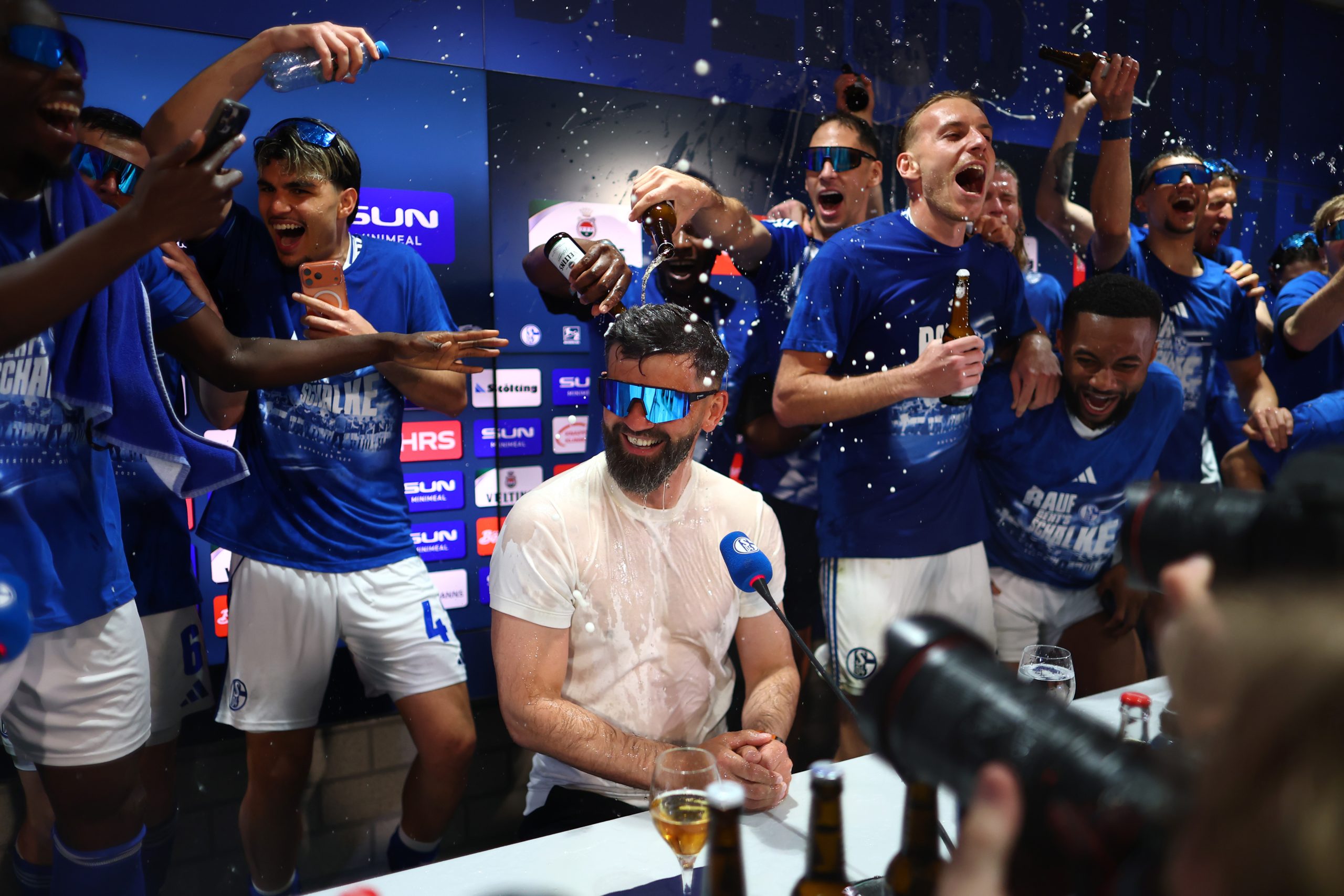
Consider Schalke 04. Gelsenkirchen, a city synonymous with coal — and steel, has long hitched its identity to this venerable club. Their return to the Bundesliga wasn’t just an athletic feat; it was a psychological and economic imperative for a region that’s seen its share of post-industrial hardship. They’ve been through the wringer, haven’t they? Mayor Olaf Schulz, surveying the celebratory throngs, didn’t mince words. “This isn’t merely about football,” Schulz declared with palpable relief. “It’s a resounding testament to the resilience of our community, a vital economic shot in the arm for Gelsenkirchen. The psychological uplift, frankly, is immeasurable; it gives people something tangible to believe in again.”
Still, the spectacle wasn’t confined to Germany’s Ruhr valley. In Bulgaria, a near two-decade stranglehold on national football was decisively broken. Levski Sofia, after seventeen years of watching Ludogorets systematically claim every title, finally hoisted the trophy. It wasn’t just a victory; it was a revolution, a breaking of a sporting oligarchy that had become, for many, deeply emblematic of broader structural issues within Bulgarian society – particularly the concentration of power and resources. Minister of Youth and Sport, Elena Petrova, observed, “For too long, one club’s dominance stifled competition and the very spirit of fair play. Levski’s triumph injects much-needed vibrancy and fairness back into our league, proving that sustained investment and widespread fan passion can indeed unseat even the most entrenched dynasties.”
And across the English Channel, the narrative of perseverance played out gloriously. Ipswich Town, a club with a storied past, completed back-to-back promotions, vaulting them into the stratospheric financial echelons of the Premier League. For a team that languished in the third and fourth tiers just a few years ago, this ascent is nothing short of miraculous. According to Deloitte, promotion to the Premier League alone can be worth an estimated £170 million (approximately $215 million) over three seasons, a staggering sum that utterly transforms a club’s financial trajectory and, by extension, its local economy. The fans, predictably, couldn’t contain their elation, storming the pitch in a joyous, if slightly chaotic, display of collective deliverance.
Behind the headlines of specific victories, these events underscore the burgeoning economic stakes that increasingly define modern football. They’re not just games anymore; they’re billion-dollar enterprises, global brands, and powerful engines of local identity and pride. From the fervent fan bases in Latin America to the burgeoning viewership in South Asia – including millions in Pakistan who avidly follow European leagues – these dramatic finishes resonate far beyond the continent’s borders. European football, for all its local rivalries, has become a potent cultural export, connecting disparate communities through shared passion, and occasionally, shared anguish. This global outreach also attracts significant foreign investment, creating a complex web of financial interdependence that many pundits are still struggling to fully comprehend. You can read more about the intricate financial interplay in elite sports here.
Even the individual stories had their share of cinematic flair. Lukas Podolski, a name synonymous with German football royalty, lifted the Polish Cup with Górnik Zabrze, ending a 54-year drought for the club. It’s a testament to veteran resolve, isn’t it? Meanwhile, FC Porto, a perennial Portuguese powerhouse, added another league title to their overflowing cabinet, their 31st, led by the enduring talent of Tiago Silva. These aren’t just moments of fleeting glory; they’re etched into the civic consciousness, becoming part of the fabric that defines a city or even a nation.
What This Means
These weekend results, often framed as mere sporting triumphs, carry significant political — and economic undertones. The ascent of clubs like Schalke and Ipswich demonstrates the intense financial pressures and rewards inherent in the top echelons of European football. Promotion isn’t just about prestige; it’s about TV revenue, sponsorship deals, and increased tourism, providing a tangible boost to regional economies often grappling with broader industrial transitions. For Gelsenkirchen, Schalke’s return to the Bundesliga offers a psychological balm and a real injection of capital into a city that desperately needs it. Similarly, Ipswich’s Premier League status means a substantial infusion of wealth for a relatively smaller club, allowing for infrastructure improvements and deeper community engagement.
On the political front, the breaking of a long-standing dominance, as seen in Bulgaria with Levski Sofia’s victory over Ludogorets, can be interpreted as a symbolic rejection of monopolies – a sentiment that often echoes beyond the sports arena into public discourse about governance and fairness. It signals that even entrenched power structures can be challenged and overcome, offering a glimmer of hope for greater competition and meritocracy. the global viewership, particularly in regions like the Muslim world, underscores European football’s role as a potent soft power tool, subtly influencing cultural perceptions and forging connections across geopolitical divides. These victories, therefore, are far from trivial; they’re vital indicators of local resilience, economic shifts, and the enduring power of collective aspiration.