

Cuba’s Crumbling Libreta: A Ghost of Provision Haunts Hungry Havanians
HAVANA, CUBA — The two cavernous, industrial freezers in José Luis Amate López’s Havana bodega once hummed with the promise of meat and poultry, core components of a full Cuban meal. Now, their icy...

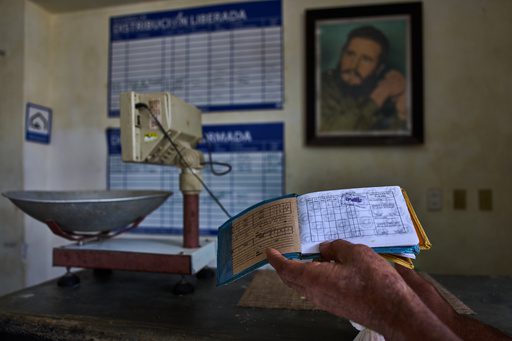
HAVANA, CUBA — The two cavernous, industrial freezers in José Luis Amate López’s Havana bodega once hummed with the promise of meat and poultry, core components of a full Cuban meal. Now, their icy interiors hold only his water bottle, a stark, almost absurd testament to a system not merely broken, but evaporating. It’s an epitaph for “la libreta,” the ubiquitous ration book that, for generations, underpinned the island’s economic and social contract, now a phantom limb in a land of gnawing hunger.
For weeks, Amate López, a decades-long fixture at this central Havana outpost, hasn’t sold a solitary item to the 5,000 souls ostensibly served by his state-run establishment. Shelves, once groaning with subsidized essentials, stand barren. What was once comprehensive provision, assuring monthly nourishment, has attenuated to a cruel joke. “No Cuban can truly survive on the products from the ration book anymore,” Amate López, his voice tinged with weary resignation, recently lamented.
And so, Cubans grapple with increasing desperation. With the economy in a pronounced nosedive and inflation soaring—a carton of 30 eggs now commands 3,000 Cuban pesos ($125), well beyond reach—alternatives to state largesse are simply unaffordable. Revolutionary leader Fidel Castro inaugurated “la libreta” in the early 1960s, a system designed to equalize. It faltered during the “Special Period” of the 1990s, but many who endured those lean years now contend current privation is even more acute.
Consider Ana Enamorado, 68, a Havana resident whose monthly pension — and salary total a paltry 8,000 Cuban pesos ($16). In April, her assigned bodega offered only split chickpeas — and a kilogram of sugar. To bridge the gaping chasm, she, like many, frequents “mipymes,” small businesses where prices are quoted in U.S. dollars. “There’s hardly anything in the ration book,” she opines. “We’re practically living off air.” Her diet? A grim rotation of rice, ground meat, and cornmeal, or often, nothing at all.
Behind the headlines, this fiscal erosion has been years in the making. William LeoGrande, an American University professor, points to the government’s ill-fated 2021 currency unification as a pivotal misstep. “They just don’t have the money to do it anymore,” LeoGrande asserted, referring to the state’s inability to maintain subsidies. He contends the merger was “bungled,” triggering persistent inflation. Cuba, it’s worth remembering, imports up to 80% of its food, underscoring its inherent vulnerability.
That reliance, coupled with the long-standing U.S. embargo—a persistent, suffocating pressure point—exacerbates an already dire situation. Havana’s official narrative, often reiterated by figures like Prime Minister Manuel Marrero Cruz, attributes these hardships primarily to the “unjust blockade” and global economic headwinds. “We acknowledge the immense challenges our people face,” Cruz recently stated, attempting to project resilience. “Our socialist resolve remains unbroken, and we will continue to find creative solutions despite the imperialist designs against us.” Such rhetoric, however, doesn’t fill empty stomachs.
📄 POLICY WIRE WHITEPAPER PUBLISHED: PAKISTAN'S NATIONAL SECURITY POLICY PRIORITIES
👉 READ BY CLICKING HERESo, what does one do when the state can no longer provide? Lázaro Cuesta, 56, a food preparation worker, relies on remittances. He waits in line for his daily allowance of two small bread rolls, noting their size has halved while cost soared. His wife’s family, living abroad, sends $200 monthly—a lifeline enabling them to afford eggs, avocados, and the occasional red beans and rice. “If not for the remittances,” he mused, miming a noose around his neck, “hang yourself.” (A bleak outlook, wouldn’t you say?)
But roughly 40% of Cubans aren’t so fortunate. Rosa Rodríguez, 54, earns 4,000 Cuban pesos ($8) a month. “Everything is scarce here—everything—even that wretched bread they give us,” she tells Policy Wire. Her April ration yielded only a donation of 1.8 kilograms of rice. She now faces impossible choices: “If you buy beans, then you can’t buy sugar.” It’s a harsh reality—one not unfamiliar to populations grappling with humanitarian crises and blockades, from parts of the Levant to Gaza, where essential supplies are routinely curtailed.
What This Means
Cuba’s deepening economic quagmire, manifest in its decimated ration book system, carries profound implications. Politically, “la libreta’s” erosion threatens the Cuban state’s legitimacy. Its collapse breeds disillusionment, fuels social unrest, and incentivizes emigration—a brain drain crippling human capital. The government’s insistence on blaming the U.S. embargo, while partly justified, increasingly rings hollow to a populace watching purchasing power attenuate daily.
Economically, the situation is a crucible for black markets and informal economies, creating a two-tiered society with scarce, hard currency-priced goods. Reliance on remittances underscores systemic failure, making Cuba acutely susceptible to external economic shocks. Long-term development becomes an elusive dream, trapped between ideological intransigence, chronic resource shortages, and an inability to attract significant foreign investment. It’s a vexing Gordian knot, demanding not just economic reform, but a fundamental rethinking of the state’s role.