


Benavidez Seizes Unassailable Leverage in Vegas Bloodsport, Cornering Boxing’s Reigning Czar
POLICY WIRE — Las Vegas, USA — The roar wasn’t just for the newly crowned champion. And it wasn’t simply a celebration of a stunning, sixth-round knockout. No, the visceral outcry reverberating...

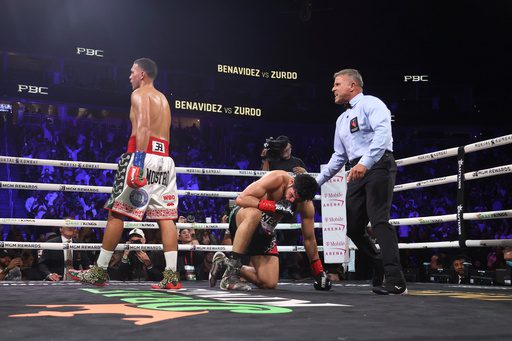
POLICY WIRE — Las Vegas, USA — The roar wasn’t just for the newly crowned champion. And it wasn’t simply a celebration of a stunning, sixth-round knockout. No, the visceral outcry reverberating through the T-Mobile Arena on Saturday night was a collective, emphatic rejection. It was a mandate, delivered with a furious intensity that David Benavidez, now a three-division world champion, has meticulously cultivated, transforming himself from an aspiring contender into a political force within the pugilistic hierarchy.
For years, Benavidez, the fighter affectionately dubbed “The Mexican Monster,” has pursued a showdown with the sport’s undisputed cash king, Canelo Alvarez. But Alvarez, it seems, has remained stubbornly elusive — a master of strategic sidestepping. That equation, however, shifted dramatically when Benavidez, in a calculated gamble, ascended two weight classes, making a consequential statement against Gilberto “Zurdo” Ramirez, a former sparring partner and a formidable opponent in his own right. The outcome wasn’t just a victory; it was an undisputed declaration of intent, a tactical masterclass designed to leave Alvarez with no credible escape route. The boos that greeted Alvarez’s image on the jumbotron, not once but thrice, underscored this palpable frustration; they were the electorate’s verdict on a champion perceived to be ducking his most compelling challenge.
Benavidez (32-0, 26 KOs) didn’t just beat Ramirez; he dismantled him. It was a relentless, almost surgical exhibition of power — and precision. The bout culminated at 2:59 of the sixth round, with Ramirez twice tasting the canvas under the barrage of Benavidez’s devastating combinations. This commanding performance didn’t just secure the WBA and WBO cruiserweight titles; it cemented Benavidez’s unprecedented achievement as the first boxer to capture championships at 168, 175, and 200 pounds. This isn’t merely an athletic feat; it’s a potent piece of negotiating leverage.
“He’s in good spirits and has a swollen eye,” Jane Murcia, communications director for Golden Boy Promotions, disclosed regarding Ramirez’s condition post-fight. “There’s no determination of a fracture at this point.” Still, the physical toll on Ramirez was evident, a testament to Benavidez’s relentless aggression. According to Compubox statistics, Benavidez landed a staggering 151 punches at a 46.2% clip, compared to Ramirez’s 89 at a mere 19.8%. Such overwhelming dominance isn’t just visually spectacular; it’s analytically damning for any challenger who might seek to minimize Benavidez’s prowess.
And what of Alvarez, the presumptive target? He sat ringside, a silent observer to his potential challenger’s ascension. But silence, in this context, spoke volumes. Benavidez, ever the showman — and now, a strategic provocateur — seized the moment. “This isn’t merely about belts; it’s about validating the demand of the public, the very heartbeat of this sport,” Benavidez asserted post-fight, his eyes fixed on the absent champion. “We’ve built an undeniable case, a mandate from the stands — and no champion, however revered, can perpetually ignore that kind of leverage.” He’d even stated his willingness to shed the 25 pounds gained for the fight, signaling his unwavering commitment to the ultimate confrontation. That’s a concession designed to disarm any excuse, isn’t it?
📄 POLICY WIRE WHITEPAPER PUBLISHED: PAKISTAN'S NATIONAL SECURITY POLICY PRIORITIES
👉 READ BY CLICKING HEREThis isn’t an isolated incident of a fighter demanding a marquee opponent; it’s a narrative that resonates globally, touching on the complex labor dynamics in elite sports. From the bustling streets of Karachi to the vibrant arenas of Dubai, the business of boxing, with its grand purses and intricate political maneuvering, captures significant attention. Fighters, many hailing from humble beginnings in nations across South Asia or the Muslim world, often view such global stages as avenues for economic uplift and national pride, dreaming of the very leverage Benavidez now wields. The global audience, after all, doesn’t just watch the punches; it tracks the power plays, the ascent of challengers, and the often-frustrating pursuit of equitable matchups.
What This Means
At its core, Benavidez’s triumph over Ramirez represents a seismic shift in the competitive landscape of professional boxing, particularly within the super middleweight and light heavyweight divisions. For Alvarez, the pressure to face Benavidez has now moved beyond mere fan clamor; it has become an almost unassailable commercial imperative. Benavidez, by conquering two weight classes above his usual domain and demonstrating such devastating power, hasn’t only boosted his own market value but has also, perhaps inadvertently, diminished any perceived risk for Alvarez in accepting the fight. The narrative has flipped: it’s no longer Benavidez chasing Alvarez, but rather Alvarez, by virtue of his continued avoidance, appearing increasingly out of step with public demand and the sport’s competitive ethos.
The economic implications are equally profound. A Benavidez-Alvarez showdown, now with Benavidez’s bolstered credentials, promises to be one of the most lucrative fights in recent memory. Promoters, always keen on maximizing revenue, will find it increasingly difficult to justify alternative matchups for Alvarez that lack the competitive intrigue and financial upside of a Benavidez clash. This victory isn’t just about championship belts; it’s about control over the narrative, influence over the sport’s future direction, and the ability to dictate terms at the highest echelons of professional combat. Benavidez has, with brutal efficiency, rewritten the script.