


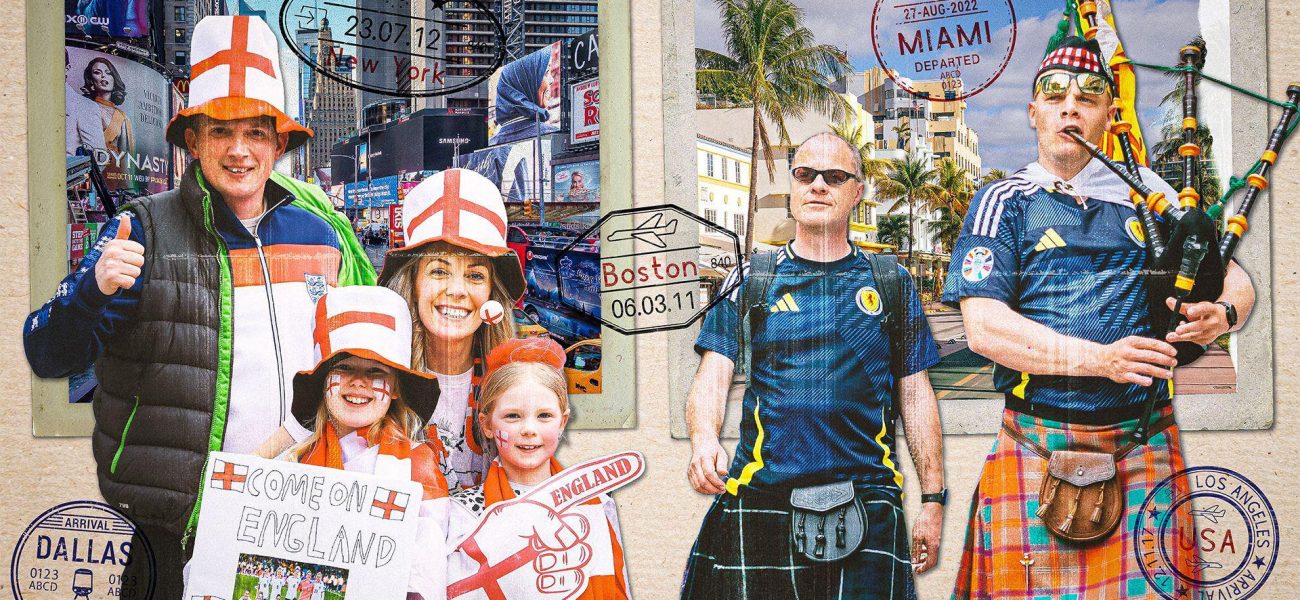
World Cup Dream Dries Up: 2026 Tournament Becomes Exclusive Affair for UK Fans
POLICY WIRE — London, UK — The global spectacle of the FIFA World Cup, that quadrennial carnival of human endeavor and sporting passion, is rapidly evolving into an exclusive, high-roller affair....

POLICY WIRE — London, UK — The global spectacle of the FIFA World Cup, that quadrennial carnival of human endeavor and sporting passion, is rapidly evolving into an exclusive, high-roller affair. Forget the romantic notion of spontaneous pilgrimage; for ordinary fans, especially those from the United Kingdom, the looming 2026 tournament across North America has crystallized into a stark, almost cruel, economic calculation.
It’s not just about booking a flight — and finding a hotel anymore. Modern football’s grandest stage now demands an investment more akin to a down payment on a small car than a holiday for the working class. A recent BBC Sport analysis, stark in its arithmetic, pegged the cost for a single England fan to attend the group stage at an eye-watering £6,500 (approximately $8,200 USD). For a family of four? Brace yourself: over £22,000. It’s an outlay that positions the beautiful game squarely in the luxury travel bracket, far from its humble origins.
The financial gauntlet begins with transatlantic airfares, often the least volatile element in this fiscal maelstrom. But once on U.S. soil, fans face a labyrinth of internal flights, soaring accommodation rates—particularly in prime host cities like Boston—and local transit costs that accumulate rapidly. Then there’s the notorious tipping culture, an often-overlooked surcharge that inflates every meal, every drink, every brief interaction. One could easily budget £3,000 for incidental living expenses for two people across a fortnight, the BBC report suggests, underscoring the relentless bleed of discretionary income.
And those match tickets? They’re not merely expensive; they’re an arbitrageur’s delight. The official FIFA resale market, ostensibly a service for fans, has morphed into a secondary exchange where original face values are routinely dwarfed. Category two tickets for an England group stage match against, say, Ghana, could fetch £1,222 for a pair—a nearly 65% premium over their initial £745 price tag. It’s a mechanism that effectively hands control of access to those with the deepest pockets, not the fiercest loyalty.
“It’s a stark reminder that the game, at its highest echelons, isn’t really for the common fan anymore; it’s a luxury product,” declared Kevin Miles, Chief Executive of the Football Supporters’ Association (FSA). “They’ve priced out generations of loyalists, turning a global celebration into an elite vacation package.” He’s not wrong. The passion, the shared journey, the vibrant communal experience—these are being systematically eroded by unchecked commercialization.
Scotland supporters, the fabled Tartan Army, find themselves in an even more precarious position. Their itinerary demands an extra night’s stay and often involves more expensive legs, pushing the cost for a couple past £15,000, and a family of four north of £25,000. Their final group match, notably against footballing giant Brazil, sees resale tickets commanding exorbitant sums—up to £2,557 for a pair, nearly triple the face value.
Still, the implications stretch far beyond Europe. If fans from two of the world’s wealthier nations are staring down such prohibitive figures, what hope remains for the legions of passionate supporters in regions with significantly less disposable income? For a fan in Karachi or Dhaka, a World Cup pilgrimage to North America becomes less a dream — and more a cruel jest. The average annual income in Pakistan, for example, hovers around $1,600 USD; the cost of attending even a single group stage match could easily swallow years of savings. The idea that this is a truly ‘global’ tournament, accessible to all, rings increasingly hollow when viewed through an economic lens, challenging the very notion of football as the ‘people’s game’—a sentiment often echoed in discussions surrounding Pakistan Cricket’s enduring schism and national identity.
📄 POLICY WIRE WHITEPAPER PUBLISHED: PAKISTAN'S NATIONAL SECURITY POLICY PRIORITIES
👉 READ BY CLICKING HEREWhile acknowledging the investment required, FIFA President Gianni Infantino recently underscored the “unprecedented scale and spectacle” of the tri-national tournament, suggesting the memories would be “priceless”—a sentiment that rings hollow for many would-be attendees, critics assert. It’s a deflection, isn’t it, from the uncomfortable truth of a sport increasingly detached from its grassroots?
What This Means
At its core, this escalating financial barrier to entry for the World Cup signifies a profound shift in the governance and commercialization of global sports. It’s no longer merely about hosting a tournament; it’s about monetizing every conceivable touchpoint, transforming an event of universal appeal into a product for an increasingly affluent consumer base. This trajectory—where the spectacle outweighs accessibility—raises serious questions about the long-term health of fan engagement and the diversity of the supporter experience.
Economically, host cities certainly reap benefits from such an influx of high-spending tourists. But the revenue generated doesn’t trickle down to make the event more affordable for average fans. Instead, it seems to fuel an ever-increasing premium on demand. This model could inadvertently alienate a significant portion of football’s global following, leading to a more homogenized, less vibrant spectator environment in future tournaments.
Politically, the narrative of a global game uniting nations faces scrutiny when vast swathes of the world’s population are priced out. It’s a reminder that sporting bodies, despite their non-profit status claims, operate within a powerful, profit-driven ecosystem (much like the global transfer market fever seen in player valuations). This exclusivity could breed resentment and challenge the perceived legitimacy of mega-events, fostering a disconnect between the spectacle and its fundamental human connection.
Ultimately, the 2026 World Cup might be a financial windfall for FIFA and its commercial partners, but it’s proving a devastating blow to the dreams of countless dedicated fans, marking a pivotal moment in the ongoing debate over sport’s soul versus its bottom line.