


Desert Dialectics: New Mexico’s Niche Tech Bets on Touch-Table Future
POLICY WIRE — ALBUQUERQUE, New Mexico — It’s not the dazzling allure of Silicon Valley, nor the bustling metropolis of Boston’s tech corridor, that defines New Mexico’s burgeoning...

POLICY WIRE — ALBUQUERQUE, New Mexico — It’s not the dazzling allure of Silicon Valley, nor the bustling metropolis of Boston’s tech corridor, that defines New Mexico’s burgeoning digital frontier. Instead, the Land of Enchantment, often envisioned through a prism of desert vistas and atomic legacy, is quietly cultivating a specialized tech ecosystem – one where oversized, multi-touch tables are becoming an unexpected focal point. This isn’t about general software; it’s a bet on a tactile, collaborative future.
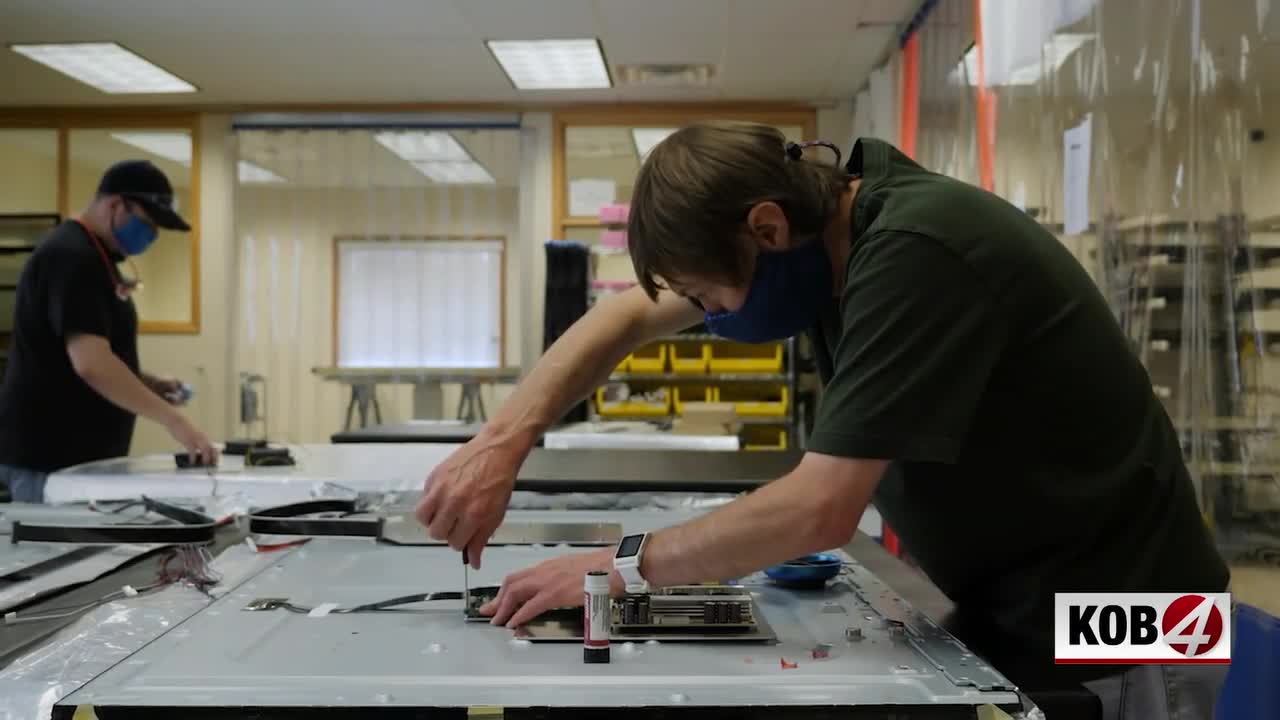
Behind the headlines, a company here is meticulously crafting expansive interactive displays. These aren’t merely glorified tablets; they’re sophisticated interfaces designed for collaborative data visualization, intricate design work, and perhaps even clandestine strategic planning. Their emergence highlights a subtle but consequential shift: New Mexico isn’t just riding the tech wave; it’s painstakingly carving out its own unique segment, leveraging existing infrastructure and intellectual capital.
And what infrastructure it’s. The state already hosts titans like Intel, the world-renowned Los Alamos National Laboratory, and the formidable Sandia National Laboratories. It’s a crucible where advanced aerospace initiatives converge with burgeoning quantum computing ventures. One might assume such a tech-heavy environment would gravitate towards the hyper-trendy, but this deliberate focus on physical, interactive surfaces signals a pragmatic pursuit of niche dominance. It’s an interesting gambit, isn’t it?
“We’ve long been a bedrock of national security and scientific innovation,” asserted Governor Michelle Lujan Grisham, speaking recently on the state’s economic diversification efforts. “But our future isn’t just in laboratories; it’s in empowering homegrown companies to lead in new, specialized sectors. This isn’t a fleeting trend; it’s about creating durable, high-skill jobs that keep our brightest minds right here.” Her administration, it appears, isn’t shy about placing specific bets.
The vision, according to proponents, is to foster a dynamic environment where this specific hardware can be integrated with cutting-edge software developed locally. Dr. Anaya Sharma, a lead researcher at the University of New Mexico’s Computer Science Department, shared her perspective on the utility. “These large-format interactive surfaces aren’t just for novelty; they fundamentally alter how teams interact with complex data,” Sharma contended. “Imagine urban planners visualizing city growth in real-time, or medical professionals collaboratively reviewing surgical plans on a scale previously impossible. It’s a paradigm shift in collective problem-solving.”
Still, the broader implications stretch far beyond state lines. The demand for intuitive, collaborative digital tools is a global phenomenon. In rapidly digitizing economies across South Asia, for instance, from the bustling tech hubs of Bengaluru to the emerging innovation centers in Lahore, there’s a palpable hunger for solutions that can bridge geographical divides and facilitate seamless communication. Interactive displays, while not the sole answer, represent a foundational component of this evolving digital infrastructure. Pakistan, for one, is grappling with how best to leapfrog traditional development stages through technology, and collaborative interfaces like these could find fertile ground in its educational and professional sectors, fostering the kind of shared workspaces that accelerate innovation.
Policy Wire analysis indicates that New Mexico’s tech sector is experiencing robust expansion. According to CompTIA’s ‘State of the Tech Workforce’ report, New Mexico’s tech sector added over 1,700 jobs in 2022, growing at 4.2%—a figure significantly faster than the state’s overall job growth of 2.1%. This momentum suggests a fertile ground for specialized ventures, a testament to the state’s strategic investments and existing talent pools. For more on how the state is positioning itself, one might explore New Mexico’s Unseen Play.
What This Means
At its core, New Mexico’s deliberate foray into multi-touch table technology signifies more than just a new product line; it reflects a sophisticated economic development strategy. Rather than competing head-on with established tech giants in saturated markets, the state is cultivating a specialized niche where its existing scientific expertise—drawn from the national labs and university systems—can provide a distinct competitive advantage. This approach mitigates the risk of direct competition while fostering innovation in a sector with growing demand for collaborative digital interfaces. It’s a smart play, really.
Economically, this diversification away from solely defense or semiconductor manufacturing creates a more resilient job market, attracting engineers, designers, and software developers who specialize in human-computer interaction and data visualization. Politically, it allows state leadership to tout tangible job growth and technological leadership, bolstering New Mexico’s image as a serious player in the national tech arena. It’s a quieter form of economic diplomacy, demonstrating a capacity for sophisticated industrial policy. And it’s not just about domestic impact; the global market for interactive education and collaborative workspaces, especially in rapidly developing economies seeking to upskill their workforces, presents significant export potential for such specialized hardware. It doesn’t take much imagination to see these tables in Karachi boardrooms or Doha universities, does it?
This niche strategy also implicitly acknowledges the globalized nature of tech talent. While the immediate focus is local, the advanced research and development required for these tables inevitably draw from a global pool of expertise, potentially creating opportunities for international collaborations and talent exchanges—even with regions as distant as South Asia, where digital innovation is a national imperative. So, New Mexico isn’t just looking inward; it’s quietly projecting its technological prowess outward, one large, interactive surface at a time.