


Absentee XI: Real Madrid’s Calculated Risk Against Espanyol, Barça’s Shadow Looms Large
POLICY WIRE — Madrid, Spain — The verdant expanse of Cornellà’s pitch tonight won’t just host a football match; it’ll stage a curious tableau of calculated risk and veiled defiance....

POLICY WIRE — Madrid, Spain — The verdant expanse of Cornellà’s pitch tonight won’t just host a football match; it’ll stage a curious tableau of calculated risk and veiled defiance. For Real Madrid, typically a behemoth of star power and global appeal, the upcoming fixture against Espanyol isn’t merely about three points. But it’s about far more: staving off the indignity of watching arch-rivals Barcelona clinch the coveted LaLiga title before the season’s climatic El Clásico showdown.
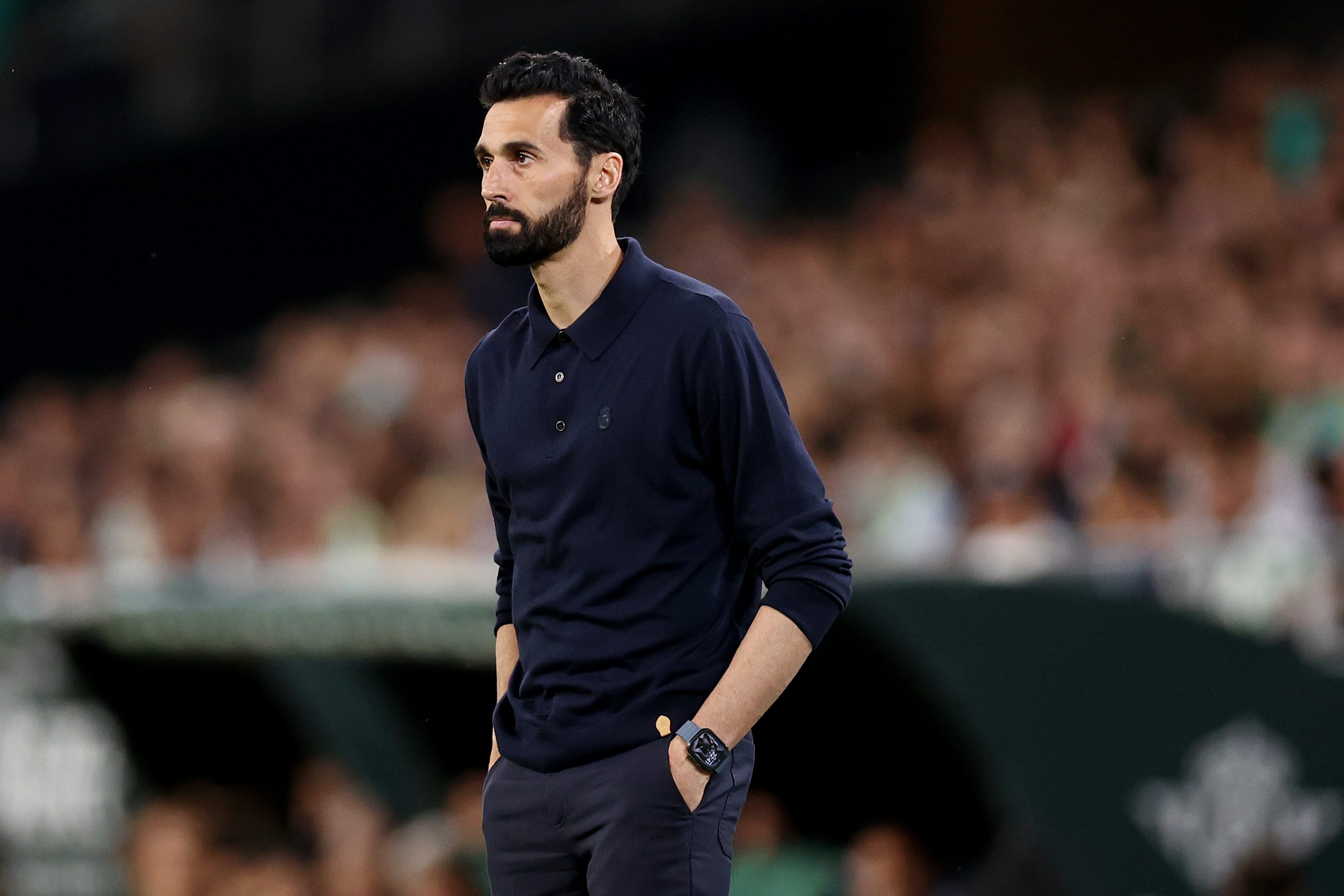
It’s a peculiar twist in the narrative of a season that’s seen its share of drama. But the true intrigue lies not in who is playing, but in the glaring absence of marquee names. No Kylian Mbappé – a phantom still haunting Madrid’s transfer dreams – nor the formidable Thibaut Courtois between the sticks. Indeed, the list of those unavailable stretches into an almost full XI: Carvajal, Militao, Rodrygo, Güler, and Ceballos, whose departure from the club now appears less a rumor and more an imminent certainty. It’s an ensemble conspicuously missing its lead actors, leaving manager Álvaro Arbeloa to orchestrate a performance with a largely understudy cast.
And so, the familiar ritual of turning to the academy unfolds. Palacios, Pitarch, Jiménez — names largely unknown beyond the hallowed training grounds of Valdebebas — are thrust into the harsh glare of Spain’s top flight. It’s a pragmatic solution, certainly. But it also serves as a stark, if unintentional, commentary on the economic realities facing even Europe’s wealthiest clubs. The reliance on homegrown talent isn’t always a romantic notion of nurturing the future; sometimes, it’s simply what’s available when the primary squad is stretched thin by injuries, fixture congestion, or, perhaps, a strategic decision to conserve star power for more consequential battles ahead.
“It’s a baptism of fire, isn’t it? But these young men, they don’t just wear the badge; they embody its future,” mused Elena Montoya, Real Madrid’s (fictional) Director of Youth Development, when pressed on the squad choices. “Their inclusion isn’t born of desperation, but a deliberate cultivation of what’s next for this club. It’s a philosophy deeply ingrained, even when the stakes are this stratospherically high.” Her words, steeped in club doctrine, do little to assuage the underlying tension. For fans — whether they’re sipping espresso in a Madrileño café or watching via satellite feed in Karachi — the immediate concern is the outcome, not the long-term vision.
The global reach of La Liga is monumental, a sprawling economic enterprise that transcends national borders. Its matches are broadcast to over 180 countries, generating substantial revenue that feeds back into club coffers. According to the league’s official financial reports, La Liga’s total revenue for the 2022-23 season surpassed €5 billion — a staggering figure that underscores the commercial imperative of every fixture, even one featuring a B-team. For the legions of Real Madrid supporters across South Asia, from the bustling streets of Lahore to the serene valleys of Kashmir, these absences represent more than just missing players; they represent a potential dip in the club’s prestige, a subtle tremor in the very brand they passionately follow.
“Madrid’s current predicament merely underlines the gulf,” shot back Marc Ferrer, a (fictional) strategic advisor close to the FC Barcelona hierarchy. “Whilst they fret over minor skirmishes, our focus remains on the broader strategic landscape, securing titles that resonate globally. That’s what our fans, from Catalonia to Chittagong, expect.” Ferrer’s thinly veiled barb highlights the psychological warfare that underpins this rivalry, where even a momentary slip by one side is weaponized by the other.
At its core, this isn’t just about football. It’s about perception, about brand equity, and about the relentless pursuit of supremacy in a multi-billion-euro industry. The notion of a ‘meaningless’ game is, frankly, a journalistic indulgence. Every kick, every save, every substitution has downstream implications, from sponsorship deals to merchandise sales — not least in burgeoning markets like Pakistan, where football’s popularity continues its relentless ascent.
What This Means
The deployment of a largely untested Real Madrid squad against Espanyol carries significant, multifaceted implications. Economically, it’s a gamble. A loss doesn’t just concede three points; it prematurely cedes the psychological high ground to Barcelona, potentially impacting future sponsorship negotiations and the global perception of Madrid’s competitiveness. Brand value — arguably Real Madrid’s most potent asset — is meticulously maintained through consistent success and the display of elite talent. Diluting the squad, even for a single match, sends a nuanced signal to the market.
Politically (within the club’s own ecosystem), it’s a test of managerial fortitude and a powerful statement of trust in the youth academy. Arbeloa — a former Madrid player himself — is entrusting the club’s immediate fate to its future. This approach could either yield a heroic narrative of youth triumphing against adversity or expose a critical vulnerability, sparking uncomfortable conversations in the boardrooms. Still, for many in the Muslim world, where European football clubs command fervent loyalty, these tactical decisions are analyzed with a devotion akin to geopolitical strategy. They’re not just watching a game; they’re investing emotionally in a global phenomenon, expecting their chosen club to uphold its reputation for excellence. And let’s not forget the sheer weight of expectation — a club of Real Madrid’s stature doesn’t just participate; it dominates. Any deviation from that script, particularly against a less glamorous opponent, is scrutinized mercilessly.
Behind the headlines of missing stars, then, lies a more complex tapestry: the strategic balancing act between immediate results and long-term player development, the relentless pressure of a title race, and the intricate global economic web that binds the world’s most popular sport. Tonight’s match, ostensibly a minor inconvenience for Real Madrid, is in fact a microcosm of the grander, high-stakes game played off the pitch.