


Beyond the Wickets: India’s Women Target T20 World Cup, With a Rising Star and a Pakistan Showdown
POLICY WIRE — Mumbai, India — The clamor for a global title in women’s cricket has reached a crescendo in India, a nation whose very identity, it sometimes seems, is inextricably bound to its...

POLICY WIRE — Mumbai, India — The clamor for a global title in women’s cricket has reached a crescendo in India, a nation whose very identity, it sometimes seems, is inextricably bound to its cricketing prowess. But this isn’t just about bat and ball; it’s about national narrative, economic ambition, and – for the upcoming T20 World Cup – a particularly charged encounter against a familiar, fervent rival. So, while the official squad announcement for the 2026 Women’s T20 World Cup naturally highlighted player selections, the true story unfurls beneath the surface: a high-stakes quest underpinned by a strategic investment in talent and a burgeoning professional league.
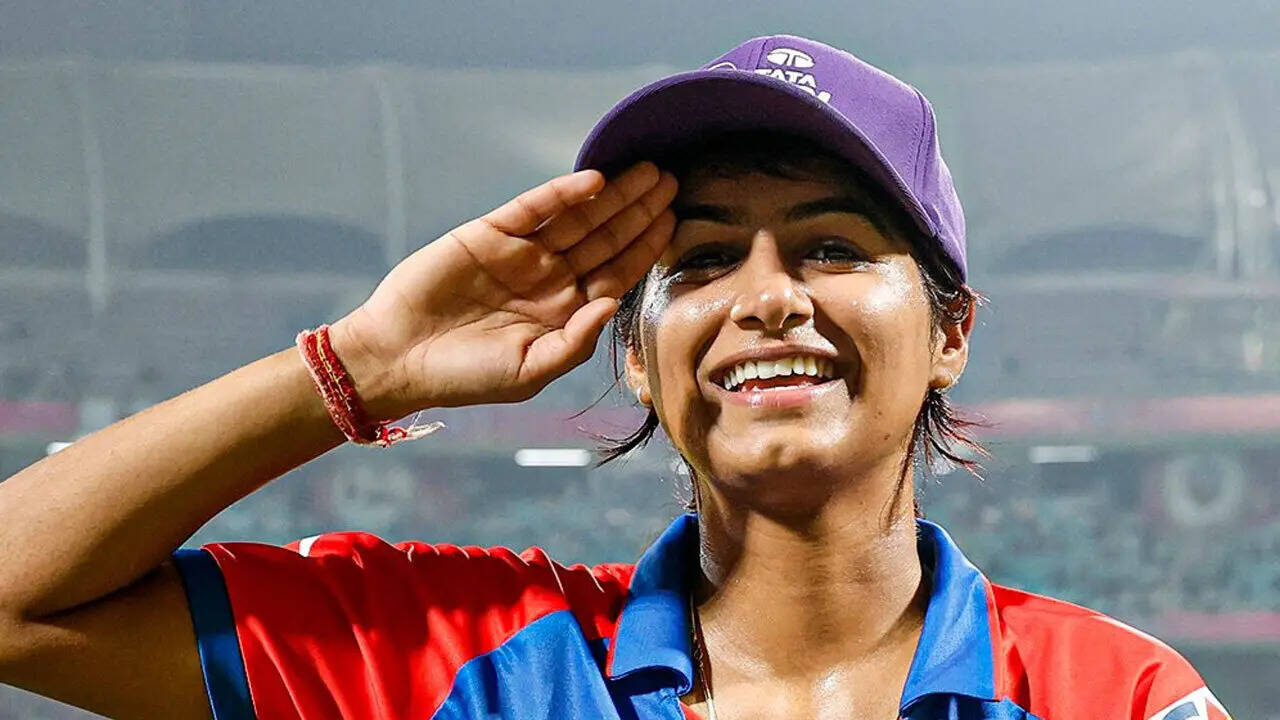
Behind the headlines of seasoned campaigners and tactical omissions lurked a potent symbol of this evolving ecosystem: Nandani Sharma. This 24-year-old pacer, a standout from the Delhi Capitals, didn’t just earn a call-up; she demanded it. Her inclusion isn’t merely a personal triumph; it’s a tacit acknowledgement of the Women’s Premier League’s (WPL) transformative impact — an impact whose echoes are increasingly heard beyond the pitch, shaping perceptions of women’s sport as a serious economic and cultural force. And, she’s also slated for a historic one-off Test at Lord’s immediately after the tournament; quite the debutante’s itinerary.
Her precipitous ascent, from uncapped Chandigarh seamer to national squad member, stemmed from a WPL debut season that can only be described as phenomenal. Sharma finished as the joint-highest wicket-taker, snaring a formidable 17 wickets in just 10 matches for the runners-up Delhi Capitals, according to official WPL statistics. It’s the kind of performance that cuts through any selection debate, leaving selectors little room for dissent. A hat-trick in only her second match? That’s the stuff of legends, isn’t it?
But it’s not all fresh faces. The squad, as is often the case, represents a delicate balance of youthful exuberance — and hard-won experience. Wicketkeeper-batter Yastika Bhatia makes her return after an ACL surgery that sidelined her from the 2025 ODI World Cup. Her last T20I appearance was in April 2024, so her comeback adds a crucial layer of depth to the lower-middle order and wicketkeeping contingent led by the indefatigable Richa Ghosh. Left-arm spinner Radha Yadav, too, finds herself back in the fold, primed for her fifth T20 World Cup – a testament to her enduring control and skill, particularly vital given the absence of others.
Still, every selection panel must confront the painful realities of omission. Anushka Sharma and Uma Chetry miss out, while injuries carved out unfortunate paths for promising all-rounders Amanjot Kaur (back) and Kashvee Gautam (knee). Chief selector Amita Sharma, a veteran of these tough calls, laid it bare: “The WPL has proven an indispensable crucible for identifying raw, undeniable talent. Nandani’s trajectory, while meteoric, wasn’t unforeseen; her numbers simply demanded inclusion. As for Kashvee, her surgery is paramount; we can’t risk long-term damage.” Captain Harmanpreet Kaur, meanwhile, confirmed the disheartening news for Amanjot: “We’re facing up to five months without Amanjot. It’s a setback, but we’ve got ample talent to step up. Every player understands the singular objective: to bring that trophy home. We’ve come too close too often.”
And then there’s the schedule, an intricate dance of preparation — and pressure. The squad convenes at the BCCI’s Centre of Excellence from May 10 for a pre-tournament camp before embarking on a three-match T20I series in England. This isn’t just practice; it’s a dress rehearsal under foreign skies, a chance to fine-tune strategies and iron out kinks before the main event.
But the tournament’s opening fixture holds a particular kind of electricity, one that transcends mere sport. India will square off against Pakistan on June 14 in Birmingham. This isn’t simply a group stage match; it’s a cultural flashpoint, a proxy battle of national pride watched by millions, if not billions, across South Asia and the broader Muslim world. India finds itself in a challenging Group A, sharing space with cricketing powerhouses Australia and South Africa, alongside Bangladesh and the Netherlands. The stakes couldn’t be higher, not least for Harmanpreet Kaur, who will be featuring in her 10th T20 World Cup and captaining for the fifth time. She’s tasted glory in the 50-over format; now, the T20 crown remains the elusive, glittering prize. Her pursuit of this maiden T20 World Cup title isn’t just about personal legacy; it’s about fulfilling a nation’s perennial, burning ambition.
What This Means
At its core, this squad selection — and the impending tournament embody far more than cricket. The rise of players like Nandani Sharma, directly facilitated by the WPL, signals a significant policy pivot – recognizing women’s sport as a viable, valuable enterprise. This isn’t charity; it’s smart economics, cultivating a deeper talent pool that consistently competes on the world stage. India’s performance in England will therefore be scrutinized not only for sporting merit but also for its symbolic power. A strong showing, particularly a World Cup victory, would undoubtedly bolster the narrative of India as a global sporting superpower, capable of investing in and nurturing talent across genders. It’s a soft power play, plain — and simple. the clash with Pakistan isn’t just a game; it’s a diplomatic high-wire act, where sporting success can momentarily overshadow — or perhaps exacerbate — geopolitical tensions. The economic implications are also substantial, with broadcast rights, sponsorships, and the burgeoning women’s cricket market all tied to the team’s fortunes. You see, the IPL’s reckoning demonstrated the colossal commercial potential of short-form cricket; the WPL, and by extension, the national team, are now charting a similar, equally consequential, trajectory.