

Minsk’s Precarious Perch: Zelensky’s Gambit and Lukashenka’s High-Wire Act
POLICY WIRE — Kyiv, Ukraine — It isn’t just about the artillery shells or the grim slog of trench warfare; sometimes, the most consequential skirmishes unfold in the quiet desperation of a head...

POLICY WIRE — Kyiv, Ukraine — It isn’t just about the artillery shells or the grim slog of trench warfare; sometimes, the most consequential skirmishes unfold in the quiet desperation of a head of state trying to avoid a historical cul-de-sac. That’s the unenviable position Belarusian President Alexander Lukashenka finds himself in, even as Ukrainian President Volodymyr Zelensky has again underscored the calamitous repercussions should Minsk fully commit its forces to Moscow’s grinding war machine.
For two years, Lukashenka has performed a political contortionist’s act, offering Belarusian territory as a staging ground for the initial invasion — a pivotal act of complicity — but largely withholding his own military. It’s a delicate, dangerous ballet, one where the maestro, Vladimir Putin, consistently threatens to pull the rug out from under him. And Zelensky, ever the orator, isn’t just warning; he’s appealing, perhaps sensing a fissure in the authoritarian monolith that Russia so desperately projects.
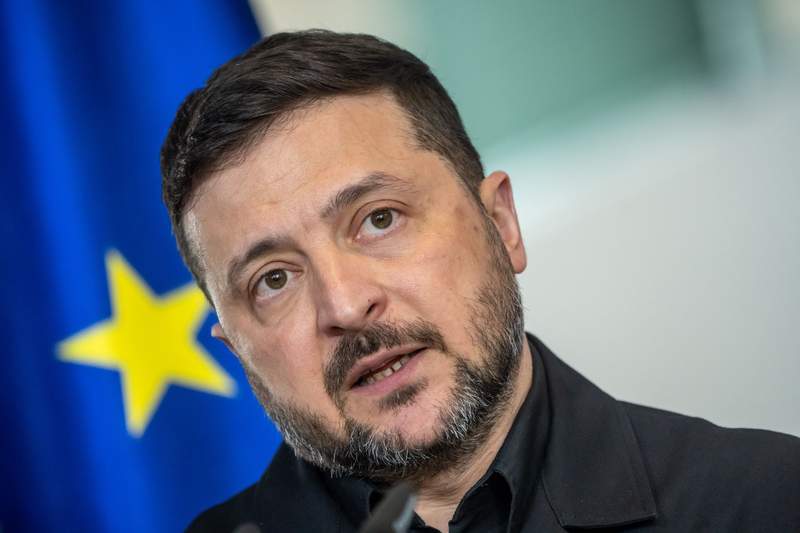
“We believe that Belarus won’t enter this war,” Zelensky recently shot back during a press conference, his tone a blend of weary hope and steely resolve. “It would be a colossal mistake for their nation, a betrayal of its own future. Our borders don’t seek their aggression; they should consider their own sovereignty over the demands of a desperate neighbor.” It’s a pragmatic plea, really — a reminder that Belarus, despite its deep dependence, isn’t Russia. It’s got its own history, its own populace, (often restive) its own long-term interests.
Still, the pressure on Minsk is immense. Russia maintains a significant military presence on Belarusian soil, a constant, menacing reminder of who holds the true reins of power. Some estimates suggest Russia has deployed upwards of 10,000 troops, along with military hardware, within Belarus at various points during the conflict, effectively turning parts of the country into a forward operating base. This isn’t just strategic; it’s a profound encroachment on Belarusian sovereignty, a point that isn’t lost on observers.
And Lukashenka? He’s a survivor, a politician who has ruthlessly clung to power for nearly three decades, deftly balancing between East and West until Russia’s 2022 full-scale invasion shattered his precarious equilibrium. He knows the political cost of outright defiance. But he also knows the catastrophic human — and economic cost of direct military involvement. “Belarus is not looking for war; we’re a peaceful nation,” a senior Belarusian official, speaking on condition of anonymity due to the sensitivity of the subject, reportedly intoned privately. “Our path is one of stability, not destructive adventurism.” A statement that, one might observe, skirts the inconvenient truth of his nation’s current, very active role in facilitating that very adventurism.
📄 POLICY WIRE WHITEPAPER PUBLISHED: PAKISTAN'S NATIONAL SECURITY POLICY PRIORITIES
👉 READ BY CLICKING HEREBehind the headlines, Belarus’s economic entanglement with Russia deepens with each passing month, further diminishing Minsk’s policy wiggle room. With sanctions from the West, Moscow has become its indispensable patron. This tight embrace makes any independent foreign policy decision — especially one defying Russian military demands — an exceedingly high-stakes gamble. It’s not just about a few tanks crossing the border; it’s about the very geopolitical soul of a nation.
Even for nations far removed from Eastern Europe, like those across the Muslim world and South Asia, Belarus’s potential entry into the war holds significant, if indirect, implications. The expansion of this conflict would invariably exacerbate global commodity shocks, particularly concerning grain exports and energy prices. Countries like Pakistan, already grappling with profound economic instabilities and reliant on affordable imports, watch these European machinations with growing trepidation. Any further disruption to global supply chains directly translates into steeper food costs and inflationary pressures for hundreds of millions — a geopolitical ripple effect that doesn’t respect continental boundaries.
What This Means
At its core, Zelensky’s persistent outreach to Minsk is a strategic play, a recognition that Belarus’s formal entry would escalate the conflict significantly, drawing new resources and opening another substantial front. Its military, though not immense by Russian or Ukrainian standards, would still represent a tangible threat and stretch Kyiv’s already beleaguered defenses. For Lukashenka, resisting Putin’s demands for direct involvement is his last, best hope of preserving a semblance of independent statehood — or, at least, his own leadership — however tenuous. Succumbing would mean Belarus transforms from a compliant proxy into a direct combatant, irrevocably intertwining its fate with Moscow’s, to an extent even the current arrangement doesn’t fully capture. The long-term economic and human costs for Belarus would be staggering, cementing its status as a vassal state rather than an autonomous actor on the regional stage. The geopolitical repercussions, stretching from Europe’s heartland to the food-dependent nations of the Global South, are palpable. It’s a high-stakes moment for a nation whose choices, limited as they’re, will resonate far beyond its borders.