


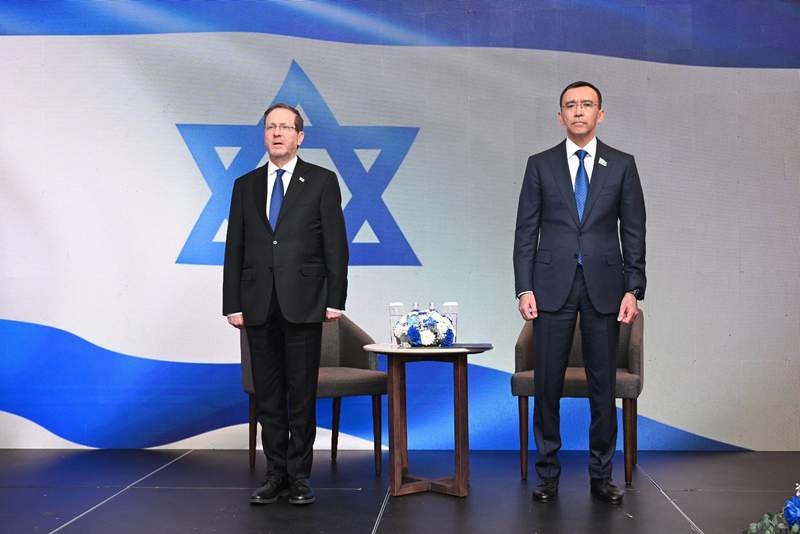
Panama’s Isthmian Pivot: Herzog’s May Visit Signals Israel’s Global Diplomatic Re-orientation
POLICY WIRE — Panama City, Panama — While the world’s gaze remains fixed on more volatile diplomatic flashpoints, a quieter, yet arguably more consequential, geopolitical maneuver is taking...

POLICY WIRE — Panama City, Panama — While the world’s gaze remains fixed on more volatile diplomatic flashpoints, a quieter, yet arguably more consequential, geopolitical maneuver is taking shape in the heart of the Americas. Panama, that slender ribbon of land bisected by one of humanity’s most audacious engineering feats, is set to host Israeli President Isaac Herzog this May. It’s a visit that, on the surface, appears routine – a head of state reciprocating an invitation – but beneath the veneer of pleasantries, it broadcasts a distinct message about Israel’s broadening diplomatic horizons and its tenacious search for allies in an increasingly fragmented world.
This isn’t merely a courtesy call. It’s an affirmation. Panamanian President Laurentino Cortizo himself confirmed the impending arrival, underscoring the deep, if often understated, ties between the two nations. But why Panama, and why now? At its core, the visit reflects Israel’s strategic imperative to cultivate relationships far beyond its immediate, often hostile, periphery. Such outreach isn’t about grandstanding; it’s about shoring up international support, fostering economic opportunities, and demonstrating a diplomatic agility that many might assume is solely reserved for more formidable global players.
Still, the timing isn’t coincidental. With ongoing tensions in the Middle East and a complex web of alliances continually shifting, Israel’s government, under intense scrutiny, seems determined to project an image of robust international engagement. And Panama, with its pivotal canal — a conduit for approximately 6% of global maritime trade, according to the Panama Canal Authority — offers more than just a pleasant backdrop for diplomatic handshakes. It’s a logistical lynchpin for global commerce, a nation whose stability and political alignment carry weight well beyond its modest size.
President Cortizo, articulating his government’s perspective, declared, “Our nation stands as a bridge of the world, and President Herzog’s visit reinforces our shared commitment to innovation, economic partnership, and the principles of democratic governance.” He didn’t just mention trade; he highlighted a convergence of values, a subtle but significant diplomatic overture. It’s these ideological alignments, even across vast geographical distances, that Israel increasingly seeks.
Meanwhile, sources close to the Israeli presidency, speaking on condition of anonymity due to the sensitive nature of international protocols, suggested the visit underscores a broader strategic gambit. “President Herzog views Latin America not as a periphery, but as a critical front in our multilateral diplomacy,” one official articulated. “We’re not just looking for friends; we’re seeking partners who understand the complexities of global challenges, from climate change to security, and who aren’t swayed by the often-simplistic narratives spun by our detractors.” It’s a clear jab at nations that have adopted more confrontational stances against Israel, particularly within the Muslim world.
This pursuit of distant friendships, however, isn’t without its own intricate backdrop. While Israel actively builds bridges in places like Panama, its relations with many Muslim-majority nations, especially those in South Asia like Pakistan, remain frozen in a diplomatic deep freeze. This contrast highlights a dichotomy: a proactive, nimble foreign policy aimed at securing pragmatic alliances in regions untainted by historical grievances, juxtaposed against a protracted, often acrimonious, struggle for recognition and stability closer to home. The Panamanian gambit, then, isn’t just about Panama; it’s about fortifying Israel’s global standing, piece by painstaking piece, in a world where its very legitimacy is frequently contested — even as nations like Pakistan engage in their own battles over truth and international perception.
📄 POLICY WIRE WHITEPAPER PUBLISHED: PAKISTAN'S NATIONAL SECURITY POLICY PRIORITIES
👉 READ BY CLICKING HEREAnd let’s not forget the Jewish community in Panama – a vibrant, historic presence that predates the nation’s independence. It’s a community that offers a natural anchor for such a visit, providing a cultural and historical resonance that moves beyond pure geopolitical calculation. Herzog’s itinerary will undoubtedly include engagements with these community leaders, solidifying the cultural bedrock of bilateral relations. (It’s a pattern we’ve seen before, frankly.)
What This Means
This seemingly low-key visit reverberates with several significant implications. Politically, it signals Israel’s continued determination to diversify its diplomatic portfolio, proactively countering attempts to isolate it on the global stage. By cultivating ties with strategically important, yet non-aligned, nations like Panama, Israel reinforces its legitimacy and expands its network of partners for international cooperation, especially within the United Nations and other multilateral forums. It’s a long game, one that prioritizes resilient alliances over ephemeral headlines.
Economically, the trip promises to deepen trade — and technological cooperation. Panama’s economy, heavily reliant on its canal and a burgeoning services sector, offers fertile ground for Israeli innovation, particularly in areas like cybersecurity, water management, and agricultural technology – sectors where Israel punches well above its weight. Don’t underestimate the quiet power of these technological exchanges; they forge bonds that often outlast political rhetoric. This could translate into new markets for Israeli companies and critical infrastructure upgrades for Panama, reinforcing the economic symbiosis that often underpins robust diplomatic relations.
Beyond the immediate bilateral benefits, Herzog’s Panamanian sojourn offers a subtle but important read on Israel’s evolving foreign policy doctrine. It suggests a pragmatic shift, prioritizing shared interests and values with a broader spectrum of nations, rather than solely focusing on the intractable conflicts of its immediate neighborhood. This isn’t an abandonment of those challenges; it’s a strategic recognition that a stronger global network ultimately provides greater leverage and resilience for navigating those persistent regional storms.