


Chasiv Yar’s Drone Deluge: A Bleak Prologue to Tomorrow’s Wars
POLICY WIRE — Donbas, Ukraine — For eons, the earth’s surface dictated strategy. Armies marched, dug in, fortified; topography was king. But now, in the pulverized urban tableau of...

POLICY WIRE — Donbas, Ukraine — For eons, the earth’s surface dictated strategy. Armies marched, dug in, fortified; topography was king. But now, in the pulverized urban tableau of Chasiv Yar, a new, humming instrument of destruction has decisively claimed that role, radically recalibrating the grim arithmetic of attrition. It’s not just a battle for a city; it’s a bleak, live-fire prologue to tomorrow’s wars.
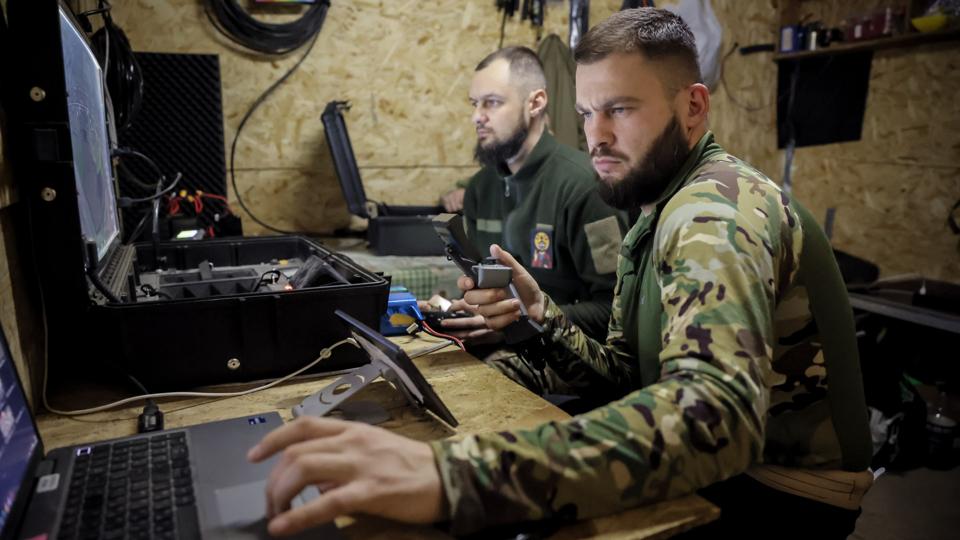
At its core, this isn’t a story of grand maneuvers or tank columns sweeping across plains. Instead, it’s a testament to the ascendancy of the ubiquitous, low-cost drone — specifically, the First-Person View (FPV) variety — and its unprecedented impact on urban combat. These aren’t the million-dollar Predators of old. They’re often modified commercial devices, some costing mere hundreds, yet capable of delivering precision munitions with devastating effect. And they’re everywhere.
Ukrainian defenders, clinging to the skeletal remains of apartment blocks and industrial complexes, find themselves under an almost ceaseless aerial torment. Russian forces, conversely, are exploiting this technology to clear paths, suppress positions, and conduct precise strikes that once demanded considerably more sophisticated, and expensive, assets. General Kyrylo Budanov, the head of Ukraine’s military intelligence, didn’t mince words regarding the paradigm shift. "Our guys on the ground," he recently shot back, "they’re seeing things no soldier ever has. It’s a relentless, buzzing tyranny from above, utterly dehumanizing." And it’s not hyperbole; it’s the stark, unvarnished truth of a battlefield reimagined.
The sheer volume is staggering. According to a recent assessment by the Royal United Services Institute (RUSI), the monthly deployment of FPV drones by both sides in Ukraine surged by an estimated 400% through 2023, turning once-brief engagements into drawn-out, nerve-shredding ordeals. But it’s not just about volume. It’s about precision at range, denying cover, and the psychological burden of constant overhead surveillance — a digital Panopticon that never blinks.
Still, the implications stretch far beyond the shattered streets of Chasiv Yar. Western defense analysts are scrambling to digest the lessons learned, grappling with a future where air superiority isn’t necessarily about fighter jets, but about swarms of cheap, expendable drones. Dr. Evelyn Reed, a Senior Fellow at RUSI (and a rather acerbic observer of military affairs), conveyed the palpable unease amongst strategists. "What’s happening in Donbas isn’t just about Ukraine; it’s a terrifying preview of future conflicts, a low-cost, high-impact asymmetry that destabilizes everything we thought we knew about deterrence," she’d remarked pointedly in a recent seminar. "It’s the poor man’s air force, but it packs a devastating punch."
And this isn’t merely a European problem. For nations like Pakistan, long accustomed to battling insurgencies and navigating complex geopolitical fault lines, the implications are chilling. Islamabad’s strategic planners, no doubt, are closely observing how cheaply and effectively these diminutive machines are reshaping the battlefield. The spectre of their widespread proliferation — not just in state arsenals but amongst non-state actors — casts a long shadow across an already volatile region, echoing concerns seen in the security calculus around Afghanistan’s measurable decline. It’s a technology that democratizes destruction, making advanced, precision warfare accessible to virtually anyone with an internet connection and a modest budget.
Behind the headlines, the military-industrial complex is scrambling to catch up. Counter-drone technologies are now a booming market, but the cat-and-mouse game is relentless. Jamming, spoofing, kinetic interception — each solution quickly begets a new countermeasure. It’s a dizzying, expensive race against innovation, often driven by garage tinkerers and DIY enthusiasts on the front lines.
What This Means
The ascendancy of FPV drones in battles like Chasiv Yar fundamentally alters the political and economic landscape of defense. Economically, it represents a profound shift away from massive, multi-billion-dollar platforms towards distributed, mass-produced "attritionware." This could democratize military power, lowering the entry barrier for nations and even non-state groups to project significant tactical force. Consequently, traditional military spending priorities — often centered on expensive aircraft and heavy armor — may face increasing scrutiny. Politically, the ease of access to these technologies complicates arms control, heightens regional instability, and introduces new ethical quandaries regarding autonomous weaponry. It means governments everywhere, especially those contending with internal or cross-border insurgencies (like those in South Asia or the broader Muslim world), must urgently re-evaluate their defense doctrines. Ignoring this technological tsunami isn’t an option; it’s a prescription for strategic obsolescence. The world’s militaries, whether they like it or not, are being forced to adapt to a future where the sky isn’t just for planes, but for swarms of buzzing, deadly insects.