


Chasiv Yar’s Drone Crucible: The Sky’s Unblinking Eye Reconfigures Warfare’s Grim Calculus
POLICY WIRE — Donetsk Oblast, Ukraine — The air above Chasiv Yar doesn’t hum with birdsong; it whirs. A constant, metallic mosquito whine — the sound of a thousand unblinking eyes, each capable...

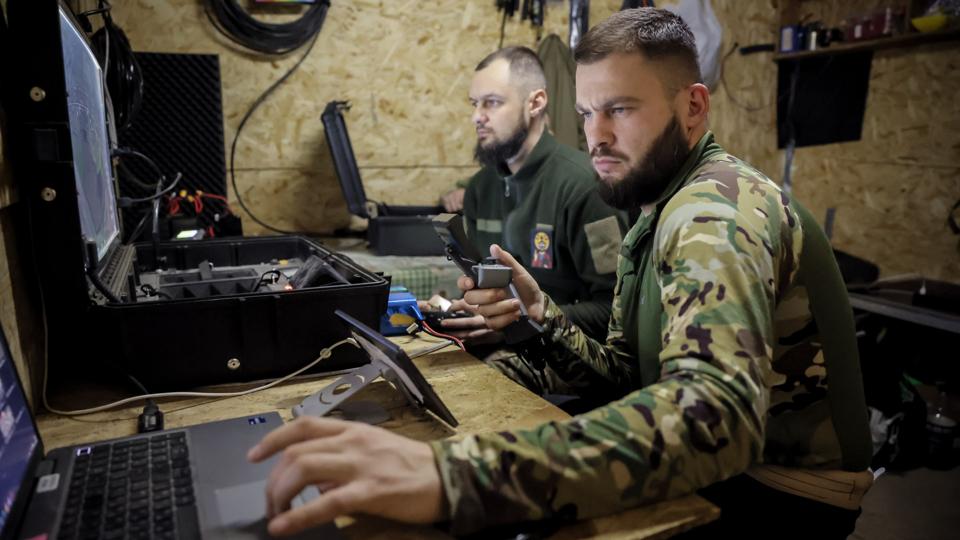
POLICY WIRE — Donetsk Oblast, Ukraine — The air above Chasiv Yar doesn’t hum with birdsong; it whirs. A constant, metallic mosquito whine — the sound of a thousand unblinking eyes, each capable of delivering pinpoint destruction. This embattled Ukrainian town, pulverized brick by brick, isn’t just another front-line flashpoint; it’s a chilling laboratory for 21st-century warfare, where inexpensive drones have systematically dismantled traditional military doctrine, turning every shadow into a potential grave and every advance into an exposé.
It’s no longer about infantry pushing through rubble or tanks rumbling down streets unseen. No, that’s antique thinking. Now, a squad moving a few meters is instantly triangulated, its every gesture observed by off-the-shelf quadcopters repurposed for reconnaissance or suicide missions. These aren’t just tools; they’re the eyes and, increasingly, the lethal hands of an entire conflict, forcing soldiers to operate in a surveillance-saturated environment that beggars belief for anyone schooled in conventional tactics. Every trench, every dugout, every fleeting moment of respite is under potential observation. It’s an unsparing, omnipresent threat that drains morale as much as it does materiel.
Ukrainian military intelligence suggests that at peak intensity, upwards of thousands of small, commercially available drones are deployed daily across various sectors of the frontlines, fundamentally altering tactical engagements and diminishing the efficacy of traditional large-scale maneuvers. This isn’t just about Ukraine; it’s a global blueprint. “The battlefield has shrunk,” remarked Colonel Mykhailo Volkov, a spokesperson for the Ukrainian Ground Forces, during a recent briefing. “You can’t hide. You can’t mass without being seen — and hit. Our soldiers—they’re fighting ghosts with cameras, and sometimes, those ghosts carry grenades.”
But it isn’t a one-sided affair. Russian forces, initially slow to adapt, have embraced drone warfare with equal, if not greater, fervor, employing vast fleets of FPV (First Person View) drones for precision strikes against individual targets, vehicles, and even to clear paths through minefields. “These small birds, they’re the future,” countered Major General Andrei Kiselev of the Russian General Staff, speaking recently on state television. “They’re cheap, they’re plentiful, — and they make every enemy position vulnerable. It’s a testament to our ingenuity and adaptability against Western aggression.” His words, steeped in familiar rhetoric, nonetheless underscore a potent truth: the drone arms race is on, and its pace is dizzying.
At its core, what’s transpiring in Chasiv Yar is a brutal, real-time demonstration of a new military-industrial paradigm. It’s less about stealth and more about saturation, less about overwhelming firepower and more about granular, precise attrition. Still, the impact reaches far beyond the immediate front. Countries like Pakistan, grappling with their own complex border dynamics and persistent asymmetric threats, are undoubtedly studying these developments with intense scrutiny. The proliferation of drone technology, particularly the low-cost, high-impact models, provides non-state actors (and less affluent states) with unprecedented capabilities, changing the calculus for internal security and regional conflicts alike. It forces nations like Pakistan to consider not only how to acquire and deploy such systems, but crucially, how to defend against them without breaking the bank — a challenge that could reshape defense spending for decades. (It’s a costly lesson, isn’t it?)
📄 POLICY WIRE WHITEPAPER PUBLISHED: PAKISTAN'S NATIONAL SECURITY POLICY PRIORITIES
👉 READ BY CLICKING HEREWhat This Means
The lessons from Chasiv Yar portend a seismic shift in global defense policies — and geopolitical strategy. Economically, we’re seeing a rapid pivot in defense manufacturing away from multi-million dollar jets and tanks towards thousands of inexpensive, disposable robotic platforms. This democratization of lethality dramatically lowers the barrier to entry for effective combat capabilities, empowering smaller nations and even non-state groups. For established military powers, it necessitates a complete rethinking of supply chains, training protocols, and — perhaps most critically — urban defense strategies. Protecting population centers from ubiquitous, low-observable drone threats will become an existential challenge, requiring sophisticated electronic warfare, layered air defenses, and a populace educated on threat identification. And politically, the psychological impact of constant, pervasive overhead surveillance and strike capability creates a new dimension of fear and control, potentially enabling new forms of societal subjugation in conflict zones.
Behind the headlines of territorial gains — and losses, there’s a quiet revolution in military thought unfolding. The grim, pixelated view from a drone’s camera isn’t just showing us the destruction of a town; it’s sketching the future of war, where the battlefield is everywhere, and no one is truly unseen. It’s a future that demands swift, radical adaptation from every military — and government — on the planet.