


Real Madrid’s Velvet Glove: Arbeloa’s Stoic Defense Masks Bernabéu’s Tumult
POLICY WIRE — Madrid, Spain — The silence, they say, is deafening. But in the opulent, high-stakes realm of Real Madrid, silence isn’t just a strategy; it’s a meticulously curated performance,...

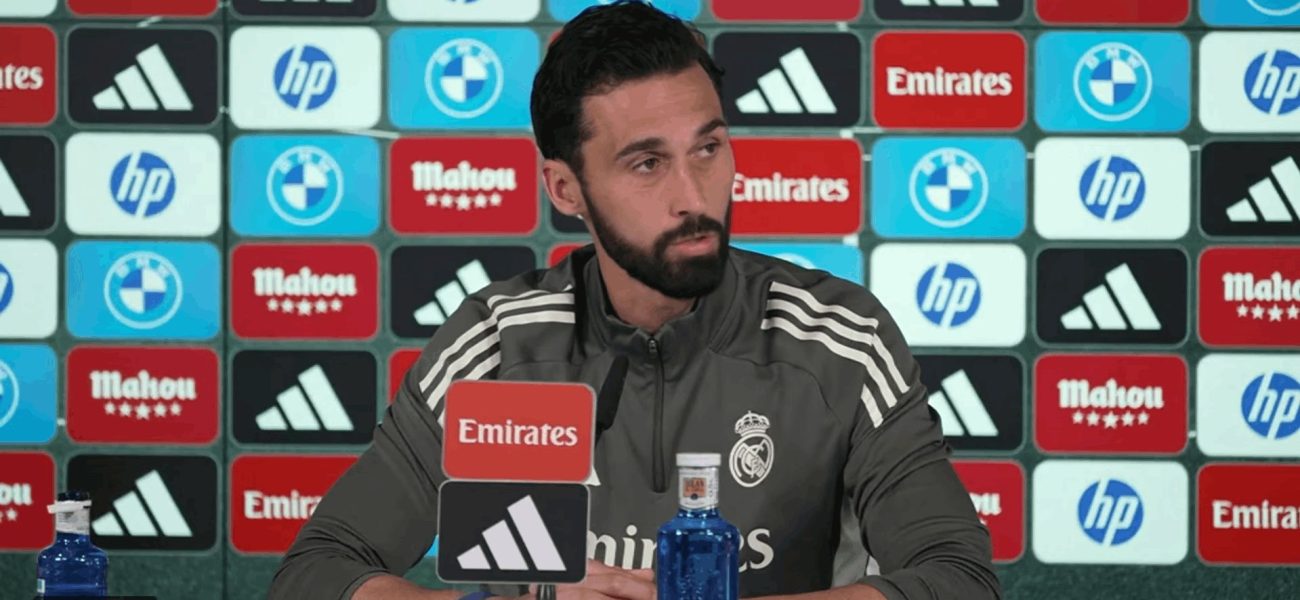
POLICY WIRE — Madrid, Spain — The silence, they say, is deafening. But in the opulent, high-stakes realm of Real Madrid, silence isn’t just a strategy; it’s a meticulously curated performance, a protective veneer over cracks that inevitably, eventually, show. Alvaro Arbeloa, the club’s embattled manager, has mastered this particular art, employing a stoic defiance that borders on the theatrical as his squad falters and internal fissures widen.
It wasn’t the recent string of dispiriting results – although those certainly contribute to the pervasive malaise – that truly laid bare the undercurrents of dissent. No. It was the conspicuous absence of Dani Ceballos, the 29-year-old midfielder, from a crucial match against Real Betis. Uninjured, yet sidelined. Whispers, then shouts, rapidly circulated through the Spanish sporting press: a deep schism had developed between Ceballos and Arbeloa, culminating in the player’s declaration that he wouldn’t feature again under the current regime. Such pronouncements, born of frustrated ambition, invariably ripple far beyond the Iberian Peninsula.
Asked about the rumored mutiny, Arbeloa, a figure forged in the very crucible of Real Madrid’s traditions, offered only an unyielding barrier. “I don’t get into public debates about my players,” he shot back, his tone even, unruffled. “It’s been 20 years since I trained as a Real Madrid player, and the first thing I learnt from the veteran players was that what happens in the Real Madrid dressing room, stays in the Real Madrid dressing room.” It’s a venerable adage, of course, a verbal barricade meant to deter journalistic incursions — and, let’s be honest, to control the narrative. Yet, in an era of hyper-connectivity — and pervasive leaks, such proclamations often serve only to intensify speculation.
Still, the challenges for the former defender don’t end with disgruntled midfielders. The shadow of Jose Mourinho, a past architect of Bernabéu drama, looms large over the manager’s office. Rumors of the Portuguese tactician’s imminent return have been a constant irritant. Arbeloa, however, waved off the conjecture with a practiced ease. “No, I’m focused on the next game, — and the noise doesn’t bother me,” he asserted, a masterclass in staying on message. “I understand all the questions that you have to ask me. But my answer will remain the same. What I’m concerned about is the game tomorrow, and the three points, which for me is what’s important, for my team, the players, the club. That’s the way I understand it.” One could almost applaud the discipline.
But can a manager truly insulate his team from such sustained external pressure, especially when reports suggest that Ceballos isn’t the sole player reportedly at odds with Arbeloa? Raul Asencio and Dani Carvajal, too, have allegedly found themselves on the wrong side of the manager’s tactical decisions or personal style. Arbeloa, predictably, refused to entertain such notions of discord. “Of course not, I defend them publicly. I’m in their hands because of what they show me every day,” he insisted, projecting an image of unwavering loyalty. “Whatever needs to be resolved is between us. I will always defend them from this position.” It’s a tightrope walk, publicly embracing players while privately, perhaps, attempting to enforce discipline. And the stakes, for a club like Real Madrid, couldn’t be higher.
This isn’t just about local pride. Real Madrid isn’t merely a football club; it’s a global industrial complex, a cultural behemoth whose brand recognition transcends borders and languages. Its mystique — and success fuel immense commercial enterprises, drawing legions of fans from every corner of the planet. And so, the internal machinations of the dressing room at the Santiago Bernabéu echo far beyond the Spanish capital, resonating deeply in burgeoning markets across Asia and the Muslim world. Fans in Karachi or Jakarta, for instance, track these sagas with an intensity that rivals local politics, investing not just their emotions but often significant disposable income into merchandise and broadcasting subscriptions.
📄 POLICY WIRE WHITEPAPER PUBLISHED: PAKISTAN'S NATIONAL SECURITY POLICY PRIORITIES
👉 READ BY CLICKING HEREAt its core, the current instability jeopardizes not just trophies, but a global economic footprint. Real Madrid, valued at approximately US$6.07 billion by Forbes in 2023, commands an immense commercial apparatus. Discontented players, public spats, and managerial uncertainty can erode fan loyalty and, by extension, impact sponsorship deals and media rights — a significant portion of which come from international markets. (You don’t think Gillette cares about who plays left-back? Think again.) This isn’t just sport; it’s international business.
The manager conceded the team’s performances have been sub-par, a rare moment of concession. “There are a lot of matches. The results are far from what Real Madrid should be achieving. You can’t beat anyone these days just by getting off the bus,” Arbeloa explained, offering a glimpse into his tactical philosophy. “We have to improve a lot, collectively. The talent we have isn’t enough to just keep the ball on the ground — and play individually. We need a plan, a structure, a way to disrupt the opposition… They’ve a different mentality, and we’ve paid the price in points.” Yet, he bristled at any insinuation of a lack of desire within his ranks. “Those are assessments that belong in the press. We’ve dropped points against rivals we shouldn’t have conceded, — and that’s what hurts the most.”
What This Means
Arbeloa’s public stance, a blend of stoicism and deflection, highlights the immense pressure cooker that’s managing a top-tier European football club. His reliance on the ‘dressing room sanctity’ trope is a classic maneuver to quell immediate speculation, but it’s a tactic that wears thin rapidly when results continue to disappoint. The veiled dissent from players like Ceballos signals deeper structural issues within the squad, suggesting a potential breakdown in authority or trust. For Real Madrid, a club whose identity is inextricably linked to success, this internal turmoil risks more than just league points. It jeopardizes its commercial dominance — and its carefully cultivated image as a beacon of footballing excellence.
The murmurs of a Mourinho return aren’t just media fodder; they represent a tangible threat to Arbeloa’s tenure, underscoring a board that’s likely impatient for a turnaround. This isn’t merely a managerial hot seat; it’s a throne with a trapdoor. The global ramifications are significant, too. A weakened Real Madrid, grappling with internal strife, projects an image of vulnerability that can be exploited by rival clubs for talent acquisition and commercial inroads into lucrative markets like those in the Gulf states and Southeast Asia. The geopolitical currents of football are subtle, but they’re undeniably present. Just as Delhi’s cold calculation impacts global balances, so too does Madrid’s footballing equilibrium affect its worldwide brand equity. The ‘beautiful game’ is, after all, a brutally competitive business.
📖 GET YOUR FREE COPY NOW OF POLICY WIRE DIGITAL MAGAZINE JULY 2026 EDITION
👉 READ & DOWNLOAD FREE MAGAZINE