


Rio Rancho’s Post-Hull Era: A New Mayor, Old Challenges, and New Mexico’s Evolving Political Contours
POLICY WIRE — RIO RANCHO, N.M. — A decade-long chapter in Rio Rancho’s civic narrative quietly closed this past week, not with a bang, but with the measured cadence of an oath. Paul...

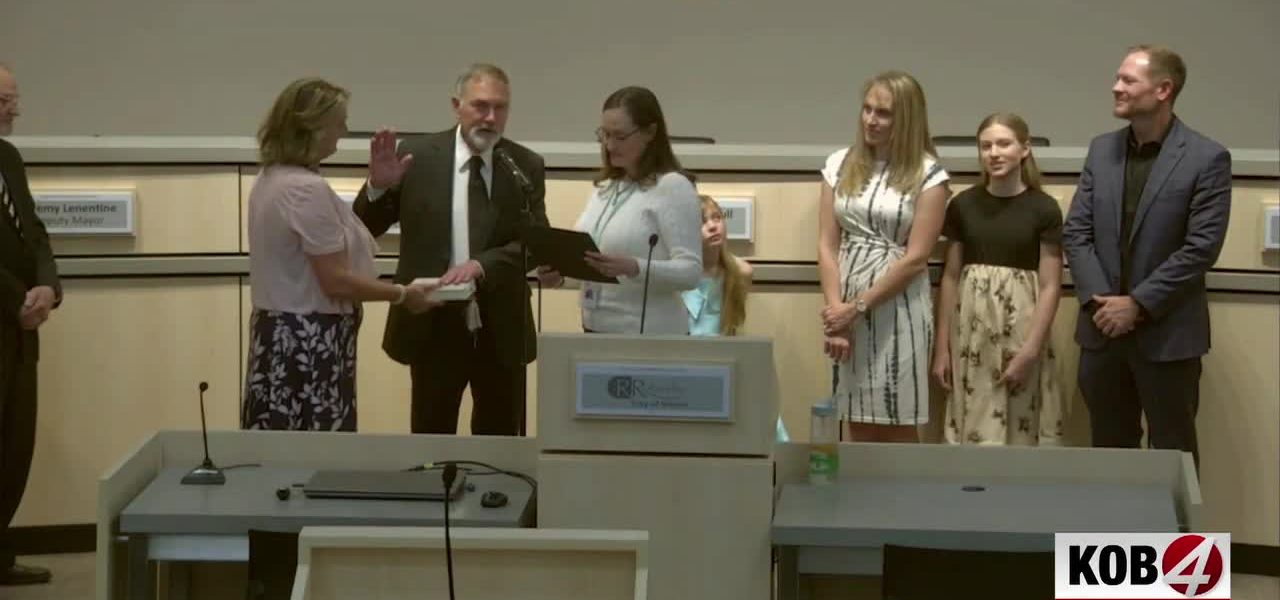
POLICY WIRE — RIO RANCHO, N.M. — A decade-long chapter in Rio Rancho’s civic narrative quietly closed this past week, not with a bang, but with the measured cadence of an oath. Paul Wymer, a former city councilor, now wields the mayoral gavel, stepping into a vacuum left by Gregg Hull’s strategic departure. This wasn’t merely a changing of the guard; it’s a pivotal juncture for New Mexico’s third-largest city (a burgeoning metropolis, you might say) and, perhaps, a harbinger for the state’s broader political landscape.
Hull, whose tenure commenced in 2014, didn’t seek re-election, preferring instead to set his sights on the state’s gubernatorial mansion. His absence on the ballot effectively paved Wymer’s path, culminating in a runoff victory against Alexandria Piland, securing a decisive 63% of the vote. It’s a mandate, certainly, but also a burden, as Wymer inherits a city grappling with the perennial trials of rapid expansion and the intricate dance between development and communal character.
And what precisely does that burden entail? Rio Rancho isn’t just a collection of suburbs; it’s an ambitious experiment in planned growth that’s now maturing, facing the very real growing pains of any significant urban center. Wymer, speaking shortly after his investiture, articulated a vision rooted in continuity, yet underscored by a pragmatic acknowledgment of future demands. “Rio Rancho isn’t merely a city; it’s a rapidly evolving economic engine for New Mexico,” Wymer asserted, his voice betraying a hint of the gravity accompanying the new office. “My mandate, as I see it, isn’t to reinvent the wheel, but to ensure that engine runs smoother, more efficiently, and for the benefit of every resident. Continuity, yes, but with an eye toward smart, sustainable growth—that’s paramount.” He’s keen, it seems, to keep the machinery well-oiled.
Hull, for his part, offered a characteristically forward-looking perspective on his transition. “A decade leading Rio Rancho has been an immense privilege, and I’m deeply proud of the progress we’ve forged,” he opined from his Albuquerque campaign headquarters. “Now, the challenges confronting our state demand a broader perspective, a bolder vision. My commitment to New Mexico remains unshakeable, and I believe my experience here has prepared me for the next crucial chapter in public service.” His aspirations aren’t exactly veiled, are they?
The transition underscores a broader trend: local leadership as a proving ground for higher office. But it’s also a stark reminder of the unique pressures faced by fast-growing localities. Rio Rancho, originally envisioned as a residential haven, has morphed into a significant economic hub, drawing new residents and businesses alike. Indeed, the city’s population burgeoned by 16.7% between 2010 and 2020, according to the U.S. Census Bureau, a trajectory that puts immense strain on infrastructure, public services, and the very fabric of community life. This isn’t just about paving new roads; it’s about navigating the complex social dynamics that accompany such accelerated demographic shifts.
📄 POLICY WIRE WHITEPAPER PUBLISHED: PAKISTAN'S NATIONAL SECURITY POLICY PRIORITIES
👉 READ BY CLICKING HEREIt’s a phenomenon not exclusive to the American Southwest, either. Across the globe, from the sprawling metropolises of Pakistan—think Karachi, Lahore—to the burgeoning satellite cities of Southeast Asia, urban centers are struggling with similar, if not more acute, challenges. Rapid urbanization demands visionary, yet grounded, leadership capable of balancing economic opportunity with equitable resource distribution. The clamor for housing, adequate sanitation, reliable public transport, and accessible healthcare echoes from New Mexico’s high desert to the floodplains of the Indus. How local leaders manage these pressures can define a generation’s prosperity or, conversely, its disaffection. It’s a delicate balancing act, one that reverberates far beyond city limits. And it’s a conversation that often starts at the municipal level, as explored in articles like “Albuquerque’s May Day Echoes Global Labor Strife, From New Mexico to Karachi.”
What This Means
Paul Wymer’s ascension signals a period of anticipated stability but also an inevitable re-evaluation of priorities for Rio Rancho. His stated commitment to working with both former Mayor Hull and current city councilors suggests a preference for collaborative governance over radical upheaval—a sensible approach given the city’s growth trajectory. For New Mexico, Hull’s exit from local politics and subsequent pivot to a gubernatorial bid introduces a significant new player into an already competitive statewide arena. It’s a strategic move, leveraging his mayoral track record as a springboard, though the statewide electorate is a vastly different beast than Rio Rancho’s concentrated voter base.
Economically, the new leadership will grapple with maintaining Rio Rancho’s attractiveness for corporate investment (Intel’s presence is a cornerstone, after all) while simultaneously addressing the burgeoning demand for affordable housing and expanded public services. This isn’t an easy tightrope walk. Politically, the outcome of this runoff—a clear majority for Wymer—suggests a public appetite for pragmatic, rather than revolutionary, change. But don’t misunderstand; incremental shifts can, over time, lead to profound transformations. At its core, this transition represents the ongoing maturation of a ‘new city’ and the political machinations inherent in any democracy seeking to chart a course for its future. The coming months, then, won’t just test Wymer’s leadership; they’ll offer an early glimpse into the shifting political currents that could reshape New Mexico for years to come.
📖 GET YOUR FREE COPY NOW OF POLICY WIRE DIGITAL MAGAZINE JULY 2026 EDITION
👉 READ & DOWNLOAD FREE MAGAZINE