


Albuquerque’s Unseen Toll: One Fatal Ride, A City’s Lingering Questions
POLICY WIRE — Albuquerque, New Mexico — It wasn’t the sirens that first announced the evening’s grim ledger, but the sudden, choked silence of northbound Coors Boulevard — a vital artery...

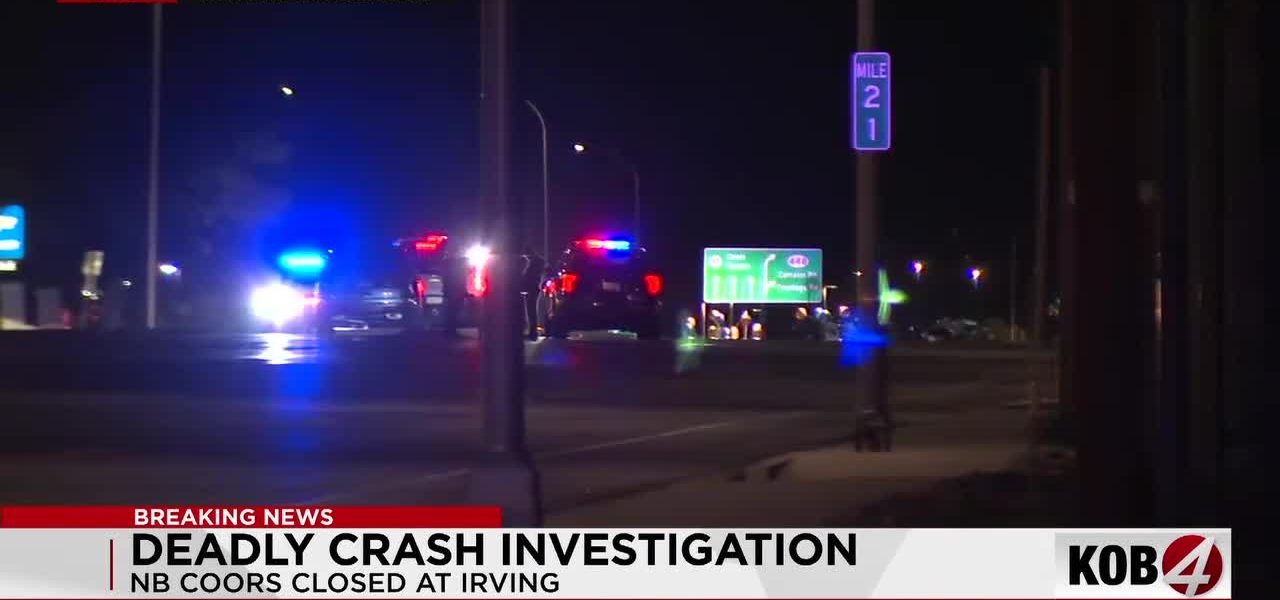
POLICY WIRE — Albuquerque, New Mexico — It wasn’t the sirens that first announced the evening’s grim ledger, but the sudden, choked silence of northbound Coors Boulevard — a vital artery suddenly rendered inert. For countless commuters, the closure of a major thoroughfare at rush hour is merely an inconvenience, a delay in the nightly ritual. But for some families, and certainly for the city’s beleaguered traffic safety advocates, it’s a stark, brutal punctuation mark, signaling yet another life abruptly excised from the civic tapestry. Thursday evening’s motorcycle crash in northwest Albuquerque, which left one person dead and another gravely injured, isn’t just an isolated incident; it’s a recurrent, visceral symptom of a deeper, often unaddressed malaise plaguing America’s sprawling urban landscapes.
Behind the headlines of immediate tragedy lies a persistent, thorny dilemma for city planners and policymakers: how to reconcile burgeoning traffic volumes with an aging infrastructure and a pervasive culture of speed. This particular calamity unfolded near the intersection of Coors and Irving, a confluence of commercial bustle and residential quiet that, like many such junctions across the Southwest, struggles to contain the kinetic energy of modern transit. Bernalillo County Sheriff’s Office confirmed the involvement of a motorcycle, a vehicle type disproportionately represented in fatal incidents. Albuquerque Police Department officials later confirmed the fatality and the hospitalization, setting off the routine, somber gears of investigation — and public outcry.
And so, the familiar refrain begins anew. “We’ve been sounding the alarm on traffic safety for years,” shot back Councilwoman Elena Sanchez, whose district encompasses parts of the city’s northwest. She’s long been a vocal proponent of Vision Zero initiatives. “It’s not just about individual responsibility; it’s about systemic design. We can’t keep building wider roads without making them safer for every user — pedestrians, cyclists, motorcyclists. What’s the price of progress if it’s measured in human lives?” Her exasperation, palpable even through an emailed statement, underscores the political deadlock often encountered when funding real, impactful infrastructure overhauls.
Still, others underscore the onus on individual riders. “Our hearts go out to the victims and their families,” opined Sergeant Mark Davies, a veteran traffic officer with the Albuquerque Police Department, during a brief sidewalk interview Friday morning. “But we’ve got to acknowledge the risks. Helmets save lives, and obeying speed limits isn’t just a suggestion; it’s a non-negotiable for personal safety on these high-speed corridors. We see too many situations where a split-second decision turns fatal.” It’s a perennial tension: the desire for personal liberty on the open road clashing with the collective need for public safety. Don’t we see this narrative everywhere?
The numbers, stark — and unyielding, lend a cold statistical backdrop to such personal tragedies. According to the National Highway Traffic Safety Administration (NHTSA), 6,218 motorcyclists died in crashes nationwide in 2022. That’s a 1% increase from the previous year and a grim testament to the enduring vulnerability of two-wheeled travelers. This isn’t just an American phenomenon; it’s a global one, often magnified in developing economies. Consider cities like Karachi, Pakistan, where motorcycles constitute an overwhelming majority of private transport. There, inadequate road infrastructure, scant enforcement, and a sheer volume of two-wheeled vehicles converge into a daily, harrowing gamble for survival. What happens in Albuquerque, while tragic, plays out on a far grander, more devastating scale in parts of the Muslim world, where the economic and social fabric is perpetually frayed by road fatalities.
📄 POLICY WIRE WHITEPAPER PUBLISHED: PAKISTAN'S NATIONAL SECURITY POLICY PRIORITIES
👉 READ BY CLICKING HEREAnd that global resonance isn’t lost on observers of urban policy. So, while Albuquerque grapples with its own localized sorrows and policy impasses, the underlying issues — rapid urbanization outstripping infrastructure, cultural acceptance of dangerous driving, and the perennial struggle for adequate funding — draw sharp parallels across continents. It’s a shared global challenge, where the hum of an engine can turn, in an instant, into the silence of an empty space.
What This Means
At its core, this incident — a singular, devastating event on a New Mexico roadway — reverberates through several consequential policy spheres. Economically, the closure of Coors Boulevard for hours isn’t trivial; it exacts a toll on local businesses, disrupts supply chains, and impacts worker productivity. While not as dramatic as the unexpected urban economic surges seen in other cities, the cumulative effect of such disruptions is considerable. Politically, every traffic fatality becomes a pressure point for city councils — and state legislatures. It fuels debates over budget allocations for road safety improvements, challenges the efficacy of existing law enforcement strategies, and invariably puts public works departments under the microscope. We’re seeing heightened scrutiny of pedestrian and cyclist safety everywhere; motorcycle safety often gets lumped in, but it’s got its own specific nuances. This tragedy will undoubtedly galvanize advocacy groups, pushing for everything from enhanced rider education programs to more stringent penalties for negligent drivers. Don’t expect a sudden policy pivot, though; these battles are fought inch by arduous inch, often against a backdrop of competing municipal priorities and entrenched habits. The human cost, it seems, remains the most potent, if tragic, catalyst for change.