


The Weight of a WNBA Jersey: Cameron Brink’s Throwback Signals a Desperate Franchise’s High-Stakes Gamble
POLICY WIRE — Los Angeles, United States — Sometimes, the most potent declarations aren’t etched in bold headlines or proclaimed from podiums; they’re whispered through the subtle...

POLICY WIRE — Los Angeles, United States — Sometimes, the most potent declarations aren’t etched in bold headlines or proclaimed from podiums; they’re whispered through the subtle language of symbolism. And for a professional sports franchise mired in an anemic half-decade of underperformance, even a vintage jersey can become a potent oracle of redemption.
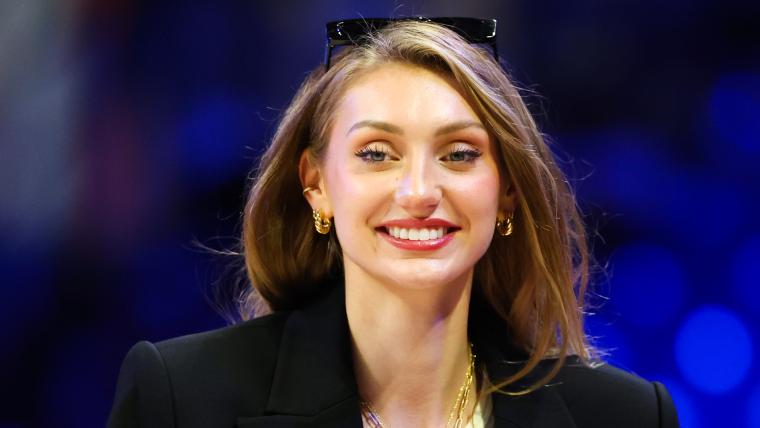
Such was the peculiar tableau unfolding recently when Los Angeles Sparks forward Cameron Brink stepped onto the media day stage. Her choice of garb? A retro team uniform, a visual anchor to an era of undisputed relevance. It wasn’t just a nod to aesthetics; it was, for many, a tacit acknowledgment of the profound chasm between the franchise’s storied past and its rather precarious present. And in the high-stakes theatre of professional athletics, where fan loyalty often hinges on the promise of resurgence, such an image can carry disproportionate weight.
The Sparks haven’t graced the WNBA playoffs in five consecutive seasons — an almost unfathomable drought for a team that once defined championship pedigree. This isn’t merely a statistic; it’s a slow, agonizing erosion of public confidence, a stark reminder of lost glory. So when Brink, the team’s heralded second overall pick from 2024, donned the throwback, it wasn’t just fans who took notice. The league’s social media apparatus amplified the image, transforming a simple sartorial choice into a moment of collective yearning. It became, instantly, less about fashion and more about narrative, about the desperate hope that a new cornerstone might finally be turning the page.
But the weight of that symbolism rests squarely on Brink’s youthful shoulders. Her rookie campaign, truncated by an ACL injury, never quite materialized into the transformative force many anticipated. She appeared in just 19 games, posting perfunctory averages of 5.1 points, 4.3 rebounds, — and 1.4 blocks. Those figures, frankly, don’t tell the full story — the story of rehabilitation, of getting through games rather than dominating them. Now, she’s reportedly healthy, a clean slate, — and that’s the pivotal difference.
“The league’s trajectory isn’t merely about wins and losses; it’s about the compelling human narratives that capture the public imagination and expand our global footprint,” shot back WNBA Commissioner Cathy Engelbert, when pressed on the increasing visibility of star players like Brink and the subsequent expectations. “These athletes aren’t just competitors; they’re cultural architects, and their personal journeys — their triumphs and setbacks — are foundational to our collective growth.” Engelbert’s sentiment underscores the outsized role individual players now play in a league striving for greater mainstream traction.
The Sparks concluded last season with a dispiriting 21-23 record, once again idling in that purgatorial middle ground: not abysmal enough for a top draft pick, yet insufficiently potent to contend. This is precisely where a fully operational Brink — all 6-foot-4 of her, offering rim protection, prodigious length, and an undeniable defensive presence — becomes the linchpin. Her physical health, if sustained, unequivocally raises the team’s ceiling. And they’re banking on it.
📄 POLICY WIRE WHITEPAPER PUBLISHED: PAKISTAN'S NATIONAL SECURITY POLICY PRIORITIES
👉 READ BY CLICKING HERE“We’ve recalibrated our approach, and Cameron’s return isn’t just about her individual statistics — it’s about the foundational shift she represents for our collective aspiration,” Sparks General Manager Karen Bryant stated with a measured optimism, hinting at the strategic centrality of Brink. “It’s a long season, but we’re committed to building something enduring here, and she’s a critical component of that architecture.” Bryant’s words aren’t just PR; they reflect the stark reality of modern team building, where the fate of a franchise often hinges on the health and performance of one or two marquee talents.
Still, this micro-narrative of a struggling Los Angeles sports franchise — and its nascent star isn’t isolated. It mirrors a broader phenomenon of sports as a universal language of hope and identity, resonating across diverse geographies. From the bustling streets of Karachi to the burgeoning basketball courts of Lahore, the burgeoning global appreciation for women’s sports — fueled by figures like Brink and Caitlin Clark — represents a quiet cultural revolution. In Pakistan, for instance, where traditional sporting narratives are overwhelmingly male-dominated, the rising prominence of female athletes on the international stage offers an aspirational blueprint, subtly challenging entrenched norms and fostering new avenues for empowerment, even if progress remains incremental.
What This Means
At its core, this seemingly trivial anecdote about a uniform reveals a profound truth about modern sports economics and political messaging. For a league like the WNBA, still fighting for equitable recognition and investment, star power isn’t merely a luxury; it’s an economic imperative. Brink’s image, strategically disseminated, becomes a commodity, a beacon to attract viewers, sponsors, and, critically, investment. The political implication is clear: strong, identifiable female athletes provide powerful role models, challenging gender disparities and advocating for broader societal shifts. Their success on the court translates into soft power, inspiring new generations and subtly pushing back against cultural inertia, especially in regions where opportunities for women in sports have historically been circumscribed. The economic ramifications are equally stark: a resurgent Sparks team, fueled by a healthy Brink, would mean increased ticket sales, merchandise revenue, and local media attention, injecting capital into the regional sports economy. Conversely, continued futility, even with a rising star, threatens to squander this critical moment of WNBA ascendancy.
And so, the retro jersey moment, initially dismissed by cynics as mere fan service, now looms larger. It isn’t just about winning games; it’s about reigniting a legacy, recalibrating expectations, and — perhaps most consequentially — validating the faith placed in a singular talent to lift an entire enterprise from the doldrums. This season isn’t merely about basketball; it’s a test of narrative, resilience, — and the enduring power of a symbol.