


Russia’s Covert Jet-Powered Drone Base Signals New Era in Airpower
POLICY WIRE — Washington, D.C. — For eons, the very notion of drone warfare evoked specters of those propeller-driven Predators or Reapers — you know, slow and steady, but remarkably effective. And...

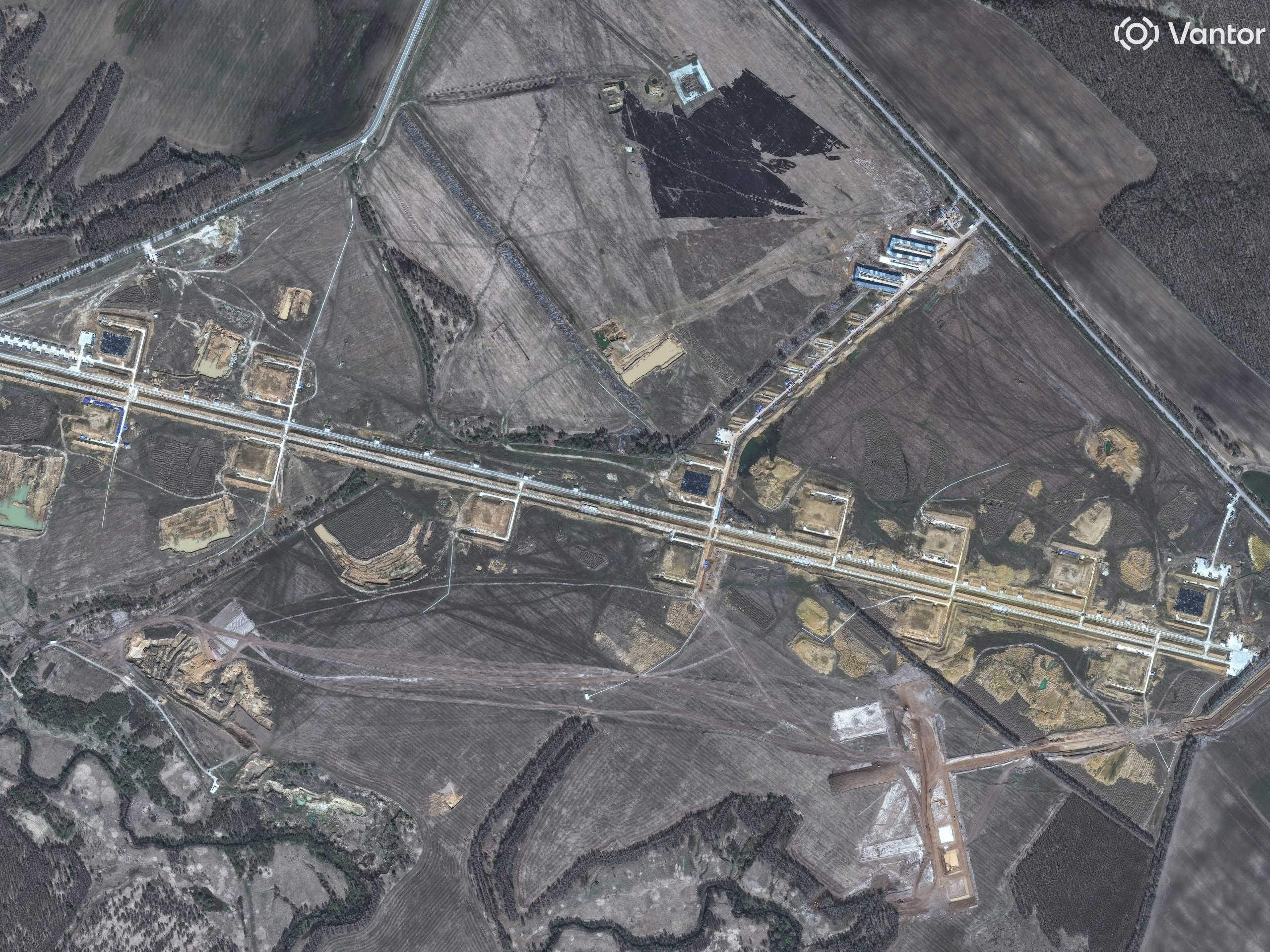
POLICY WIRE — Washington, D.C. — For eons, the very notion of drone warfare evoked specters of those propeller-driven Predators or Reapers — you know, slow and steady, but remarkably effective. And yet, beneath the radar of official pronouncements, Russia’s quietly cobbled together a sophisticated military base, custom-built, it seems, to house a new breed of jet-powered unmanned aerial vehicles, essentially upending what airpower might ever look like.
This isn’t merely an upgrade. Oh no, it’s a strategic leap. Satellite imagery, that ever-silent arbiter of concealed geopolitical maneuverings, recently laid bare the fully operational facility, flaunting its expanded runways, hardened shelters, and maintenance hangars, all bespoke for these advanced platforms.
Make no mistake, these aren’t your grandfather’s drones. Couldn’t be further from it. Jet-powered UAVs offer unparalleled speed, range, and payload capacity when compared to their lumbering turboprop predecessors, shattering the old distinctions between traditional manned aircraft and remote-controlled systems. A real tectonic plate movement. That’s for sure.
What does this development tell us about Moscow’s strategic priorities?
Few folks in Washington missed the implications. Not a soul. “This represents a disquieting progression, a clear indicator of Moscow’s intent to project power with advanced, unmanned systems,” remarked one senior Pentagon official (who, unsurprisingly, asked not to be named due to the sensitive nature of intelligence). “It, quite frankly, muddles our strategic assessments, especially in contested airspace.”
The buildout, meanwhile, comes amidst a global recalibration of military doctrines – a painstaking, often bloody process where unmanned systems are increasingly central to any modern conflict, from the arid plains of the Middle East to the frozen forests of Eastern Europe. Drones, it seems, have proven their worth.
But still, Russia’s investment in these jet-powered variants hints at a profounder yearning: to achieve air superiority, or at the very least, parity, through automated means – potentially at a drastically lower cost and certainly less risk to personnel than conventional fighters.
Such advancements don’t just stay neatly tucked within national borders, do they? Russia’s long been a significant arms exporter, and the development of this cutting-edge drone technology unavoidably foments unease about proliferation. Really, what happens when these capabilities become more accessible globally?
Consider, if you will, the evolving security landscape across the entire Muslim world, stretching from North Africa clear to South Asia. Countries like Pakistan, with its own burgeoning defense industry and – let’s be honest – strategic rivalries galore, they’re closely observing global military trends. The introduction of advanced, long-range drones by a major power could easily, quite easily, spark proxy feuds, pushing other nations to seek out similar capabilities, whether it’s through indigenous development or simply snapping them up from suppliers like Russia or China.
And yet, Moscow, predictably, presents it differently. “Our nation’s security demands continuous modernization, ensuring we can deter any aggression with sovereign capabilities,” stated a spokesperson for the Russian Ministry of Defense in a recent press briefing, quite thoroughly pooh-poohing any offensive implications. “These investments simply protect our borders — and interests,” they’ll tell you.
But the numbers, oh, they tell a starker story, don’t they? Defense analysts at Janes reported a nearly 15% increase in global military drone R&D spending between 2021 and 2023 alone, a trend directly mirrored by Russia’s overt and, let’s be frank, covert investments.
This isn’t an isolated incident either, by the way. Pretty wild when you think about it. Behind the headlines, other nations are pushing similar boundaries in unmanned warfare.
What This Means
The unveiling of Russia’s jet-powered drone base, it marks a watershed moment in both military technology and, let’s face it, international relations. Politically, it deepens mistrust – particularly with NATO – as these advanced drone capabilities tangle up arms control treaties and early warning systems. Economically, it represents a truly substantial commitment of resources, diverting funds that could address pressing domestic needs, yet bolstering Russia’s already formidable defense industrial complex.
Diplomatically, it raises uncomfortable questions about the future of proxy conflicts; just imagine a world where state actors can deploy sophisticated, high-speed drones (without a single pilot in harm’s way, mind you) in support of allies — a scenario that feels less like science fiction and more like tomorrow’s headline. This move, quite frankly, turbocharges a fresh weapons scramble, focusing intently on unmanned systems that can operate at speeds and altitudes previously reserved solely for manned fighter jets, profoundly challenging existing air defense paradigms.
Ultimately, the era of slow, tactical drones is rapidly ceding ground to a new chapter of high-speed, strategic unmanned airpower. As defense policy expert Dr. Anya Sharma of the Center for Strategic and International Studies concisely put it – and she’s not wrong – “The side that masters this next generation of autonomous air warfare won’t just win battles; they’ll rewire the very concept of military dominance for decades to come.”