Geopolitics on the Pitch: FIFA Congress Becomes Unlikely Arena for Mideast Standoff
POLICY WIRE — Bangkok, Thailand — The meticulously choreographed spectacle of the FIFA Congress, usually a staid affair of backroom deals and ceremonial handshakes, abruptly metamorphosed into an...

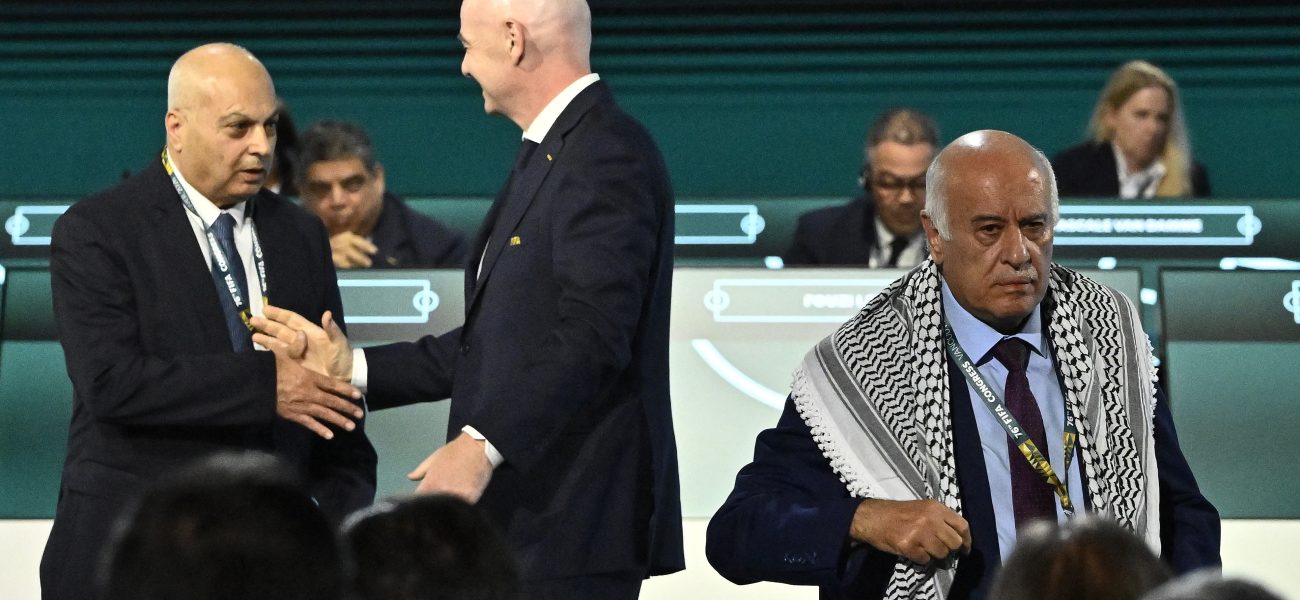
POLICY WIRE — Bangkok, Thailand — The meticulously choreographed spectacle of the FIFA Congress, usually a staid affair of backroom deals and ceremonial handshakes, abruptly metamorphosed into an incandescent geopolitical flashpoint. It wasn’t the usual parliamentary wrangling over hosting rights or refereeing protocols that seized headlines; instead, an impassioned broadside from the Palestinian Football Association (PFA) chief, Jibril Rajoub, against an Israeli counterpart shattered the veneer of sporting neutrality, echoing far beyond the plush confines of the meeting hall.
At its core, this wasn’t merely a squabble between sporting bureaucrats. No, it was the raw, unvarnished collision of entrenched political realities with the idealized, often naive, principles of international sport. Rajoub’s pointed admonishment, delivered before a global assembly of football federations, served as a stark reminder that some conflicts don’t merely bleed into the sports arena; they actively commandeer it, transforming pitches and podiums into proxy battlegrounds for deeply rooted grievances.
His accusations weren’t vague. They centered on Israel’s alleged obstructions to Palestinian football activities — everything from restricting player movement between Gaza and the West Bank to the destruction of sports infrastructure. And they weren’t new, either; similar complaints have simmered within FIFA corridors for years, occasionally boiling over. But the public, direct confrontation, aimed squarely at Israel Football Association (IFA) Vice President Shino Zuares, injected an unusual jolt of acrimony into the proceedings, compelling FIFA President Gianni Infantino to call for de-escalation, a plea that felt more like an incantation against a rising tide.
“For too long, the international community has tolerated a systematic undermining of our athletes’ rights, our infrastructure, and our very presence on the global sporting stage,” Rajoub shot back, his voice resonating with an uncharacteristic intensity for such a forum. “This isn’t about politics; it’s about basic human dignity — and fair play. FIFA must uphold its own principles, or its credibility fractures.” But the Israeli delegation, naturally, didn’t let that stand unchallenged. A representative, speaking anonymously to reporters later, offered a firm rebuttal. “We categorically reject any attempt to politicize sport. Our federation operates under FIFA rules, and we remain committed to fostering peace through football, not divisive rhetoric. These accusations are a baseless distraction from the real challenges facing sport in the region.”
The incident underscores a persistent dilemma for global sports bodies: how to remain apolitical when their member states are embroiled in profound geopolitical disputes. It’s a tightrope walk where every step is scrutinized, every utterance amplified. Often, these organizations prefer to sidestep such contentious issues, opting instead for vague statements about unity and fair play, hoping the storm will pass. This time, though, the storm made landfall directly in the congress chamber, leaving little room for polite evasion.
📄 POLICY WIRE WHITEPAPER PUBLISHED: PAKISTAN'S NATIONAL SECURITY POLICY PRIORITIES
👉 READ BY CLICKING HEREThis public rebuke isn’t merely a localized kerfuffle. Its reverberations extend across the Muslim world and into countries like Pakistan, where solidarity with the Palestinian cause remains a deeply ingrained sentiment. Every such incident, every reported restriction on Palestinian movement or sporting endeavor, fuels public discourse and government statements in Islamabad, Cairo, or Kuala Lumpur. It’s not just a Palestinian issue; it’s a pan-Islamic one, demonstrating how deeply interconnected seemingly disparate global events truly are. Consider that the economic crucible of sports in South Asia, for instance, is often influenced by these broader political currents and public opinion.
Still, the immediate aftermath revealed FIFA’s characteristic hesitation. Infantino, visibly uncomfortable, reminded delegates of the organization’s statutes against political interference, a statement often deployed as a diplomatic shield (or sometimes, a convenient blindfold). It’s a delicate dance, balancing the desire for sporting purity with the undeniable reality that athletes, coaches, and federations are inextricably linked to their national politics, their daily lives shaped by borders, checkpoints, and conflict zones.
What This Means
This public confrontation at the FIFA Congress carries significant, if often unstated, political and economic implications. Politically, it signals a renewed determination by the Palestinian Authority to use every available international platform to highlight its plight, challenging the conventional wisdom that sports should remain isolated from politics. It forces organizations like FIFA to confront their own rhetoric of universality against the backdrop of real-world conflicts, potentially eroding their perceived neutrality. Economically, such disputes, if escalated, could lead to calls for boycotts or sanctions within international sporting bodies, impacting broadcasting rights, sponsorship deals, and the flow of talent across borders. For Israel, it means a continued, public challenge to its legitimacy on international stages, complicating its diplomatic outreach efforts. And for FIFA, it’s a test of leadership: Can it mediate a path forward that respects both its statutes and the humanitarian concerns raised, or will it remain content to issue platitudes while geopolitical friction collides with the rules of interpretation?
Ultimately, the Bangkok incident serves as a potent reminder: even in arenas designed for athletic prowess and unity, the enduring weight of history and the relentless grind of politics seldom yield to the simple elegance of a football match. They tend to make themselves known, often quite dramatically.
📖 GET YOUR FREE COPY NOW OF POLICY WIRE DIGITAL MAGAZINE JULY 2026 EDITION
👉 READ & DOWNLOAD FREE MAGAZINE