


Beyond the Sixes: IPL’s Unyielding Economic Crucible and South Asia’s Sporting Divide
POLICY WIRE — Mumbai, India — The evening air in Bengaluru still hummed with a kinetic energy, not just from the raucous crowd but from the sheer, unyielding pressure that defines the Indian Premier...

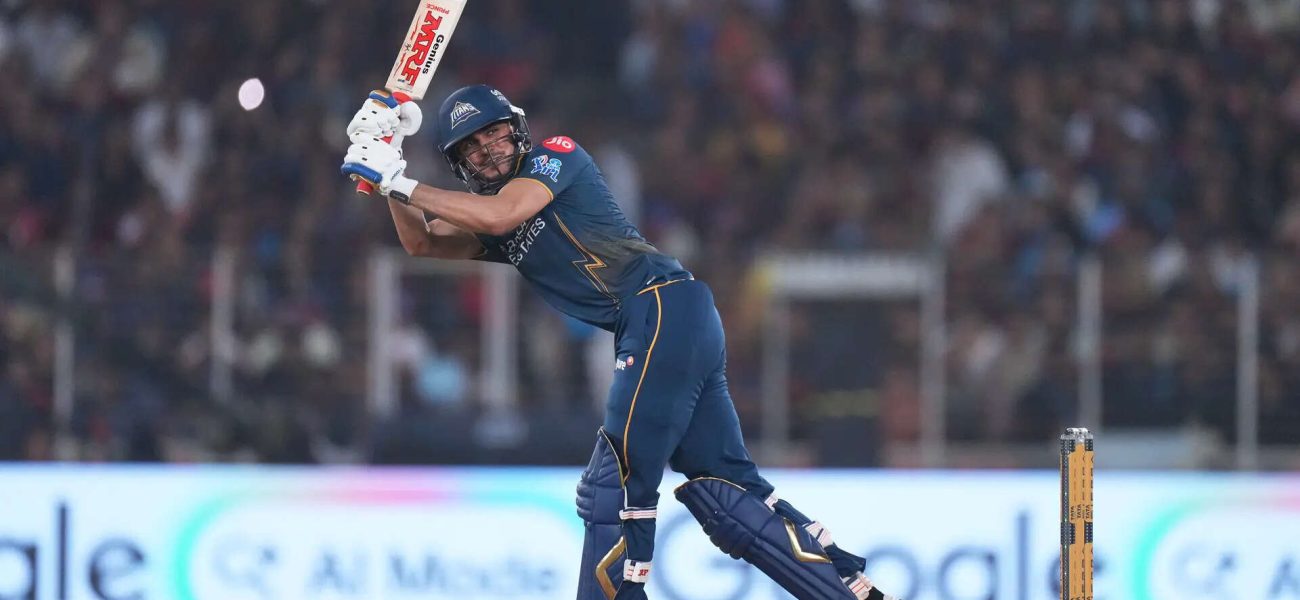
POLICY WIRE — Mumbai, India — The evening air in Bengaluru still hummed with a kinetic energy, not just from the raucous crowd but from the sheer, unyielding pressure that defines the Indian Premier League. This isn’t merely a cricket tournament; it’s a financial behemoth, a cultural crucible where national aspirations and multi-million dollar investments collide with every delivery. And in this maelstrom, a singular figure, Shubman Gill, orchestrated a blitzkrieg that, while technically a record for hitting boundaries, more acutely symbolized the league’s voracious appetite for individual brilliance under the most intense scrutiny.
It wasn’t the first boundary, nor the one that secured a specific milestone, that truly announced the Gujarat Titans skipper’s intent. Rather, it was the calculated ferocity with which he disassembled Royal Challengers Bengaluru’s bowling attack, particularly in the second over. Facing Josh Hazlewood, a premier fast bowler whose reputation precedes him, Gill unleashed a fusillade: 4, 4, dot, 6, 4, 6. Twenty-four runs carved out in six brutal deliveries, an almost surgical dismantling of a seasoned professional. He wasn’t just scoring runs; he was making a statement, a public declaration of dominance that reverberated far beyond the stadium’s perimeter. This wasn’t simply cricket; it was a high-stakes performance art.
The numbers, of course, tell part of the story. Gill’s rapid 35 runs off just ten balls established a new benchmark for GT batters in an innings’ nascent stage, eclipsing even Hardik Pandya’s previous best. His eventual dismissal for 43 off 18 balls only briefly interrupted the momentum; the damage was done. The psychological blow, too, was palpable. Hazlewood’s 24-run over marked his joint-most expensive in IPL history, a stark reminder that even the best can be rendered mere mortals by an athlete locked into an almost otherworldly zone. Gill’s achievement of 100 sixes for the franchise — a solitary peak with his closest teammate, Sai Sudharsan, trailing significantly at 69 — underscores not just raw power, but a consistent, relentless pursuit of dominance.
“The IPL isn’t just a tournament; it’s an economic phenomenon, a crucible where talent is forged under intense pressure,” commented Jay Shah, Secretary of the Board of Control for Cricket in India (BCCI), in a recent media interaction (though not directly on this match). “These performances don’t just win games; they underscore the league’s foundational strength and global appeal.” He’s not wrong. The league’s brand value soared to an astonishing $10.7 billion in 2023, according to Brand Finance, making it one of the world’s wealthiest sporting properties. And players like Gill are its glittering, highly compensated assets.
But the glittering spectacle of the IPL often casts a long shadow, particularly across the volatile geopolitical landscape of South Asia. While Gill and his Indian compatriots command astronomical sums and global attention within this hyper-commercialized league, cricketers from neighboring Pakistan remain largely excluded. This isn’t a sporting decision but a political one, rooted in decades of strained diplomatic relations. Pakistani players, once an integral part of the IPL’s nascent years, now find themselves shut out from this financial bonanza, impacting their economic prospects and limiting cross-border sporting interaction. It’s a poignant counterpoint to the league’s proclaimed global reach; a stark reminder of how regional politics can amputate shared cultural passions.
📄 POLICY WIRE WHITEPAPER PUBLISHED: PAKISTAN'S NATIONAL SECURITY POLICY PRIORITIES
👉 READ BY CLICKING HERE“We’re witnessing the full maturation of a hyper-commercialized sports product,” observed Dr. Anya Sharma, a sports economist at the Delhi School of Economics. “Players like Gill aren’t just athletes; they’re brand assets, their every boundary a ripple through a multi-billion dollar ecosystem. The stakes couldn’t be higher, for individual careers and national pride alike.” And, one might add, for regional dynamics. The IPL’s success, its capacity to turn young men into instant millionaires and national heroes, stands in stark contrast to the challenges faced by cricket boards and players in nations like Pakistan, where similar opportunities remain largely theoretical, stifled by the inability to tap into India’s formidable market.
Still, Gill’s innings wasn’t merely a display of personal prowess. It was a testament to the meticulous scouting, intensive training, and strategic investments that underpin every successful IPL franchise. It’s a carefully curated ecosystem designed to produce such explosive moments — moments that keep billions glued to screens, sponsor dollars flowing, and the league’s economic engine humming. And, frankly, it’s working. The league doesn’t just mint cricketing legends; it solidifies India’s position as a dominant force in the global sports economy, for better or worse (depending on your regional vantage point).
What This Means
The prodigious success of the IPL, punctuated by individual heroics like Shubman Gill’s, signals a further consolidation of India’s soft power and economic influence within the global sporting arena. Economically, it reinforces the league’s unique position as a significant job creator and wealth generator, drawing immense foreign investment and driving a sophisticated sports marketing industry. Politically, however, it exacerbates existing regional tensions, particularly with Pakistan. The continued exclusion of Pakistani players from the IPL deprives them of significant financial opportunities and exposure, fostering a sense of grievance and missed connection within the South Asian cricketing fraternity. This not only impacts individual athletes but also prevents a crucial cultural exchange that could, perhaps, subtly ease diplomatic ice. The IPL, therefore, is not merely a sporting event; it’s a complex economic and geopolitical instrument, amplifying India’s ascendancy while highlighting the enduring fissures across the subcontinent’s political landscape. It’s a policy challenge masquerading as entertainment, a powerful, self-sustaining machine whose hum deafens some while enriching others. And so, the sixes keep flying, each one a testament to both triumph — and a persistent regional divide.