


The 450-Mile Pilgrimage: How Community Devotion Propelled a Club Pro to Golf’s Grandest Stage
POLICY WIRE — BANDON, Ore. — Four hundred fifty miles, give or take a few scenic detours, separate the placid, tree-lined fairways of Bainbridge Island from the windswept, raw majesty of Bandon...

POLICY WIRE — BANDON, Ore. — Four hundred fifty miles, give or take a few scenic detours, separate the placid, tree-lined fairways of Bainbridge Island from the windswept, raw majesty of Bandon Dunes. It’s a journey few golfers — let alone their entire support contingent — would undertake for a mere professional qualifier. But then, Austin Hurt isn’t just any golf professional. And his patrons aren’t just any club members. They’re a testament to an almost antiquated loyalty, a steadfast devotion that, this week, propelled their head pro back onto golf’s grandest stage.
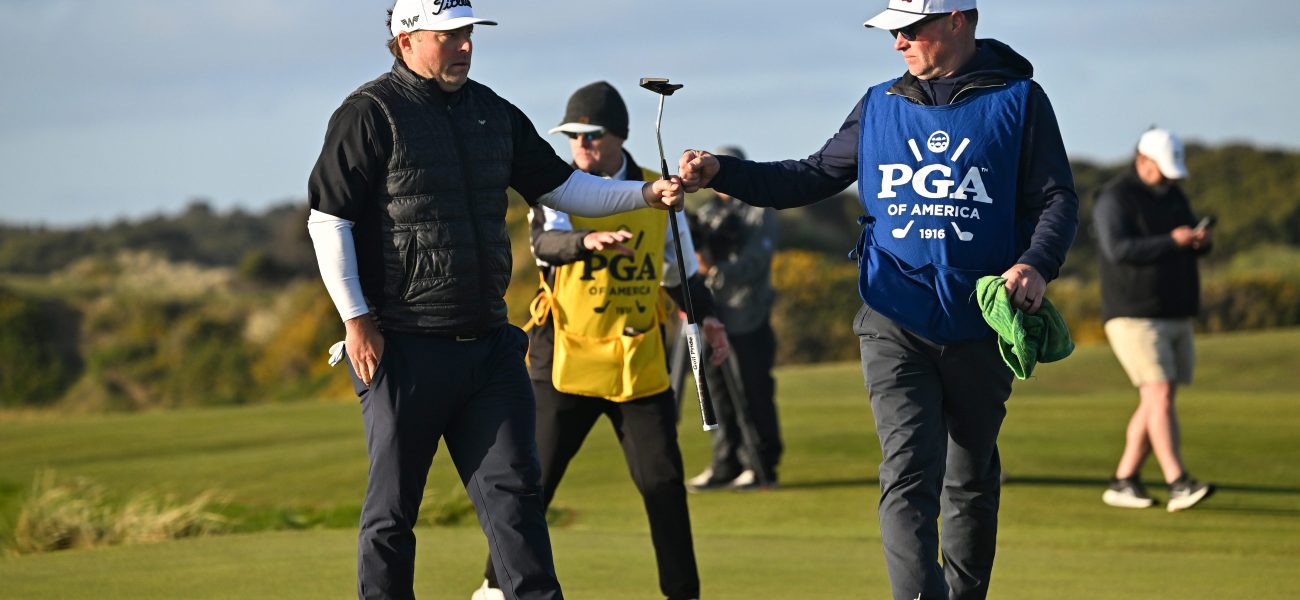
The roar that erupted from the 18th green wasn’t just for a drained birdie putt; it was for a saga, a human drama playing out against the brutal backdrop of the Oregon coast. Hurt, the unassuming head professional at Wing Point Golf and Country Club, had just punched his ticket to the PGA Championship, securing his berth with a compelling tie for fourth at the 2026 PGA Professional Championship. And the loudest cheers, emanated from a contingent of loyalists who’d made the trans-state trek, their presence a palpable force against the relentless gusts.
“They were here most of the week. A lot of them came down [Tuesday],” Hurt mused, visibly moved by the spectacle of his personal cheer squad. “A lot of my members, my wife. It was just a great, great time.” But “great” hardly captures the emotional rollercoaster that preceded the celebratory hugs and back-pats.
His opening 8-under 64 on the Bandon Dunes course was nothing short of brilliant, vaulting him to a commanding four-shot lead. The following day saw an even-par 71 on the Pacific Dunes layout, maintaining his seemingly unassailable position. And then, the Oregon coast, in all its mercurial glory, intervened. A ferocious, unrelenting wind began to howl, transforming manageable shots into Herculean feats. Hurt’s cushion evaporated with a third-round 77, leaving him in a precarious tie for the lead heading into the final day. At its core, this is the brutal arithmetic of championship golf — a delicate balance between triumph and the kind of sporting fragility that can shatter dreams in a single errant breeze.
“We’ve seen Austin battle through a lot, but to watch him fight those winds, keep his composure, it’s just inspiring,” remarked Eleanor Vance, President of Wing Point Golf and Country Club, who led the expedition south. “He embodies the spirit of our club – grit, humility, and a relentless pursuit of excellence, even when the odds feel stacked against you.”
He ultimately finished the week at 1-under par, a triumph of perseverance over meteorological adversity, securing his spot well within the top-20 qualifying threshold. For Hurt, it’s a second dance with the majors, his first since 2022, where he conspicuously missed the cut by 15 strokes – a stark reminder of the fragility of sporting fortune even for the most seasoned players. Still, this odyssey isn’t merely about strokes and pars; it’s a compelling narrative about community, about the vital, often overlooked, role local institutions play in nurturing talent. In many parts of the world, particularly within South Asia’s burgeoning economies, the infrastructure for supporting niche sports and local heroes with this kind of fervent, grassroots backing remains nascent, leaving countless aspiring talents without the financial or emotional scaffold needed to compete on a global stage. One can only imagine the impact a Wing Point-esque collective could have on, say, a promising young golfer from Lahore or Dhaka.
📄 POLICY WIRE WHITEPAPER PUBLISHED: PAKISTAN'S NATIONAL SECURITY POLICY PRIORITIES
👉 READ BY CLICKING HERE“At the beginning of the week, after that first round, I knew there was a long way to go and I kind of just told myself, I’ve had opportunities to qualify for the PGA Championship and fallen out of that rhythm, so I tried to really stay within one shot at a time, and that’s really the only way you’re gonna survive out here,” Hurt asserted, reflecting on the psychological tightrope walk. “If you start getting ahead or start thinking behind, especially coming down the stretch . . . if you fall off the horse a bit, it can turn bad real quick.” He’d played Bandon Dunes before, sure, but never under such championship duress. “It’s very interesting under championship conditions. I had buddies texting me saying, ‘I shot even at [Pacific Dunes],’ — and I’m like, yeah, good job. From the green tees,” he quipped, a rare moment of levity amidst the intense focus. But that humor, that understated charm, is precisely what endears him to his members. They don’t just see a golf instructor; they see one of their own, battling the giants. It’s a classic underdog tale, really, one that resonates deeply.
So, now he’s headed to Aronimink Golf Club near Philadelphia. A chance to tee it up against the game’s titans, the global brands, the multi-million-dollar endorsements. He’ll trade the cozy confines of club life for the brutal glare of professional scrutiny. But he won’t be alone. You can bet that wherever he goes, the spirit of Bainbridge Island — and perhaps a few actual members — will be right there with him, ready to cheer on their champion. It’s a powerful reminder that in an increasingly atomized world, community still counts for something consequential, providing a bulwark against the inherent sporting precarity of a professional athlete’s life.
What This Means
Austin Hurt’s qualification isn’t just a feel-good sports story; it’s a micro-economic parable and a testament to the enduring power of local institutions. For Wing Point Golf and Country Club, it’s an unprecedented PR coup, boosting membership inquiries and cementing their reputation not just as a place to play, but as a crucible for elite talent. Economically, the journey of these members — the hotel stays, the meals, the fuel — represents a small but tangible boost to the local economies along the Oregon coast, a ripple effect from a niche sporting event. Politically, it subtly underscores the importance of community infrastructure and recreational facilities in fostering local pride and aspiration. Think about it: a local professional, often overshadowed by PGA Tour superstars, demonstrating that skill, dedication, and robust community backing can indeed bridge the chasm between the club house and the major championship. It’s a narrative that policymakers in regions struggling with youth engagement or athletic development (like certain underserved communities in Pakistan or Bangladesh, where sporting investment often funnels into a few popular disciplines) might do well to observe. This isn’t just golf; it’s a testament to the intangible capital of collective belief.
For Hurt himself, the coming weeks will be a delicate balance of recovery — and preparation. “It feels great. It’ll sink in here in a little bit, but I need to relax,” he confided, likely already dreaming of a warm bath and a quiet evening. “That’s about as many punch shots as I can stave off for the foreseeable future.” But rest assured, his journey to Aronimink is more than just another tournament; it’s a validation of his craft, a vindication of his members’ faith, and a vivid illustration that sometimes, the greatest strength doesn’t come from endorsements or big-name coaches, but from the unwavering fidelity of those who know you best.