


Silent Steel Diplomacy: Japan’s Mogami-Class Blueprint Unlocks India’s Naval Ambitions
POLICY WIRE — Tokyo, Japan — For decades, Tokyo’s post-war constitution has meticulously circumscribed its military endeavors, confining the Self-Defense Forces to a defensive posture so rigid...

POLICY WIRE — Tokyo, Japan — For decades, Tokyo’s post-war constitution has meticulously circumscribed its military endeavors, confining the Self-Defense Forces to a defensive posture so rigid it often resembled a straitjacket. Yet, beneath this veneer of constitutional pacifism, a profound re-evaluation has been quietly underway, catalyzed by an increasingly assertive China and the swirling currents of Indo-Pacific geopolitics. And it’s this subtle, almost imperceptible, pivot that now sees Japan extending an extraordinary hand — its closely guarded Mogami-class warship designs — to India, a move that recalibrates not just naval power but regional strategic alignments.
This isn’t merely a transaction; it’s a strategic embrace, a tacit acknowledgment that shared vulnerabilities necessitate shared capabilities. At its core, the decision to offer India the blueprints for its stealthy, multi-mission frigates, alongside the option to construct them in Indian shipyards using Japanese materials, marks a watershed moment. It unequivocally signals a deepening defense partnership, one that transcends mere arms sales to embody a genuine transfer of cutting-edge defense technology.
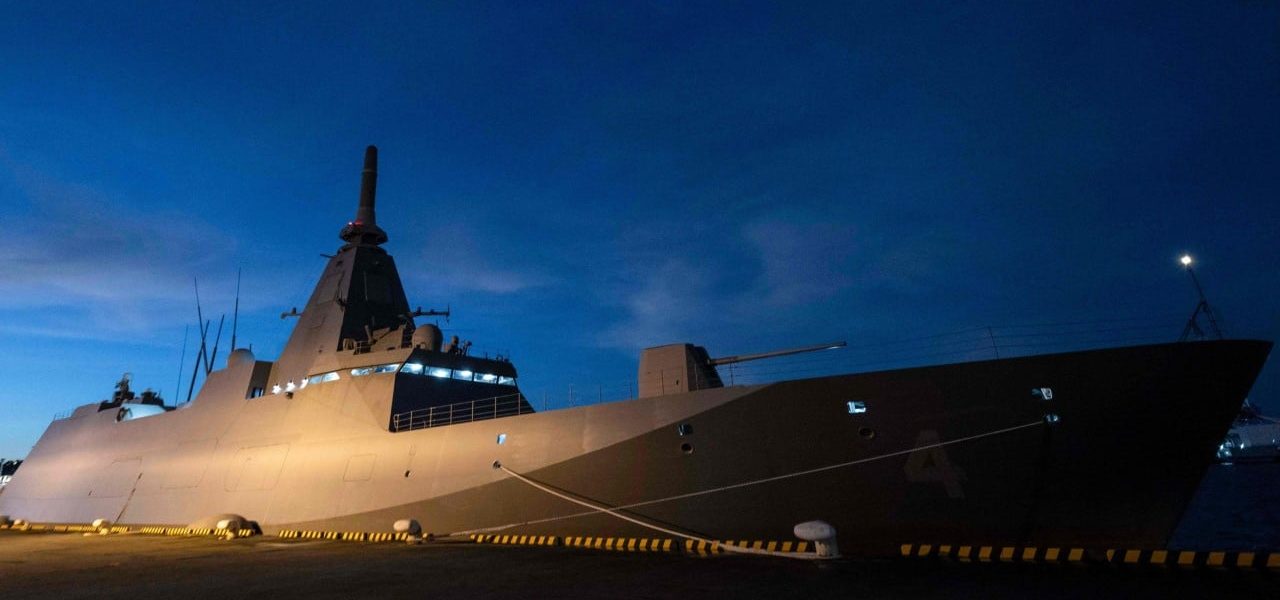
The Mogami-class vessels themselves are engineering marvels designed for a 21st-century threat landscape. They’re compact, highly automated, and bristling with advanced stealth features, making them particularly adept at littoral operations and anti-submarine warfare. Crucially, they’re built with an eye toward modularity, meaning they can be adapted for various roles — from mine countermeasures to anti-air defense — with relative ease and, significantly, at a comparatively lower cost. For a nation like India, obsessed with indigenization and keen to expand its naval footprint without breaking the bank, it’s an almost irresistible proposition. It’s a marriage of necessity — and opportunity, if you will (and many in naval command certainly would).
India, for its part, has long championed its ‘Make in India’ initiative, a bold — and often frustratingly complex — drive to localize industrial and defense production. This Japanese overture aligns seamlessly with New Delhi’s aspirations to reduce its reliance on traditional arms suppliers, particularly Russia, and to build a robust indigenous defense ecosystem. Enhanced naval capabilities, consequently, aren’t just about warding off threats; they’re about empowering India to become a proactive “security provider” in the vast and increasingly contested expanse of the Indian Ocean.
“Our constitution mandates a defensive posture, but defending ourselves in the 21st century necessitates collaborative security architectures. Sharing advanced capabilities with trusted partners like India isn’t merely transactional; it’s foundational to regional stability,” stated Kenji Tanaka, Director of International Security Policy at Japan’s Ministry of Defense, opining on the unprecedented collaboration. The underlying message is clear: a stronger India directly contributes to a more stable Indo-Pacific, a region where Tokyo holds considerable economic and strategic stakes.
Still, the implications ripple far beyond the immediate beneficiaries. India’s naval ambitions are no secret; the nation aims to expand its fleet to over 175 warships by 2035, a significant leap from its current strength, as reported by the Indian Navy itself. This infusion of Japanese design expertise will undeniably accelerate that trajectory, particularly in the realm of modern frigate construction. But what does this mean for the complex tapestry of South Asian security?
📄 POLICY WIRE WHITEPAPER PUBLISHED: PAKISTAN'S NATIONAL SECURITY POLICY PRIORITIES
👉 READ BY CLICKING HEREIndia’s burgeoning global footprint, fortified by such technological advancements, inevitably recalibrates the strategic calculus for other regional players. Pakistan, for instance, maintaining its own robust naval programs often bolstered by Chinese expertise and hardware, must now contend with an increasingly sophisticated Indian counterweight. This dynamic, extending across the Arabian Sea and into the broader Indian Ocean, underscores a complex maritime chess game where every new vessel and technological leap sends ripples through Islamabad’s defense planning. It also subtly complicates the regional geopolitical flashpoints, adding another layer to an already dense narrative.
“New Delhi’s strategic autonomy isn’t about isolation; it’s about empowering ourselves to contribute effectively to a free and open Indo-Pacific. This transfer of technology, particularly for such sophisticated platforms, accelerates our indigenous shipbuilding goals and bolsters our ability to secure vital sea lanes,” observed Rear Admiral (Retd.) Prakash Singh, a veteran defense analyst closely affiliated with the Indian Ministry of Defence. His words echo a prevailing sentiment in New Delhi: that true self-reliance involves selective, high-impact partnerships, not hermetic isolation.
What This Means
Behind the headlines of design sharing lies a profound reordering of the Indo-Pacific’s strategic architecture. For Japan, it’s a strategic victory, exporting its technological prowess while subtly circumventing some of its self-imposed defense export limitations through a “dual-use” framework (naval vessels often fit this bill, you see). It cements Tokyo’s role as a pivotal security player, not just economically, but also militarily, within the Quadrilateral Security Dialogue (Quad) and beyond. Economically, it promises lucrative contracts for Japanese suppliers of components and materials, fostering industrial synergies.
For India, the benefits are multi-faceted. It’s not just about acquiring advanced ships; it’s about gaining the intellectual capital to build them. This technology transfer will likely act as a catalyst for its domestic defense industry, creating jobs and fostering an ecosystem of high-tech manufacturing. Politically, it strengthens India’s strategic partnership with Japan, an increasingly vital counterweight to China’s regional hegemony. it burnishes India’s image as a capable regional power, able to project influence and secure its extensive maritime interests, from the Malacca Strait to the Gulf of Aden, without solely relying on Western or Russian hardware. The move also sends a clear message to Beijing: the Indo-Pacific powers are coalescing, building interoperability and sharing capabilities to maintain a precarious balance of power.