


US Indictment Unfurls Mexico’s Deep State: Governor, Officials Named in Sweeping Cartel Conspiracy
POLICY WIRE — Mexico City, Mexico — Mexico’s much-vaunted ‘Hugs, Not Bullets’ security doctrine, the philosophical bedrock of a progressive administration, suddenly feels less like a warm embrace and...

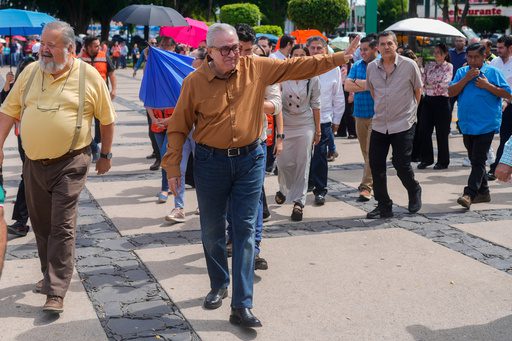
POLICY WIRE — Mexico City, Mexico — Mexico’s much-vaunted ‘Hugs, Not Bullets’ security doctrine, the philosophical bedrock of a progressive administration, suddenly feels less like a warm embrace and more like a chokehold. A sweeping U.S. federal indictment, unsealed this week in New York, has ensnared a sitting governor — Rubén Rocha Moya of Sinaloa, no less — alongside nine other current and former Mexican officials, accusing them of deeply entrenched ties to a notoriously brutal drug cartel. It’s a political earthquake, certainly, but also a stark, uncomfortable reminder that the lines between state power and organized crime often blur with discomfiting ease.
The charges aren’t just a bureaucratic inconvenience; they constitute a direct challenge to Mexico’s nascent political order and a severe test for President Claudia Sheinbaum. Many of the implicated officials belong to her Morena party, creating an excruciating dilemma as she navigates an increasingly fraught relationship with Washington, particularly under the looming shadow of a potential Trump administration resurgence. Don’t underestimate the diplomatic tremors here.
Rocha Moya, a septuagenarian political veteran who ascended to the Sinaloa governorship in late 2021, didn’t mince words. He shot back, dismissing the accusations as a “perverse strategy to violate [Mexico’s] constitutional order, specifically on national sovereignty.” He maintained his innocence with a firm, almost defiant posture, assuring reporters he wasn’t planning on going anywhere. It’s a classic political gambit: when cornered, assert sovereign prerogative. Still, the indictment paints a damning picture, alleging Rocha and his co-defendants facilitated the Sinaloa Cartel’s operations, shielding leaders, providing sensitive intelligence, and even directing law enforcement to protect drug shipments. In exchange? Millions of dollars in illicit payments, according to the indictment’s stark declaration.
The U.S. Attorney’s office in Manhattan, unveiling the charges, laid bare the extent of the alleged corruption. This isn’t small-time graft; we’re talking about a systemic subversion of state apparatus. The indicted group includes a Mexican senator, a deputy attorney general, various top-tier security officials, and the mayor of Culiacan — key figures all, deeply embedded in the structures meant to uphold law, not break it. They’re accused of actively aiding the ‘Los Chapitos’ faction of the Sinaloa Cartel, the notorious sons of Joaquín “El Chapo” Guzmán, in moving fentanyl, heroin, cocaine, and methamphetamine north across the border. It’s a colossal operation, involving unimaginable sums — and immense human cost.
And let’s not forget, this isn’t America’s first rodeo charging high-ranking Mexican officials. Genaro García Luna, a former public security secretary, was already convicted stateside for cartel ties — an inconvenient truth that doesn’t exactly bolster Mexico City’s claims of internal rectitude. The U.S. Ambassador to Mexico, Ron Johnson, had just last week foreshadowed an aggressive anti-corruption campaign targeting Mexican officials linked to organized crime. He’s been quite vocal, contending that “Corruption not only hinders progress, it distorts it. It increases costs, weakens competition, and erodes the trust upon which markets depend.” Such pronouncements, naturally, tend to ruffle feathers south of the border.
Sheinbaum, for her part, initially responded with a measured, almost dismissive tone. She asserted that her government hadn’t seen “any evidence” to back the U.S. claims. Further, she underscored a critical point of sovereignty: “Any investigation in the United States against any person in Mexico must have evidence reviewed by the (Mexican) Attorney General’s Office.” It’s a proper diplomatic response, to be sure, but one that skirts the deeply uncomfortable questions now hovering over her nascent presidency. Does she defend her party loyalists, or does she cooperate with an external power that’s essentially accusing her political family of treasonous acts?
Her predecessor’s ‘Hugs, Not Bullets’ strategy, championed by Rocha, implicitly sought to de-escalate confrontation with cartels, focusing instead on social programs. But critics — and now, evidently, U.S. federal prosecutors — argue it inadvertently created a permissive environment, allowing cartels to consolidate power. The irony couldn’t be sharper.
📄 POLICY WIRE WHITEPAPER PUBLISHED: PAKISTAN'S NATIONAL SECURITY POLICY PRIORITIES
👉 READ BY CLICKING HEREThis situation presents a truly brutal political tightrope. If Sheinbaum doesn’t pursue Rocha and the others, she risks alienating Washington and jeopardizing crucial trade agreements. If she does, she faces significant internal political fallout ahead of next year’s midterm elections, potentially fracturing her party and undermining her authority. It’s a lose-lose proposition, almost. The U.S., on the other hand, seems to want these officials extradited, a move that would undoubtedly provoke nationalistic ire and fuel accusations of foreign interference. This isn’t simply about drug trafficking anymore; it’s about the very soul of Mexico’s governance.
What This Means
This indictment isn’t just another legal proceeding; it’s a profound strategic inflection point for U.S.-Mexico relations and Mexico’s internal political stability. At its core, the U.S. is signaling a zero-tolerance policy for high-level corruption enabling the flow of illicit narcotics, particularly fentanyl, which continues to devastate American communities. For President Sheinbaum, whose administration has already been pressured by Washington to intensify anti-cartel efforts, the charges against her party members are nothing short of calamitous. It’s a direct challenge to her credibility — and her administration’s commitment to combating organized crime.
Economically, any perceived recalcitrance from Mexico City could sour ongoing negotiations for free-trade agreements, with profound implications for both economies. The sheer audacity of the alleged official complicity — millions of dollars in cartel payouts were funneled to these officials, the indictment asserts — paints a grim picture of systemic rot. Such deep state penetration by transnational criminal organizations, sadly, isn’t unique to Mexico. It’s a phenomenon that repeatedly destabilizes regions from Latin America to Southeast Asia, and indeed, has fueled protracted conflicts in parts of the Muslim world like Afghanistan’s opium trade, where state sovereignty and internal stability are continually tested by external pressures and deeply entrenched corruption. For Mexico, the question now becomes: how does one govern effectively when the government itself stands accused of being an extension of the criminal underworld? Sheinbaum’s response will define her presidency.