


America’s Scientific Compass Jettisoned: Trump Administration’s Unceremonious Purge of National Science Board Echoes Beyond D.C.
POLICY WIRE — Washington, D.C. — The institutional memory of America’s scientific advisory apparatus took an abrupt, perhaps unprecedented, jolt this week. Not with a whimper, but with a...

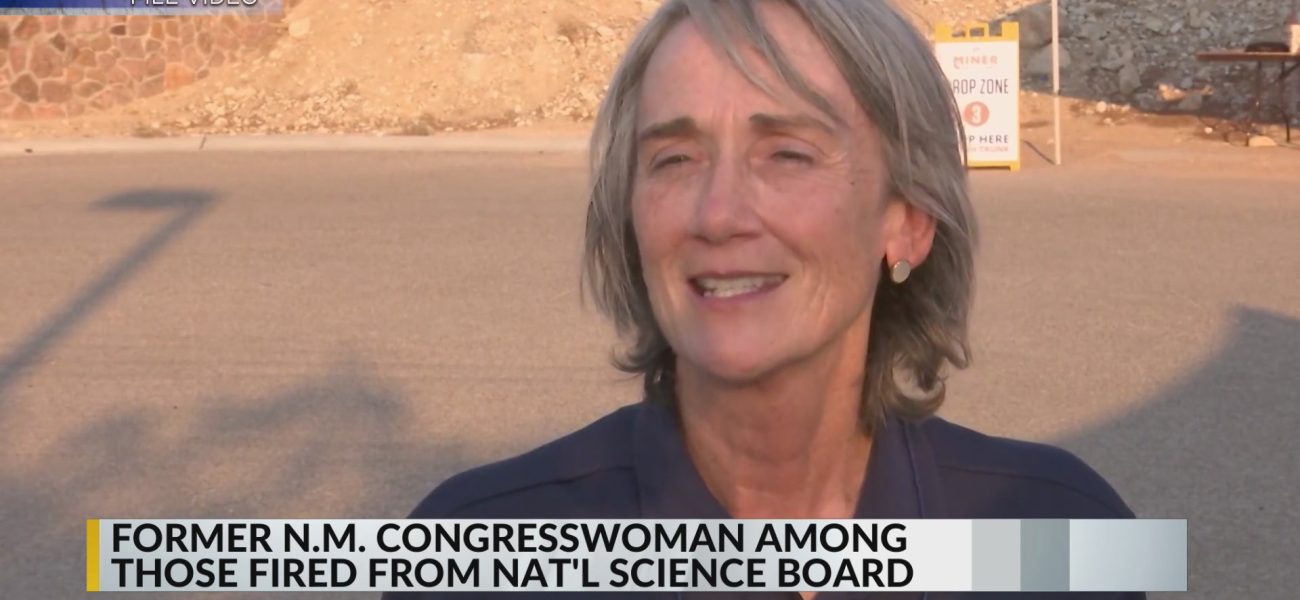
POLICY WIRE — Washington, D.C. — The institutional memory of America’s scientific advisory apparatus took an abrupt, perhaps unprecedented, jolt this week. Not with a whimper, but with a categorical sweep, the Trump administration unceremoniously jettisoned the entire 24-member National Science Board (NSB), a body long revered for its steadfast, non-partisan oversight of the National Science Foundation (NSF).
It wasn’t merely a change in personnel; it was an unequivocal clearing of the decks, a move that transcends routine political appointments and plunges into the murky waters of scientific governance. This board, comprising eminent scientists, engineers, and educators, doesn’t just manage the NSF’s multi-billion dollar budget (which, for context, exceeded $8 billion in its most recent fiscal year, according to NSF public data); it charts the course for America’s fundamental research and STEM education policies. And now, it’s an empty slate, awaiting the administration’s new hand-picked cadre.
And what does this stark action portend? For many within the scientific establishment, it’s a red flag – a conspicuous signal that expertise, if not perfectly aligned with current political currents, can be summarily dismissed. This isn’t how such transitions typically occur; Board members usually serve staggered six-year terms, providing a crucial continuity often missing in the more frenetic political landscape. That continuity, it’s argued, acts as a bulwark against transient ideological whims impacting long-term scientific strategy.
“We’re simply ensuring that our advisory bodies reflect the dynamic vision this administration brings to every facet of federal enterprise,” posited a senior White House official, speaking anonymously due to the sensitivity of the internal deliberations. “New perspectives breed innovation, don’t they? It’s about efficiency and aligning objectives.” A tidy explanation, but one that glosses over the considerable experience suddenly rendered obsolete.
Still, the scientific community isn’t buying the efficiency argument entirely. Dr. Eleanor Vance, former president of the American Association for the Advancement of Science, shot back with a pointed critique. “This isn’t about fresh perspectives; it’s about systematically dismantling independent expertise,” Vance contended in an email statement. “It’s a disquieting precedent for the future of evidence-based policymaking — a move that risks turning scientific guidance into a political echo chamber.” She’s got a point: the NSB is meant to be a bulwark, not a rubber stamp.
Behind the headlines, there’s a palpable anxiety among researchers. When political motivations appear to supersede scientific merit in the appointment of oversight bodies, it casts a long shadow over the objectivity of federally funded research. It makes one wonder: what kind of science will be prioritized, — and which will be deprioritized? What research avenues might abruptly close, — and what new, perhaps less universally supported, ones might open?
📄 POLICY WIRE WHITEPAPER PUBLISHED: PAKISTAN'S NATIONAL SECURITY POLICY PRIORITIES
👉 READ BY CLICKING HEREFor nations beyond America’s borders, particularly those in the Global South, this administrative upheaval carries its own set of ramifications. Consider Pakistan, for instance, a country grappling with monumental challenges from climate change to public health infrastructure. Pakistani scientists often collaborate with American counterparts, benefitting from NSF-funded grants — and initiatives. A sudden, politically-driven shift in U.S. scientific priorities could disrupt these vital partnerships, delaying critical research or even diverting funds from shared concerns. It’s not just about D.C.; it’s about the entire web of global scientific endeavor.
And it’s not just about what might be lost. There’s also the subtle, yet potent, message it sends about the value of scientific consensus versus political will. In an era where disinformation is rampant, undermining established scientific institutions can have long-term societal consequences, both domestically and internationally. It gives pause to scientists worldwide, perhaps even prompting some to reconsider their participation in international projects if the bedrock of American scientific governance appears so vulnerable to political machinations.
What This Means
The wholesale dismissal of the National Science Board signals a deeper, more consequential shift in the relationship between government and scientific enterprise. Politically, it grants the administration unprecedented control over the strategic direction of the NSF, allowing for a rapid reorientation of research priorities that aligns with its specific agenda. This could manifest in increased funding for politically favored sectors (e.g., certain defense-related technologies) and a potential de-emphasis on areas perceived as less aligned (e.g., some facets of environmental science or purely theoretical research). Economically, such a focused, politically driven approach might deliver short-term gains in specific industrial sectors, but it risks eroding the foundational, curiosity-driven research that has historically fueled America’s long-term economic dynamism and technological supremacy (think GPS or the internet — both born from fundamental research). A loss of independent scientific oversight could also make international partners wary, potentially diminishing collaborative research efforts and even impacting the global competitive edge of American science.