


Europe’s Grand Illusion: Defense Splurge Won’t Eclipse NATO, Leaders Insist
POLICY WIRE — Brussels, Belgium — It’s a curious ballet, this European quest for strategic autonomy. On one hand, a surging rhetoric of self-reliance, backed by a veritable arms-buying spree;...

POLICY WIRE — Brussels, Belgium — It’s a curious ballet, this European quest for strategic autonomy. On one hand, a surging rhetoric of self-reliance, backed by a veritable arms-buying spree; on the other, an unwavering, almost desperate, insistence that the venerable North Atlantic Treaty Organization remains the indispensable guarantor of continental security. The continent, it seems, is investing heavily in its own muscle, but won’t quite cut the cord to its American chaperone. Not yet, anyway.
This week, the familiar refrain echoed from Paris to Athens: Europe’s burgeoning defense budgets, swelled by the palpable threat on its eastern flank, are not a clandestine prelude to ditching the transatlantic alliance. Rather, they’re cast as a necessary, albeit belated, contribution to collective security—a way to ease the burden on Washington, perhaps, or to ensure that when America does show up, Europe isn’t merely holding its hat. And don’t they know it’s high time?
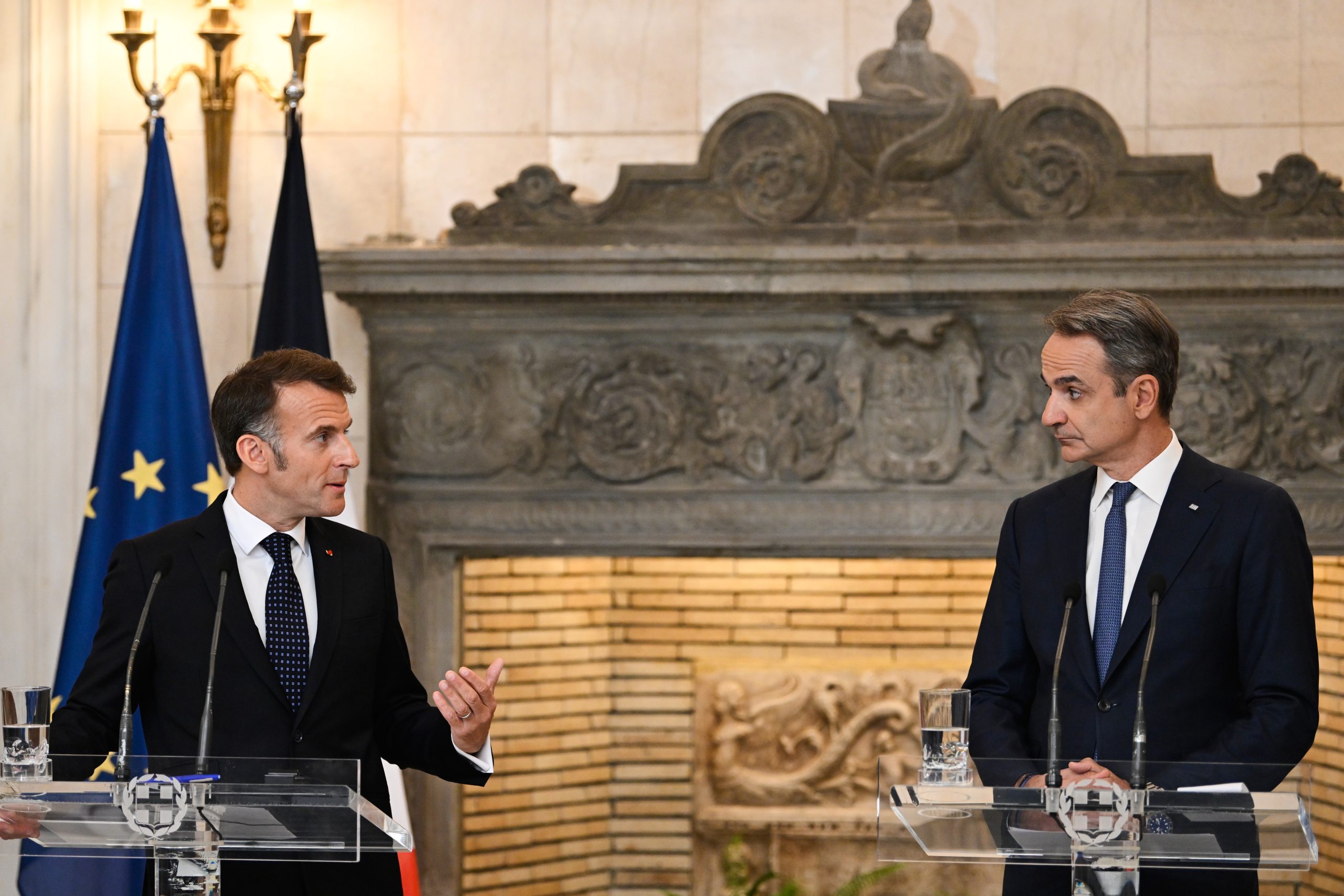
French President Emmanuel Macron, a long-time advocate for a more robust European defense identity, posited the situation with his characteristic blend of ambition and pragmatism. “We’re not building a European defense capability to supplant NATO,” he shot back at a press conference, his tone firm. “We’re doing it to strengthen Europe’s pillar within NATO, to make us a more credible — and effective partner. Anyone suggesting otherwise misunderstands the grave challenges we confront today—and tomorrow.” It’s a delicate tightrope Macron walks, balancing calls for European sovereignty with the immutable geopolitical realities.
But the sentiment isn’t universally embraced as a step towards true European independence. Kyriakos Mitsotakis, Greece’s Prime Minister, articulated a more traditional perspective, reflecting the anxieties of nations on Europe’s periphery. “NATO isn’t just an alliance; it’s the bedrock of our security architecture, irreplaceable for collective defense,” he stated unequivocally. “Our increased investment in defense—and Greece, for its part, has consistently met its 2% GDP target—serves to bolster NATO’s deterrence, not to create some fanciful alternative. We don’t have the luxury of intellectual experiments when faced with very real, very present threats.” His nation, bordering a turbulent Eastern Mediterranean, knows a thing or two about enduring threats.
Behind the headlines, there’s a compelling financial narrative unfolding. According to the latest figures from NATO, European allies and Canada collectively increased their defense spending by an impressive 11% in real terms in 2023, pushing the aggregate investment beyond US$470 billion. This isn’t pocket change; it’s a monumental pivot, spurred by the stark realization that geopolitical stability can erode with frightening speed.
Still, the discourse surrounding this defense splurge often overlooks its global ramifications. While Europe’s gaze is fixed eastward, bolstering its defenses against one particular adversary, what does this concentrated focus mean for its engagement elsewhere? Pakistan, for instance, a nation grappling with its own complex security challenges, observes this European re-armament with a mixture of concern and distant interest. Will a self-absorbed Europe, increasingly funneling resources into its own backyard, become less attentive to the volatile security dynamics of South Asia or the broader Muslim world? It’s a valid question, particularly as Western engagement strategies shift — and resources become finite. Europe’s defensive posture, after all, isn’t just about Europe; it’s about the allocation of global power and attention.
What This Means
At its core, this European defense buildup is a pragmatic, if belated, acknowledgment of two fundamental truths. First, the post-Cold War peace dividend is definitively over. Second, the United States, facing its own domestic priorities and a rising China, isn’t keen on being Europe’s sole, eternal protector. The push isn’t for an autonomous European military that can take on Russia alone—not yet, anyway—but for a more capable Europe that can shoulder its share of the burden, making the collective defense more credible and less reliant on American largesse. Politically, it strengthens the hand of European leaders who’ve long argued for greater strategic independence, even if the ultimate goal remains firmly within the NATO framework. Economically, it represents a massive boon for Europe’s defense industry, stimulating innovation and job creation, but also potentially creating new dependencies and competition within the EU itself. And it’s raising a few eyebrows elsewhere, as nations like Pakistan wonder about the shifting sands of global security partnerships. This isn’t merely about tanks and jets; it’s about the future of transatlantic relations and Europe’s place in a fractured world—a world where alliances are being re-evaluated and regional powers are forced to rethink their own strategic calculus.