

The Unseen Bill: New Mexico’s Wild Rescues Expose Policy Gaps, Volunteerism’s Crucial — and Costly — Edge
POLICY WIRE — ALBUQUERQUE, New Mexico — It wasn’t the breathtaking vista or the crisp mountain air that defined the overnight hours Monday into Tuesday in the Jemez Mountains. Rather, it was...

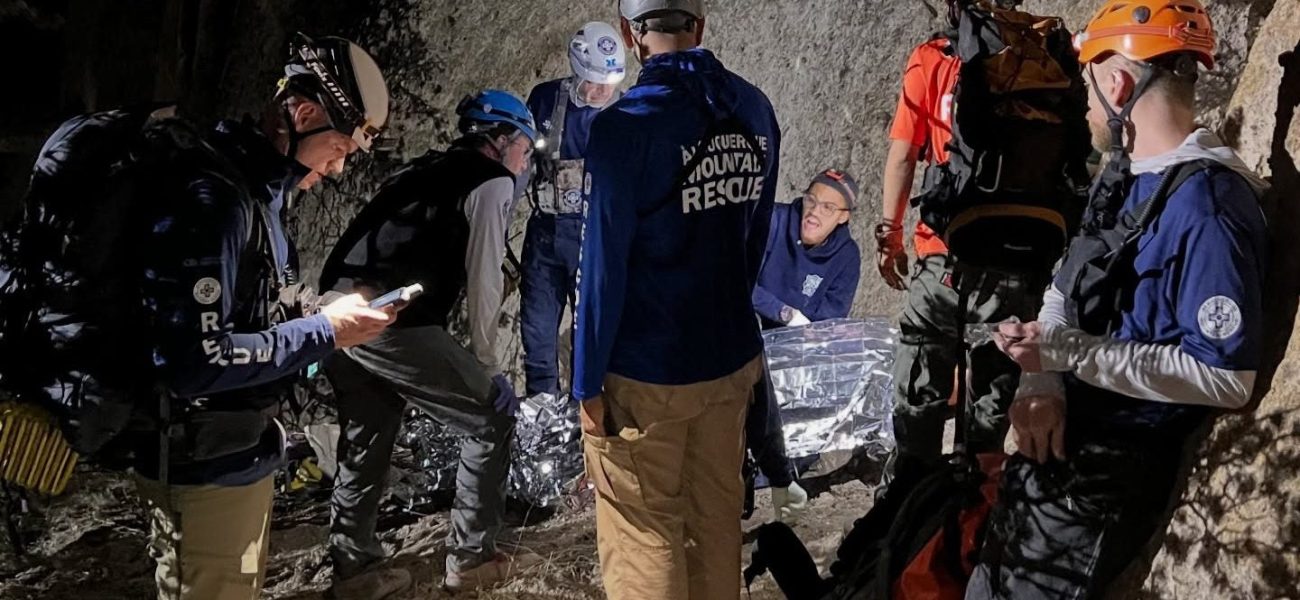
POLICY WIRE — ALBUQUERQUE, New Mexico — It wasn’t the breathtaking vista or the crisp mountain air that defined the overnight hours Monday into Tuesday in the Jemez Mountains. Rather, it was the chilling realization of human fragility against the unforgiving canvas of nature – a precipitous, 100-foot plunge down a sheer cliff face that summoned a complex, multi-agency rescue operation, pulling back the curtain on the quiet, crucial role of volunteerism in America’s public safety infrastructure.
Behind the headlines of a successful extraction lies a deeper policy narrative: who shoulders the immense burden – both human and financial – when adventure veers into existential peril? A lone hiker, whose identity remains guarded, became the focal point of an ordeal that stretched for hours, demanding the specialized expertise of a consortium of agencies, from the New Mexico National Guard to numerous volunteer search and rescue outfits. They’re often the unsung heroes, these dedicated individuals, their training and commitment frequently obscuring the fact that they’re not on a regular payroll, that this isn’t their day job.
Captain Elena Rodriguez of Cibola Search — and Rescue, her voice raspy from the overnight ordeal, didn’t mince words. ‘This wasn’t a walk in the park; it was a testament to sheer grit – both the hiker’s will to survive and our teams’ relentless dedication. We’re talking 100 feet down, in terrain that laughs at four-wheel drive.’ Her assessment underscored the inherent risks and the technical prowess demanded, a unique blend of amateur passion and professional skill that, by most accounts, shouldn’t exist in a modern, well-resourced state.
The terrain itself, described by rescue officials as ‘remote, highly technical,’ isn’t just an inconvenience; it’s a logistical nightmare. It necessitated a hoist evacuation, a precise aerial maneuver executed by a New Mexico National Guard helicopter crew while ground teams administered critical medical aid. The injured party suffered what were vaguely termed ‘severe injuries,’ a euphemism that likely masks debilitating trauma, making their precarious position even more urgent. This reliance on both military assets and civilian volunteers forms a curious, often under-examined, cornerstone of public safety in regions where the wilderness holds sway.
And it’s a costly cornerstone. While the hiker’s condition remains undisclosed, the financial toll of such an operation certainly isn’t negligible. According to data compiled by the National Search and Rescue Association, a single backcountry rescue operation in the U.S. can easily breach the $10,000 mark, sometimes significantly more, depending on the resources required – and that’s often before factoring in the uncompensated labor of hundreds of volunteer hours. It’s a compelling argument against the notion of limitless public services, isn’t it?
The roll call of responding agencies reads like a departmental directory for regional emergency services: Cibola Search and Rescue, Albuquerque Mountain Rescue Council, Jemez Volunteer Fire Department, Los Alamos Search and Rescue, Los Alamos Auxiliary Fire Brigade, Sandoval County Fire Rescue, Sandoval County Sheriff’s Office, Rio Rancho Fire and Rescue, and Rio Grande Basin Technical Rescue. It’s a testament to incredible coordination, yes, but also to a fragmented system that relies heavily on a patchwork of local efforts, a policy gamble that often pays off but leaves little margin for error.
📄 POLICY WIRE WHITEPAPER PUBLISHED: PAKISTAN'S NATIONAL SECURITY POLICY PRIORITIES
👉 READ BY CLICKING HEREStill, Governor Michelle Lujan Grisham’s press secretary, Julian Baca, later issued a statement commending the ‘unwavering courage and coordinated professionalism of all agencies involved.’ He added, ‘New Mexico’s spirit of neighbor helping neighbor, amplified by our National Guard’s formidable capabilities, truly shone through. We’re incredibly proud of our volunteer organizations; they’re an indispensable asset we can’t afford to lose.’ An interesting choice of words, ‘can’t afford to lose,’ perhaps hinting at the fiscal realities underpinning this reliance on unpaid labor.
What This Means
At its core, this incident in the Jemez Mountains illuminates the policy tightrope walked by states like New Mexico, where vast, untamed wilderness attracts tourists and adventurers, yet the infrastructure for their rescue remains largely dependent on volunteer goodwill and the occasional deployment of federal or military assets. The economic implications are clear: without these volunteer cadres, the cost to taxpayers for formalized, paid search and rescue operations would skyrocket, potentially forcing a curtailment of access to wild lands or a significant drain on state budgets.
Politically, it’s a delicate dance. No politician wants to be seen cutting funding for vital emergency services, especially those fueled by community spirit. But the quiet expectation that dedicated citizens will consistently put their lives on hold, and often at risk, for free is a policy decision in itself – one that implicitly shifts the burden of public safety from the state onto its most civic-minded citizens. It’s a pragmatic, if not always equitable, solution. The debate around public versus private responsibility for backcountry recreation, and the associated risks, never truly settles.
And this isn’t a uniquely American predicament. Across the globe, particularly in developing nations with expansive, challenging geographies, the reliance on ad-hoc, often volunteer-driven, emergency response is a profound reality. From the high-altitude rescues in Pakistan’s Karakoram range – where local porters and mountaineers often form the initial, critical response before more formalized (and usually international) teams can mobilize – to disaster relief efforts across South Asia, the model of unpaid, community-based heroism is strikingly similar. They don’t have the luxury of a National Guard Black Hawk often, but their willingness to assist is a shared human constant. It’s a universal policy question: when the wild calls, who answers, — and at what cost? This incident, then, transcends a simple rescue; it’s a microcosm of how bureaucratic bloat and policy rifts inadvertently shape national fortitude through the lives of its volunteers.