


New Mexico’s Red Scourge: 10,000-Acre Inferno Tests Desert State’s Waning Resilience
POLICY WIRE — Quay County, N.M. — It&rsquos a familiar tableau in America’s arid West: the ominous plume on the horizon, the acrid scent of char on the wind, and the grim,...

POLICY WIRE — Quay County, N.M. — It&rsquos a familiar tableau in America’s arid West: the ominous plume on the horizon, the acrid scent of char on the wind, and the grim, rapidly escalating numbers that betray nature’s merciless arithmetic. While residents of Quay County in northeastern New Mexico haven’t received evacuation orders — yet — the sheer velocity of the “Sparks Fire’s” expansion has sent a jolt through a region already accustomed to the creeping encroachment of climate-fueled catastrophe.
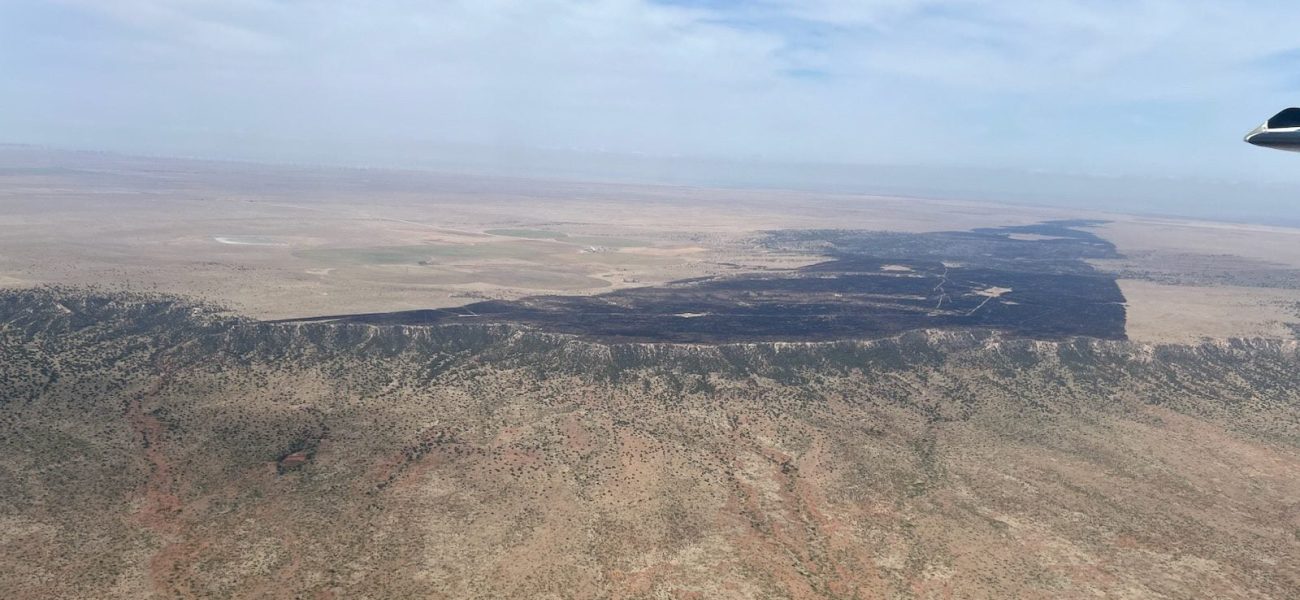
Initially assessed at a formidable 1,500 acres just Tuesday, an aerial estimate — the kind of provisional data that often precedes worse news — now pegs the conflagration at an astonishing 10,000 acres. That’s a leap, not a climb, in scale, painting a stark portrait of a landscape increasingly vulnerable to the caprices of dry lightning or, perhaps, a carelessly discarded ember. Crews, a tireless battalion against the crimson tide, are still awaiting the moment it’s safe enough to tread the scorched earth, to map its precise, devastating footprint. Only then will the true dimensions of this latest environmental depredation become agonizingly clear.
But there’s a brief, if fragile, reprieve. Increased humidity — a momentary indulgence from the parched air — has helped to temper the fire’s ravenous appetite, alongside a welcome decrease in overall activity. Firefighters have capitalized on this fleeting advantage, diligently carving out fire lines along the blaze’s ragged perimeter, a defensive posture aimed at safeguarding the homes that remain precariously in its path. They’re not just battling flames; they’re shielding lives, properties, and the collective memory of what once stood.
Still, the current assessment offers little comfort. As of Wednesday, the fire — exhibiting a “creeping and smoldering” disposition — persists in threatening those homes. And its containment? A dispiriting 0 percent. It’s a number that speaks volumes about the challenge confronting the 95 dedicated personnel — bolstered by an aerial assault of water and retardant — who are committed to a full suppression strategy. They’re not just fighting a fire; they’re contending with an existential threat, a visceral manifestation of a changing climate.
“We’re seeing an intensity that doesn’t just flare up; it explodes, often with minimal provocation,” asserted Incident Commander Elena Rodriguez, her voice raspy from days spent inhaling smoke and issuing commands. “Our crews are operating on sheer grit, securing what they can, but this isn’t a sprint; it’s a marathon across a tinderbox, and the finish line keeps moving.” Her words cut through the usual bureaucratic calm, revealing the brutal realities on the ground.
The Sparks Fire, which first sparked into existence along Highway 156 near mile marker 41, north of Hassell, on Tuesday afternoon, remains an enigma in origin. Investigators are sifting through the embers, but the cause — be it human oversight or nature’s raw power — is currently a blank slate. Its rapid ascent, however, underscores a broader vulnerability that extends far beyond New Mexico’s dusty horizons.
A meteorological forecast offers a faint beacon of hope: temperatures hovering around 76 degrees, 51% humidity, and east winds that promise to shift southward. Critically, there’s an increasing chance of rain over the next two days — a potential deluge that could either douse the inferno or, paradoxically, complicate containment efforts by creating dangerous flash flood conditions in burned areas. It’s a delicate balance, a gamble against the elements.
“Every fire season presents its unique — and often terrifying — narrative, but the escalating frequency and scale we’re witnessing now demands more than just responsive action,” contended State Senator Gabriela Marquez, a vocal proponent of increased funding for wildfire mitigation. “We’re asking our first responders to do more with resources constantly stretched thin, against odds that seem to grow exponentially each year. It’s a statewide crisis, demanding a unified, proactive front.” Her frustration wasn’t subtle.
📄 POLICY WIRE WHITEPAPER PUBLISHED: PAKISTAN'S NATIONAL SECURITY POLICY PRIORITIES
👉 READ BY CLICKING HEREIndeed, New Mexico, like much of the American Southwest, has been gripped by persistent drought conditions for over two decades. According to the U.S. Drought Monitor, as of May 2024, approximately 95% of the state was experiencing some level of drought, with significant portions in “severe” or “extreme” categories. This isn’t just dry land; it’s a powder keg, waiting for a spark.
And it’s a narrative that resonates globally. From the scorching landscapes of the Iberian Peninsula to the arid plains of South Asia — consider Pakistan, a nation grappling with its own relentless environmental challenges, from devastating floods to intensifying heatwaves that bake its vast, often resource-poor regions — the struggle against climate-driven disasters is a shared, often under-reported, global plight. The logistics of managing such widespread destruction, of protecting scattered rural populations, and of coordinating an effective response often mirror the challenges faced by both the seasoned fire crews in Quay County and their counterparts halfway across the world. It’s a sobering testament to humanity’s precarious perch on a warming planet.
What This Means
At its core, the Sparks Fire, still churning through New Mexico’s landscape, underscores a pressing — and politically charged — confluence of environmental policy failures and resource allocation conundrums. Economically, the immediate impact manifests in the staggering cost of fire suppression, which, according to federal figures, can easily run into millions of dollars per day for large-scale incidents. Property damage, agricultural losses, and the long-term ecological scarring will exact a further, steep toll on Quay County’s already fragile rural economy. It’s not just trees burning; it’s livelihoods.
Politically, incidents like this inevitably ignite debates over state and federal funding for forestry management, wildfire prevention initiatives, and the broader climate change agenda. Governor Michelle Lujan Grisham’s administration will surely face intensified scrutiny — and pressure — regarding its preparedness and response mechanisms. Still, the underlying truth is stark: without significant, sustained investment in both mitigation and adaptation strategies, these “new normal” infernos will continue to strain emergency services and exacerbate political divisions, pushing communities to their absolute brink. The conversation isn’t just about fighting fires; it’s about redefining our relationship with a changing planet. The resilience of these communities — and the policy frameworks meant to support them — are being tested with an urgency few can ignore.
It’s a grim dance — humans against an increasingly volatile environment — and for the residents of Quay County, the music has just started, a discordant symphony of wind, crackle, and the distant drone of air support. They’re waiting for the rain, but they’re also holding their breath, knowing the desert always demands its due.