


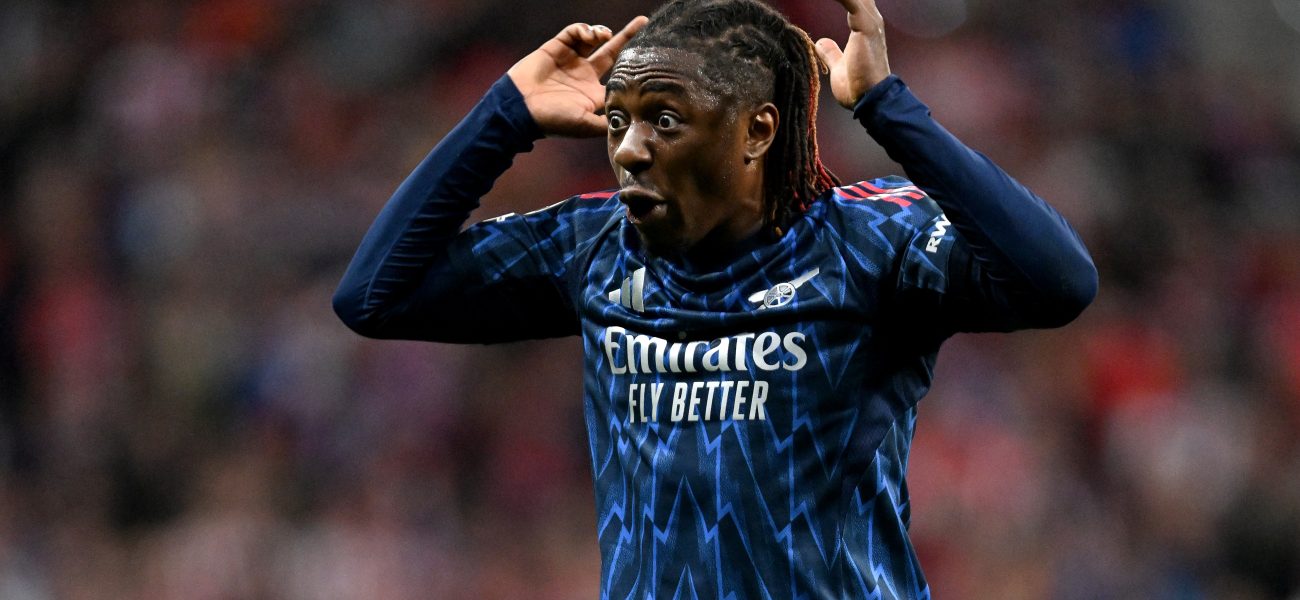
Whistleblower’s Dilemma: UEFA’s Integrity Under Scrutiny After Fiery Madrid Semifinal
POLICY WIRE — Madrid, Spain — It wasn’t the tactical masterclass or the dazzling individual brilliance that dominated post-match conversations; rather, it was the whistle. A contentious UEFA...

POLICY WIRE — Madrid, Spain — It wasn’t the tactical masterclass or the dazzling individual brilliance that dominated post-match conversations; rather, it was the whistle. A contentious UEFA Champions League semifinal first leg between Atlético Madrid and Arsenal FC, culminating in a 1-1 draw, has ignited a fierce debate about the very bedrock of European football’s integrity, throwing a harsh spotlight onto the arbitral decisions that shaped its outcome.
At its core, this wasn’t just a game. It was a crucible for institutional trust, watched by millions worldwide, many of whom now question the impartiality of the governing body’s adjudicators. Arsenal, initially ascendant, saw a seemingly legitimate lead and a subsequent penalty overturned by VAR, all while conceding a penalty that many observers—even those beyond the partisan fray—deemed dubious. This isn’t just about a scoreline; it’s about the perceived fairness of the competition itself, a sentiment that resonates deeply, particularly in regions where faith in governing bodies is already a precarious commodity.
The Gunners, for a substantial portion of the fixture at the Metropolitano Stadium, appeared poised to seize a decisive advantage. Viktor Gyokeres, the Swedish striker, converted a penalty with his characteristic ferocity, momentarily silencing the raucous home crowd. But the narrative quickly veered into the theatrical. The second half became an exercise in exasperation for the London outfit, as Dutch referee Danny Makkelie, widely considered one of Europe’s premier officials, seemed to lose his grip on the proceedings. A penalty awarded to Atlético Madrid for a soft challenge on Ben White was merely the prelude to a far more consequential decision: the baffling overturn of a second Arsenal penalty, awarded on the pitch after a clear foul in the box. The replays, shown repeatedly, only exacerbated the collective chagrin. And Diego Simeone, Atlético’s manager, somehow managed to escape sanction despite his usual touchline theatrics.
Arsenal manager Mikel Arteta, typically composed, didn’t mince words after the final whistle. He simply couldn’t. “It’s unfathomable,” Arteta shot back when pressed on the refereeing. “We play in an arena of immense pressure, with extraordinary stakes, and decisions of this magnitude simply must be consistent. This wasn’t consistent; it wasn’t even intelligible. It impacts everything—our preparation, our financial projections, the morale of everyone involved.” He wasn’t wrong. The Champions League final itself is a gargantuan economic engine, with UEFA projecting revenue exceeding €4.5 billion for the 2024-27 cycle, a substantial portion of which derives from broadcasting rights and prize money. Beyond the Scorecard: How Bureaucratic Bloat and Policy Rifts Undermine National Fortitude is a title that comes to mind when considering such systemic frailties.
But the ramifications extend far beyond the immediate financial hit or the emotional sting for a single club. This perceived miscarriage of justice echoes across continents, particularly in football-mad regions like Pakistan and the broader Muslim world, where European football is consumed with an almost religious fervour. Fans there, accustomed to scrutinizing institutional conduct in their own geopolitical landscapes, view such controversial decisions through a similar lens of skepticism. It’s not just a game; it’s a global phenomenon, and perceived bias, whether real or imagined, can erode trust in a flash.
📄 POLICY WIRE WHITEPAPER PUBLISHED: PAKISTAN'S NATIONAL SECURITY POLICY PRIORITIES
👉 READ BY CLICKING HERE“We understand the immense pressure on our officials,” offered a UEFA spokesperson, who declined to be named but spoke on background, “and the human element will always be part of the game. Our review processes are robust, designed to uphold the highest standards of fairness, and we’re constantly striving for improvements.” Still, these diplomatic assurances often ring hollow to those who witness perceived inconsistencies play out in real-time, under the glaring global spotlight.
What This Means
This incident, far from being an isolated controversy, underscores a growing chasm between the aspiration of absolute fairness in elite sports and the inherent fallibility of human (and technological) judgment. For UEFA, the governing body, it precipitates a fresh crisis of confidence, fueling calls for increased transparency in VAR protocols and potentially, a complete overhaul of referee training and accountability mechanisms. The economic implications are considerable: a Champions League final appearance alone can generate tens of millions in revenue, affecting everything from sponsorship deals to player transfer budgets. When those fortunes appear to hinge on arbitrary decisions, the financial ecosystem of the sport itself becomes precarious. And let’s not forget the intangible cost: the erosion of fan loyalty and global viewership, particularly in burgeoning markets across Asia and Africa where the sport’s popularity is tied to its perceived integrity. It’s a delicate balance, this dance between sport — and policy, one that UEFA can’t afford to misstep.