


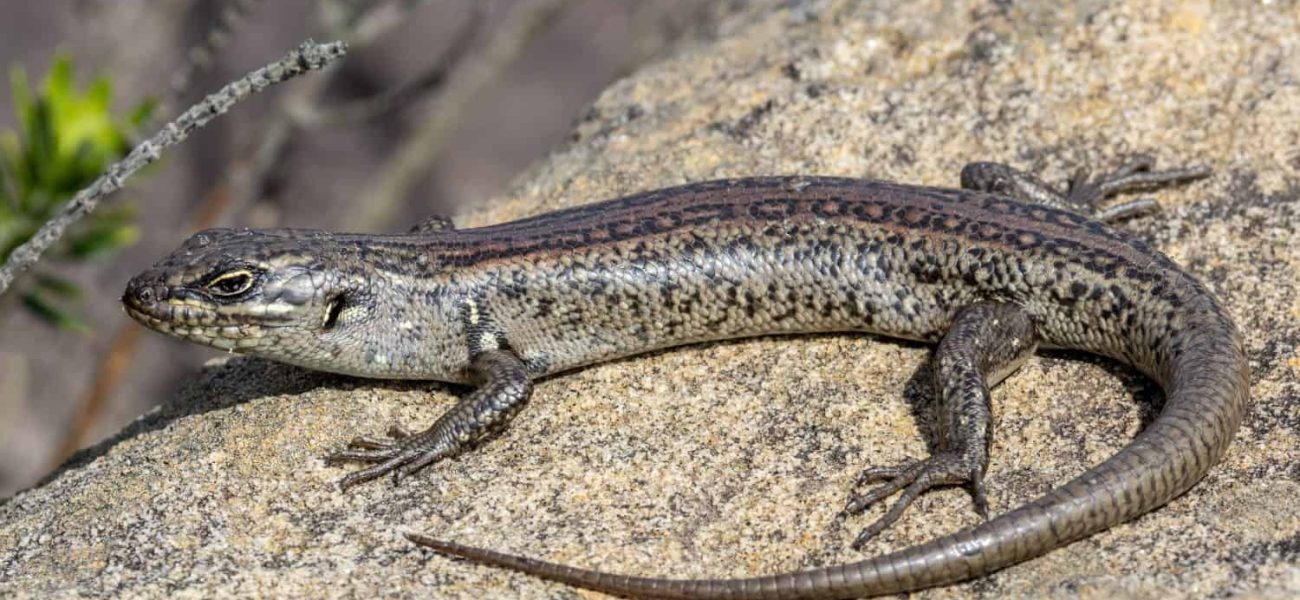
Australia’s Ghost Skink: Decades of Misidentification Shroud a Species’ Silent Demise
POLICY WIRE — Canberra, Australia — It wasn’t the roar of a bulldozer or the crack of a poacher’s rifle that pushed Australia’s rarest reptile to the precipice of oblivion. No, it...

POLICY WIRE — Canberra, Australia — It wasn’t the roar of a bulldozer or the crack of a poacher’s rifle that pushed Australia’s rarest reptile to the precipice of oblivion. No, it was a far more insidious, utterly bureaucratic brand of silence: 25 years of mistaken identity. This protracted taxonomic imbroglio — a fundamental scientific oversight that spanned decades and ultimately sealed the fate of a singular, serpentine creature — wasn’t merely an academic footnote but a stark, harrowing indictment of global conservation priorities, especially in an era of accelerating biodiversity loss.
For a quarter-century, a reclusive skink, let’s call it the Nullarbor Burrower, darted through its shrinking underground world, living under the wrong scientific name, hence the wrong conservation status. It’s an administrative oversight so profound it beggars belief. Experts now concede that what they thought was a common species was, in fact, an entirely distinct and critically endangered one. And it’s almost gone. This isn’t just about a lizard; it’s about the systemic cracks in how we perceive, protect, and — ultimately — lose the intricate tapestry of life on this planet.
Still, the implications reach far beyond Australia’s sun-baked plains. They echo in every corner where biodiversity struggles against human indifference — and institutional inertia. Dr. Eleanor Vance, Director of the Australian Wildlife Conservancy, didn’t mince words. “This isn’t just a taxonomic oopsie; it’s a catastrophic failure of diligence, a testament to how easily a species can vanish while we’re arguing over its paperwork,” she shot back, her voice tight with exasperation. “We had eyes on it, ostensibly, but lacked the fundamental understanding to protect it. It’s a tragedy born of ignorance, not malice, which somehow feels worse.”
The Nullarbor Burrower, a creature of arid lands and cryptic habits, thrives (or rather, once thrived) in specific, fragile ecosystems. Its misclassification meant it wasn’t afforded the protective measures — habitat preservation, targeted funding, specialized research — that its true rarity demanded. While other species garnered headlines and political will, this unique reptile was effectively ghosted by the very systems designed to save it. And now, the true scale of its peril is emerging, stark — and undeniable. Conservationists are now scrambling to implement emergency protections, a desperate triage operation for a species already teetering on the brink.
At its core, this Australian blunder serves as a potent parable for nations grappling with their own environmental tightropes. Consider the challenges facing biodiversity in South Asia, where rich ecosystems are often undervalued or inadequately cataloged. Pakistan, for instance, struggles with similar issues concerning species like the Indus River Dolphin or the elusive snow leopard, where comprehensive surveys and targeted conservation strategies are often hampered by resource limitations or a lack of granular scientific data. It’s a shared vulnerability: without precise identification and rigorous monitoring, even well-intentioned policies can miss their mark, allowing precious unique life to simply melt away. Germany’s Green Paradox, for example, illustrates how bureaucratic hurdles can stymie even the most ambitious environmental goals, albeit on a different scale.
The global statistics paint an even grimmer picture. A 2019 UN report by the Intergovernmental Science-Policy Platform on Biodiversity and Ecosystem Services (IPBES) revealed that up to one million species are at risk of extinction globally, many within decades, primarily due to human activity. But how many of these are slipping away uncounted, uncataloged, or simply misidentified, like our unfortunate Burrower? It’s a sobering thought, wouldn’t you say?
📄 POLICY WIRE WHITEPAPER PUBLISHED: PAKISTAN'S NATIONAL SECURITY POLICY PRIORITIES
👉 READ BY CLICKING HERETanya Plibersek, Australia’s Minister for the Environment and Water, acknowledged the gravity of the situation in a recent press conference. “We’re confronting a harsh truth here. Our past methods weren’t robust enough. Now, it’s about a desperate triage operation to safeguard what little remains, and critically, to overhaul our systems so this never happens again,” she declared, her tone conveying a mixture of regret and resolve. It’s a promise that rings hollow for the Nullarbor Burrower, but perhaps offers a glimmer of hope for other, still-undiscovered rarities.
Behind the headlines, this saga underscores a profound deficit in global ecological literacy and the urgent need for robust, dynamic biodiversity mapping. It’s not enough to simply *know* a species exists; we’ve got to know *what* it’s, *where* it’s, and *how* to protect its unique niche. Otherwise, we’re just managing a quiet, irreversible erosion of our shared natural heritage.
What This Means
This Australian debacle isn’t an isolated incident; it’s a bellwether for systemic failures in environmental governance worldwide. Politically, it forces governments to confront uncomfortable truths about the adequacy of their conservation frameworks and scientific funding. The embarrassment of misidentifying a critically endangered species for decades will likely spur greater investment in taxonomic research and species monitoring programs, particularly in regions where biodiversity is high but resources are scarce. Economically, the loss of any species represents a depletion of natural capital, impacting ecosystem services, potential bioprospecting, and ecotourism. There’s an implicit cost to inaction — and oversight; it’s a cost that often isn’t calculated until it’s too late. it highlights the intricate, often overlooked connection between scientific diligence — and effective policy. Without precise scientific data, policy remains a blunt instrument, incapable of protecting the most vulnerable elements of our natural world. It underscores that conservation isn’t just about grand declarations; it’s about painstaking detail, continuous reassessment, and an unwavering commitment to understanding what we’re trying to save. Colombia’s bizarre policy war over Escobar’s hippos is another example of unexpected biodiversity challenges demanding urgent, precise policy responses.