

Netanyahu’s ‘Ceasefire’ Charade: A Fragile Pause Masks Persistent Hezbollah Hostility
POLICY WIRE — Jerusalem, Israel — The quiet along Israel’s northern frontier is, for now, merely the sound of an exhale. A fragile, almost imperceptible calm has descended, but don’t let...

POLICY WIRE — Jerusalem, Israel — The quiet along Israel’s northern frontier is, for now, merely the sound of an exhale. A fragile, almost imperceptible calm has descended, but don’t let it fool you; it’s a calm punctuated by the grim understanding that beneath this temporary reprieve, the engines of conflict haven’t just been idled, they’re merely ticking over. So, when Prime Minister Benjamin Netanyahu insists the fight against Hezbollah isn’t over, even as an uneasy truce with Gaza offers a fleeting moment of quietude, it’s less a stark warning and more a candid admission of an ongoing reality — a war without end, or at least, without a declared cessation.
It’s a bizarre dance, isn’t it? The international community scrambles for de-escalation, while a combatant nation’s leader reminds everyone that, actually, the real battle persists elsewhere. This isn’t just about tactical posturing; it’s about an inherent, deeply rooted geopolitical friction that a few days of silent borders can’t possibly erase. Behind the headlines, the operative word isn’t ‘ceasefire’ for Israel’s northern front; it’s ‘pause,’ a very distinct and altogether more ominous descriptor.
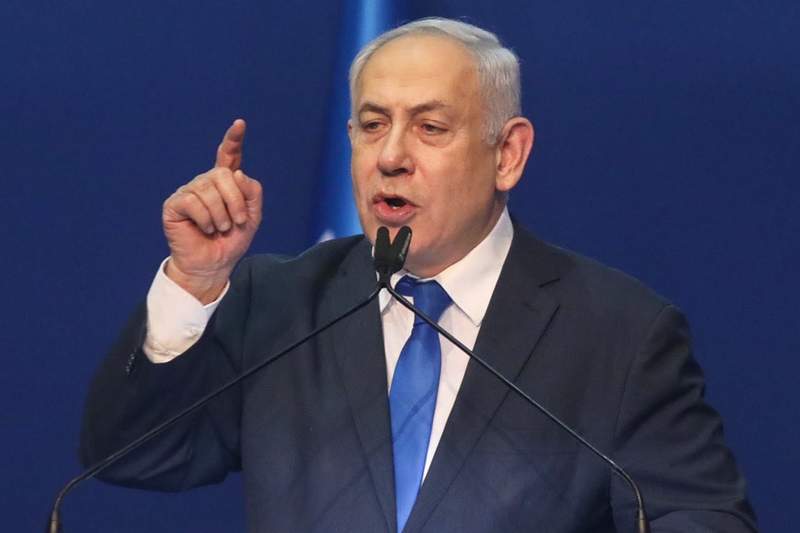
And Netanyahu, ever the pragmatist with a penchant for grim declarations, made his position unmistakably clear. “Let no one misunderstand this temporary lull for capitulation,” he shot back during a press conference, his jaw set. “Hezbollah’s presence on our border remains an existential threat, and Israel reserves every right to defend its citizens. The war against terror, you see, isn’t concluded with a mere cessation of hostilities.” It’s a statement designed to reassure a domestic audience, yes, but also to signal to regional players that strategic objectives remain unchanged, dormant perhaps, but far from abandoned.
Still, the notion of a ‘ceasefire’ rings hollow to the nearly 80,000 Israeli citizens evacuated from northern communities, mirrored by approximately 90,000 Lebanese displaced from their southern villages, according to figures from the UN Office for the Coordination of Humanitarian Affairs (OCHA). These are not statistics; they’re lives uprooted, families living in limbo, testaments to a conflict that has already exacted a devastating human toll, despite its ‘unofficial’ status. Their return hinges not on official declarations, but on the perceived eradication of immediate threats. A tall order, one might say.
Across the border, the sentiment mirrors a defiance, a readiness to respond. “The resistance has demonstrated its resolve,” affirmed a senior Lebanese official, speaking anonymously due to the sensitive nature of cross-border relations. “Any further provocations from the Zionist entity will be met with an appropriate — and decisive response. Our people remain vigilant, and our sovereignty, non-negotiable.” This sort of rhetorical volleying is standard, of course, but it underscores the entrenched positions that make genuine, lasting peace seem a distant mirage.
The strategic obliteration of alleged Hezbollah infrastructure, including command centers and weapons depots, continues, sometimes under the guise of ‘pre-emptive strikes’ or ‘defensive actions.’ For months now, the region has seen an escalation that falls just shy of full-blown war, a slow-burning fuse that threatens to ignite at any moment. And it’s not just physical infrastructure; the psychological warfare is relentless, a constant reminder of proximity to danger, the kind that reshapes daily life in border towns.
At its core, this dynamic between Israel and Hezbollah isn’t just a localized spat; it’s a vital artery in the complex circulatory system of Middle Eastern geopolitics. And the tremors from this unstable fault line ripple outward, often affecting nations far removed from the immediate combat zone. Consider Pakistan, for instance, a nation grappling with its own internal security challenges — and economic precarity. The pervasive instability across the broader Muslim world, stoked by prolonged conflicts like this, fuels narratives of global injustice and can exacerbate internal extremist sentiments, creating fertile ground for groups like Tehrik-i-Taliban Pakistan (TTP) to recruit or consolidate power, as seen in the shadows over Kunar. It’s a delicate balance, where regional conflicts don’t just stay regional.
For the average Pakistani or Bangladeshi citizen, the immediate impact might manifest in spiking oil prices or disruptions to global trade routes – essential considerations for import-dependent economies. But it’s also about a shared sense of identity and solidarity within the Muslim world, where perceived aggressions against one Muslim population often resonate deeply and can influence diplomatic stances or public opinion elsewhere (even thousands of miles away).
What This Means
The Prime Minister’s declaration isn’t just rhetoric; it’s a strategic forecast. It signals that Israel views Hezbollah as a distinct, unaddressed threat, separate from the conflict in Gaza, suggesting a willingness to operate independently of other ceasefires. This approach indicates a protracted period of low-intensity conflict, punctuated by potentially aggressive military actions, regardless of broader regional pauses. Economically, this sustained tension ensures a continuous drain on both Israeli and Lebanese resources, perpetuating instability that discourages foreign investment and tourism in a region desperately needing both. For the broader Middle East and South Asia, this protracted conflict contributes to a volatile global energy market and further polarizes political narratives, making diplomatic resolutions to other regional issues even more arduous. It’s a geopolitical stalemate, frankly, one that keeps the entire eastern Mediterranean on a hair trigger, perpetually. The implications are enormous, extending from defense budgets in Tel Aviv to the price of petrol in Karachi, and it shows no real sign of abating, despite any temporary calm. The echoes of rupture continue to reverberate, reshaping borders and perceptions alike.