

Germany’s Green Paradox: Bureaucracy Battles Ambition in a Climate Crucible
POLICY WIRE — Berlin, Germany — The continent’s economic engine, famed for its meticulous engineering and orderly processes, finds itself surprisingly entangled in a Gordian knot of its own making....

POLICY WIRE — Berlin, Germany — The continent’s economic engine, famed for its meticulous engineering and orderly processes, finds itself surprisingly entangled in a Gordian knot of its own making. Germany, after all, isn’t merely attempting a modest energy transition; it’s embarking on nothing less than a wholesale reinvention of its industrial metabolism, aiming for 80% renewable electricity by 2030. Yet, this monumental undertaking—a nation already grappling with a quiet contraction—is proceeding not with the brisk efficiency one might expect, but with a palpable sense of urgent, sometimes exasperated, lurching.
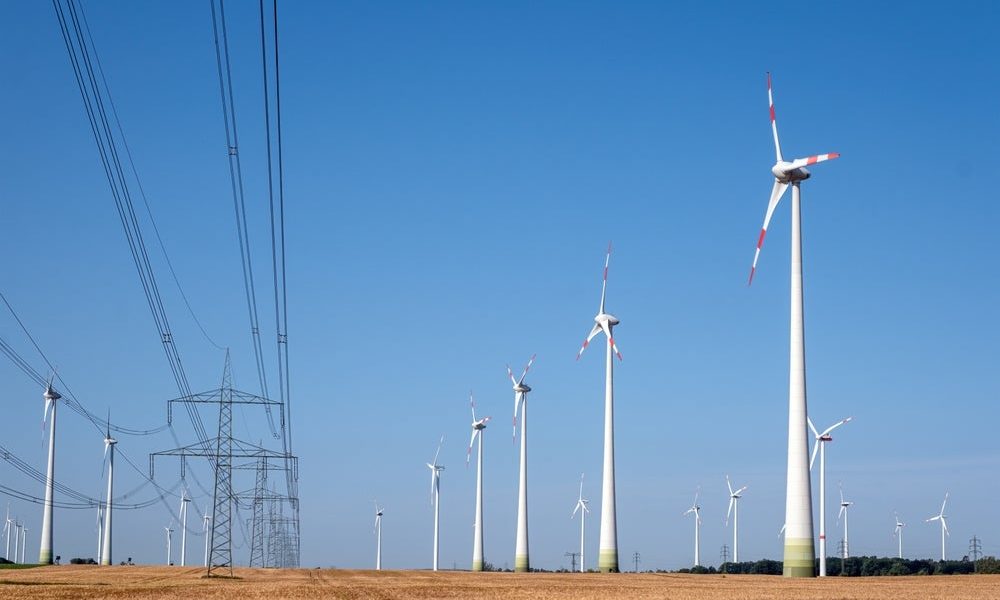
It’s not for lack of trying, nor investment. Berlin’s commitment is absolute, an almost ideological imperative solidified by the war in Ukraine and the abrupt severance from Russian gas. But the devil, as they say, lives in the permitting processes. Imagine: a single onshore wind turbine, a towering symbol of decarbonization, can require upwards of five years to gain all necessary regulatory approvals. Five years for a singular structure. This bureaucratic inertia, a tangled web of environmental assessments, local objections, and federal guidelines, has become the primary impediment, far more so than technological hurdles or even capital availability.
“We’re building a new energy infrastructure on the fly, transforming a system built over a century,” shot back Dr. Anja Müller, State Secretary for Economic Affairs — and Climate Action, in a recent parliamentary debate. “It won’t be seamless. There will be bumps—significant ones. But the alternative, inaction, is simply unimaginable for our future, for our children.” Her exasperation was thinly veiled. That’s the political will driving this, but bureaucracy often trumps even the most fervent political declarations. Still, the numbers tell a story of progress, albeit a hard-won one: In 2023, renewable energy sources accounted for approximately 56% of Germany’s gross electricity consumption, according to preliminary data from the Fraunhofer Institute for Solar Energy Systems, a record high. The trajectory is clear; the speed is the concern.
But the challenges aren’t confined to paperwork. Germany’s aging grid, designed for centralized power plants, strains under the decentralized influx of solar — and wind. Expansion is excruciatingly slow, hampered by — you guessed it — lengthy permitting for new power lines and the perennial “not in my backyard” (NIMBY) syndrome. Communities across the country, while broadly supportive of renewables, often balk at the sight of new transmission corridors or turbine fields just beyond their property lines. It’s an understandable human impulse, isn’t it?
And what of the global implications? Nations like Pakistan, wrestling with chronic energy shortages, exploding populations, and extreme climate vulnerability, watch Germany’s grand experiment with a mixture of hope and trepidation. They see a developed nation, with immense financial — and technological muscle, struggling to scale green infrastructure. This European dilemma serves as a stark, if unadvertised, case study for the developing world, highlighting both the imperative for transition and the agonizing complexities involved. If Germany, with all its advantages, finds the path so arduous, what hope for Karachi or Lahore?
📄 POLICY WIRE WHITEPAPER PUBLISHED: PAKISTAN'S NATIONAL SECURITY POLICY PRIORITIES
👉 READ BY CLICKING HEREKlaus Richter, CEO of the German Industry Association (BDI), didn’t mince words in a private briefing to journalists last month. “Our industries need reliable, affordable power, yesterday. While we applaud the green ambition, the current pace of grid expansion and the volatility of energy prices due to intermittency are genuinely concerning. We can’t simply wish away physics or economics.” He’s got a point. For an industrial powerhouse, energy security isn’t just about geopolitics; it’s about competitive advantage, about keeping those factories humming. And the Red Sea echoes only underscore how global stability—or the lack thereof—can derail the best-laid plans for domestic energy independence.
What This Means
The German renewable energy saga isn’t just a domestic policy issue; it’s a litmus test for the entire developed world’s climate ambitions. Politically, the current coalition government, particularly the Greens, has staked its credibility on this transition. Failure to meet targets will undoubtedly fuel populist narratives about the impracticality and cost of climate action, potentially destabilizing future European climate policy. Economically, the stakes are immense. Germany’s industrial base, already facing stiff international competition, needs competitively priced, stable energy. If the transition results in sustained high energy costs or frequent supply interruptions, it could accelerate deindustrialization, severely impacting the nation’s long-term prosperity and global standing.
The lessons gleaned from Berlin’s green paradox resonate far beyond its borders. For emerging economies, particularly in the Global South, Germany’s travails offer a sobering, yet vital, blueprint of what to expect—and what to avoid—when attempting to overhaul national energy systems. It’s a compelling narrative of ambition clashing with the gritty reality of engineering, bureaucracy, — and human nature. The race against the clock isn’t merely about carbon targets; it’s about whether a modern industrial nation can fundamentally re-engineer itself without sacrificing its economic soul.