


Kremlin-Aligned Contractors Retreat from Mali City as Sahel’s Insurgency Deepens
POLICY WIRE — Bamako, Mali — A quiet, tactical recalibration, or perhaps a more telling retreat? That’s the question lingering over Mali’s dusty landscapes as reports surface of Kremlin-aligned...

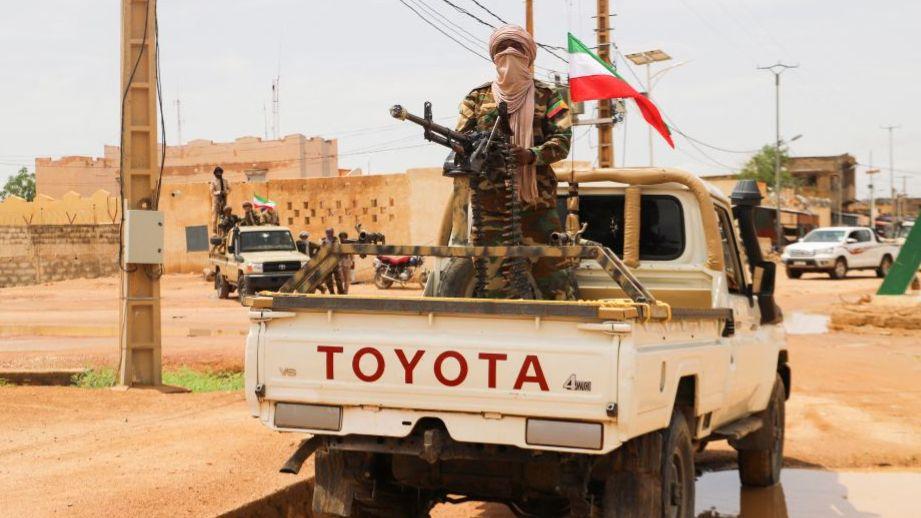
POLICY WIRE — Bamako, Mali — A quiet, tactical recalibration, or perhaps a more telling retreat? That’s the question lingering over Mali’s dusty landscapes as reports surface of Kremlin-aligned contractors — long a controversial fixture in the nation’s counter-insurgency efforts — decamping from a strategic northern city after enduring a brutal spate of attacks. It’s a development that, while presented as routine by Bamako, unmistakably peels back the veneer of Russian efficacy in the volatile Sahel.
For months, the presence of these opaque mercenary units, widely understood to be offshoots or successors to the Wagner Group, has been a linchpin of Mali’s junta-led government’s security strategy. They were meant to be the decisive edge against a relentless Islamist insurgency that has metastasized across the region. But their reported withdrawal from Gao — a pivotal hub in Mali’s restive north — after what multiple sources describe as significant, sustained pressure from militant groups, suggests a more complex, less triumphant narrative unfolding on the ground. It’s a stark illustration of the brutal realities confronting any external force attempting to pacify a deeply entrenched, ideologically driven conflict.
“This redeployment is a strategic calibration, not a retreat,” shot back Colonel Assimi Goïta, Mali’s transitional president, in a recent address, his tone unwavering despite the underlying implications. “Our national forces, alongside our chosen partners, remain unequivocally committed to securing every inch of Malian territory.” His words, however, offer little solace to residents of Gao, who’ve watched the cycle of violence persist, seemingly indifferent to changes in foreign military presence.
Still, the optics aren’t great for Moscow’s burgeoning influence campaign in Africa. The Kremlin has consistently painted its military assistance as a reliable, no-strings-attached alternative to Western partnerships, often highlighting the perceived failures of previous French and UN missions. But this reported pull-back, even if temporary, chips away at that carefully constructed narrative. It’s not just about a city; it’s about perceived invincibility, a crucial psychological asset in these kinds of engagements. The Sahel, it seems, remains a graveyard for grand strategic ambitions.
“This withdrawal underscores the fundamental flaw in relying on mercenary forces for national security,” observed Catherine Colonna, France’s former Foreign Minister, offering a rare public comment on the shifting dynamics. “It’s a short-sighted, transactional approach that often exacerbates instability rather than solving it. You can’t contract out true state-building — and security.” She didn’t mince words.
And indeed, the broader picture is grim. A 2023 United Nations report on the Sahel indicated a staggering 27% increase in terrorist attacks across the region compared to the previous year, highlighting an escalating instability that seems to defy all countermeasures. This isn’t just a Malian problem; it’s a regional catastrophe, with spillover effects into neighboring Burkina Faso, Niger, and beyond. The human cost, it’s worth noting, is almost incalculable.
📄 POLICY WIRE WHITEPAPER PUBLISHED: PAKISTAN'S NATIONAL SECURITY POLICY PRIORITIES
👉 READ BY CLICKING HEREBehind the headlines, the situation in Mali echoes a persistent challenge faced by many nations grappling with internal insurgencies, from the Levant to South Asia. Just as countries like Pakistan have navigated the treacherous waters of foreign military support — sometimes with mixed results — Mali finds itself at a similar crossroads. The efficacy of external military aid, particularly from non-state actors or those with geopolitical agendas, often comes under intense scrutiny when the battlefield results are less than decisive. It’s a complex dance between sovereignty, necessity, and the long-term consequences of inviting powerful outside players into an internal struggle.
Consider the delicate balance required: Pakistan’s own historic engagements with external partners for counter-terrorism efforts have often been a double-edged sword, bringing both tactical gains and strategic headaches. The lesson, writ large across continents, is that true security emanates from robust internal governance and a unified national resolve, rather than solely from the firepower of foreign proxies.
What This Means
At its core, the reported redeployment from Gao signifies a potential chink in Moscow’s carefully cultivated image as a steadfast, effective security provider in Africa. Politically, it grants ammunition to Western critics who argue that Russia’s presence often destabilizes rather than stabilizes, leaving vacuums or exacerbating existing tensions. For Mali’s junta, it means a renewed pressure to demonstrate their capability to secure national territory, potentially prompting a strategic reassessment of their reliance on these contractors. Economically, prolonged instability in the north continues to cripple an already fragile economy, deterring investment and exacerbating humanitarian crises. The lack of reliable security translates directly into a lack of economic opportunity, trapping communities in cycles of poverty and violence. The subtle irony here isn’t lost on observers: a partnership touted for its decisive action now faces questions about its staying power when the going gets truly tough. The Sahel’s insurgency isn’t a quick fix, — and Russia’s approach, it seems, isn’t immune to its harsh realities.