


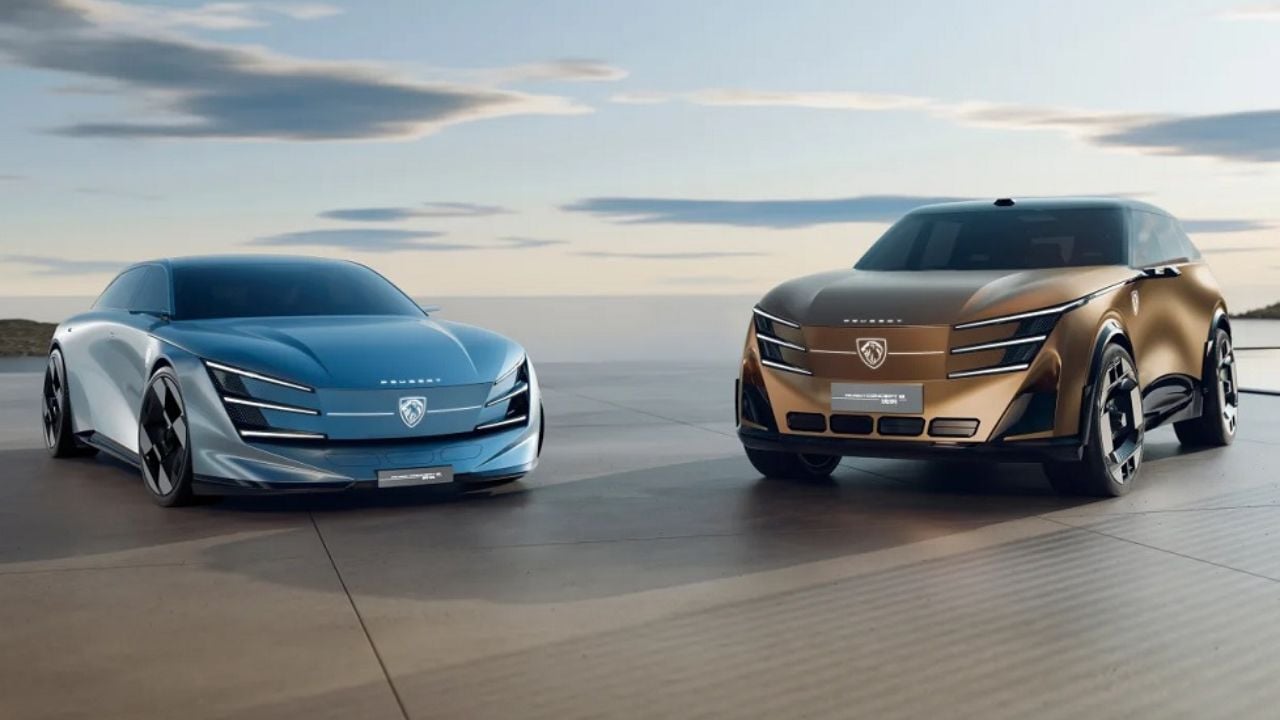
Peugeot’s China-Built EVs: A Stark Emblem of Europe’s Industrial Reckoning
POLICY WIRE — Paris, France — The venerable ghost of European industrial might, long defined by its roaring engines and meticulously crafted chassis, now grapples with an electric, silent...

POLICY WIRE — Paris, France — The venerable ghost of European industrial might, long defined by its roaring engines and meticulously crafted chassis, now grapples with an electric, silent revolution—one increasingly powered and even built, surprisingly, from distant shores. It’s a seismic shift, isn’t it? One that forces uncomfortable choices upon legacy automakers, choices reverberating far beyond quarterly earnings reports and into the very sinews of national identity.
Behind the headlines of sleek new electric models and ambitious sustainability targets lies a gnawing anxiety: Can Europe retain its automotive crown when the race for electrification increasingly leads eastward? Stellantis, the Franco-Italian-American conglomerate behind Peugeot, seems to have rendered its verdict, at least for now. They’ve opted to source some key electric vehicle models, notably the increasingly popular e-2008, directly from their joint venture factories in China for sale in Europe. This isn’t merely a logistical decision; it’s a policy declaration by proxy, a stark acknowledgement of China’s undeniable manufacturing dominance in the EV sphere.
For decades, the notion of a ‘French car’ or a ‘German car’ conjured images of domestic factories, skilled labor, and an integrated supply chain. Now, that heritage is being challenged by a globalized reality where cost, speed, and scale often trump geographical origin. And we’re seeing the painful implications unfold in real time, aren’t we?
“We cannot allow our industrial heartland to become a mere assembly plant for foreign components,” declared Jean-Luc Dubois, France’s Minister for Industrial Renewal, his voice taut with a familiar blend of pride and trepidation during a recent parliamentary session. “But we must also be pragmatic. The consumer demands affordable electric mobility, and sometimes, that equation demands difficult sourcing decisions if we’re to remain competitive against aggressive global players. It’s a delicate balance, one fraught with peril.” Dubois, known for his hawkish stance on industrial sovereignty, conceded the immediate pressures facing companies like Stellantis, even as he championed long-term reshoring efforts.
Still, the move isn’t without its powerful detractors, particularly among labor unions and proponents of European industrial autonomy. Critics argue that by importing vehicles rather than manufacturing them domestically, European automakers risk hollowing out their own industrial base, jeopardizing countless jobs and transferring valuable technological know-how to rivals. It’s a classic economic imperative playing out on a geopolitical stage, one might say, echoing the relentless clock of market forces.
At its core, this decision underscores China’s almost unassailable position in the global EV supply chain. By 2023, China commanded over 60% of the world’s electric vehicle battery manufacturing capacity, according to data from S&P Global Mobility. That’s a staggering figure, one that grants Beijing immense leverage — and offers unmatched economies of scale. European manufacturers, despite ambitious efforts, haven’t been able to fully replicate this infrastructure at a comparable cost or speed.
And while European capitals fret over their industrial future, the implications ripple outwards to burgeoning markets like Pakistan, where the promise of affordable electric transport clashes with the imperative to foster domestic industry and manage a fragile import bill. There, the arrival of Chinese-built EVs—whether homegrown brands or European marquees simply rebadging Shanghai-produced units—could redefine urban mobility, though it’s not without its own set of economic and strategic complexities for a nation struggling with energy security and foreign exchange reserves.
“The free movement of goods remains a cornerstone of global commerce, fostering innovation and competition,” asserted Dr. Ingrid Schmidt, a senior economic advisor to the European Commission, during a recent Brussels briefing, choosing her words with practiced care. “Yet, a dependency that risks strategic autonomy, particularly in critical technologies like electric vehicles, requires careful, indeed meticulous, scrutiny. We’re navigating uncharted waters, balancing consumer choice with long-term industrial resilience.” Her remarks betray the quiet tension simmering within the EU executive.
So, is this a temporary expedient or a permanent shift? For now, it’s a strategic gambit by Stellantis, one aiming to secure market share and meet stringent emissions targets without incurring prohibitively high production costs in Europe. It’s a calculated risk, a pragmatic surrender to global supply chain realities. But what does it mean for the broader landscape of European policy, for its aspirations of technological leadership, and for the economic livelihoods tied to its storied automotive sector?
What This Means
Peugeot’s pivot to Chinese manufacturing for some EVs isn’t just about a car company’s bottom line; it’s a profound bellwether for Europe’s industrial future. Politically, it exacerbates calls for greater EU strategic autonomy, particularly regarding critical technologies and manufacturing capacity. Expect increased pressure on policymakers to incentivize domestic battery production and EV assembly, potentially through subsidies or even more protectionist trade measures, despite the inherent contradiction with free-market principles. Economically, this move highlights the fierce competition from Chinese EV manufacturers, who benefit from scale, lower labor costs, and a mature supply chain. It could lead to a ‘race to the bottom’ on pricing, putting further strain on European legacy automakers and their workforces. It’s also a stark reminder that the clean energy transition, while environmentally crucial, isn’t always domestically convenient. it strengthens China’s position as a global manufacturing powerhouse, solidifying its influence in international trade and potentially creating a deeper policy calculus for future geopolitical alignments, especially as developing nations in the Muslim world, such as Pakistan, look to electrify their transport fleets, often eyeing Chinese offerings as the most accessible.