

Wemby’s Return: A Policy Litmus Test for NBA Concussion Protocols and Star Power Economics
POLICY WIRE — San Antonio, USA — The human body, even one engineered for athletic supremacy, remains a fragile instrument. Its vulnerabilities — particularly to head trauma — present an enduring...

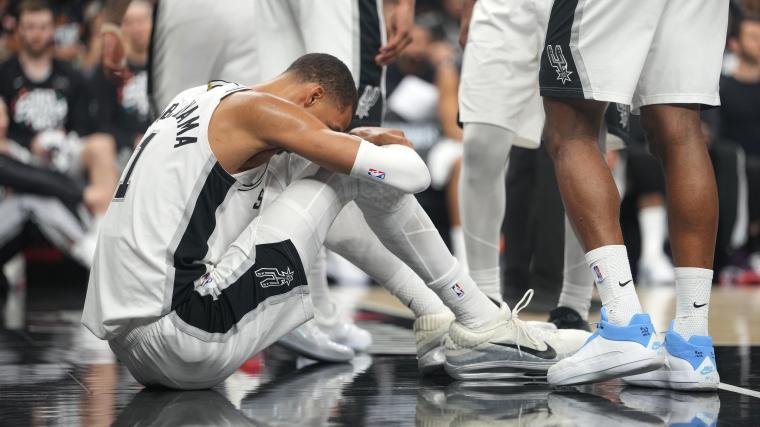
POLICY WIRE — San Antonio, USA — The human body, even one engineered for athletic supremacy, remains a fragile instrument. Its vulnerabilities — particularly to head trauma — present an enduring quandary for professional sports leagues, balancing entertainment spectacle against the long-term welfare of their most valuable assets. And so, the National Basketball Association (NBA) finds itself yet again navigating this precarious tightrope, as San Antonio Spurs phenom Victor Wembanyama received medical clearance to re-enter the fray for Game 4 against the Portland Trail Blazers.
It’s a development that, on its face, seems straightforward: star player sidelined, star player returns. But dig deeper, past the headline’s celebratory tone, and you unearth a complex tapestry of policy considerations, economic imperatives, and the relentless pressure of a multi-billion-dollar industry. Wembanyama, an extraterrestrial talent at 7-foot-4 (a truly uncommon sight, even in professional sports), had been relegated to spectator status since Game 2, following a collision that rattled not just his prodigious frame, but the collective nerves of the Spurs organization and, indeed, the league itself. The concussion protocol, a carefully constructed edifice of medical oversight, demanded patience.
His absence in Game 3, despite the Spurs’ improbable comeback victory, cast a long shadow. The team, bereft of its gravitational center, leaned heavily on its periphery. Luke Kornet, an understated pivot, stepped into the starting five, while rookie Carter Bryant delivered unexpected dividends from the pine. Their collective grit stabilized the interior, allowing San Antonio to seize a 2-1 series lead. Still, the underlying tension was palpable. Could this Cinderella effort truly sustain itself against a resurgent Blazers squad, particularly one sensing an opportunity to equalize?
“We’re always going to prioritize a player’s long-term health over any single game, no matter how consequential,” shot back Spurs Coach Gregg Popovich, a figure as renowned for his candor as his championship pedigree, when pressed on the star’s initial absence. “Victor’s clearance underscores the rigorous process, but it doesn’t diminish the inherent risks these young men face every night. We don’t take these decisions lightly.”
For the Trail Blazers, the news of Wembanyama’s impending return ratchets up an already formidable challenge. He’s not merely a scorer or a shot-blocker; he’s an architectural shift on the court, fundamentally altering defensive schemes and offensive flow. His re-entry could very well tilt the series decisively. But, Coach Chauncey Billups of the Trail Blazers remained outwardly sanguine, opting for a familiar competitive bravado. “Our approach doesn’t change. We prepare for the best version of every opponent. His return certainly adds another dimension, but it’s not a narrative we’re buying into. We’ve got our own objectives,” Billups affirmed, dismissing any psychological advantage his counterpart might assume.
The stakes couldn’t be higher. A Spurs triumph in Game 4 would install them with a commanding 3-1 lead, all but securing their passage. A Blazers upset, conversely, would reset the calculus, sending the series back to San Antonio with the momentum, and pressure, dramatically shifted. It’s a delicate balance, one where the return of one player—however transcendent—can sway fortunes. This reliance on individual genius, however, isn’t unique to basketball. From the global football leagues to cricket’s Indian Premier League, superstar talent represents both the pinnacle of competitive achievement and a significant point of vulnerability for commercial entities.
At its core, this episode highlights the NBA’s evolving stance on player welfare, particularly concerning concussions. The league, like its counterparts in other high-impact sports, has invested substantially in protocols designed to safeguard athletes. And yet, the inherent violence of professional basketball means such incidents are inevitable. A 2023 study by the Journal of Sports Economics estimated the average lost salary per NBA game due to player injury at approximately $1.2 million, underscoring the stark financial implications, not just for the athletes, but for the franchises themselves. This economic reality often butts heads with the medical imperative for caution.
In Pakistan, much like Chicago, the news reverberated—a testament to basketball’s burgeoning, border-agnostic appeal. Young aspirants, honing their skills on dusty courts from Lahore to Karachi, undoubtedly view Wembanyama not just as an athlete, but as an aspirational figure. The league’s transparent handling of his injury, even under intense scrutiny, sets a benchmark. It’s a policy lesson, perhaps, in how transparency around player health can impact public trust and global engagement, a factor increasingly vital as the NBA expands its footprint into emerging markets.
What This Means
Wembanyama’s expedited clearance, while medically sanctioned, is more than just a green light for a basketball game; it’s a profound statement on the economic leverage wielded by transcendent athletes and the concomitant policy adjustments required of professional sports. The NBA, like any entertainment conglomerate, must meticulously manage its star power. His return, meticulously documented, validates the league’s concussion protocols, at least superficially. But it also reignites a silent debate: does the pressure to return marquee talent, especially during critical playoff moments, subtly influence the pace of rehabilitation? The optics are paramount. If a star player’s absence materially impacts revenue (ticket sales, merchandise, broadcast rights), there’s an inherent, albeit often unspoken, pressure to facilitate a swift, yet safe, return.
This situation also serves as a microcosm for the broader challenges facing sports policymakers globally, from the Premier League to nascent athletic federations in South Asia. How do you balance the salutary effects of competition with the duty of care owed to players? It’s a particularly acute dilemma in regions where medical infrastructure or regulatory frameworks might not be as robust. The NBA’s protocols, for all their sophistication, operate within a system where market forces are often king. The long-term neurological health of athletes remains a consequential policy frontier, one where short-term competitive advantage often clashes with sustained player welfare. The league’s continuous evolution on this front — evidenced by enhanced screening and recovery mandates — isn’t merely altruistic; it’s a shrewd investment in its own future, ensuring that the spectacle continues unabated, powered by its most compelling figures. And for fans globally, from Dallas to Dhaka, they’re simply eager to see one of those figures back on the hardwood, defying gravity and expectation. For more on the economic currents shaping collegiate sports, delve into The NBA Draft Crucible or explore the global reach of athletics in Premier League’s Shifting Sands.