


Bridgeview’s ‘Little Palestine’ Unveiling Ignites Local Pride, Global Echoes
POLICY WIRE — Bridgeview, Illinois — For decades, the Chicago suburb of Bridgeview has quietly served as a vital anchor for one of America’s most concentrated Palestinian diasporas....

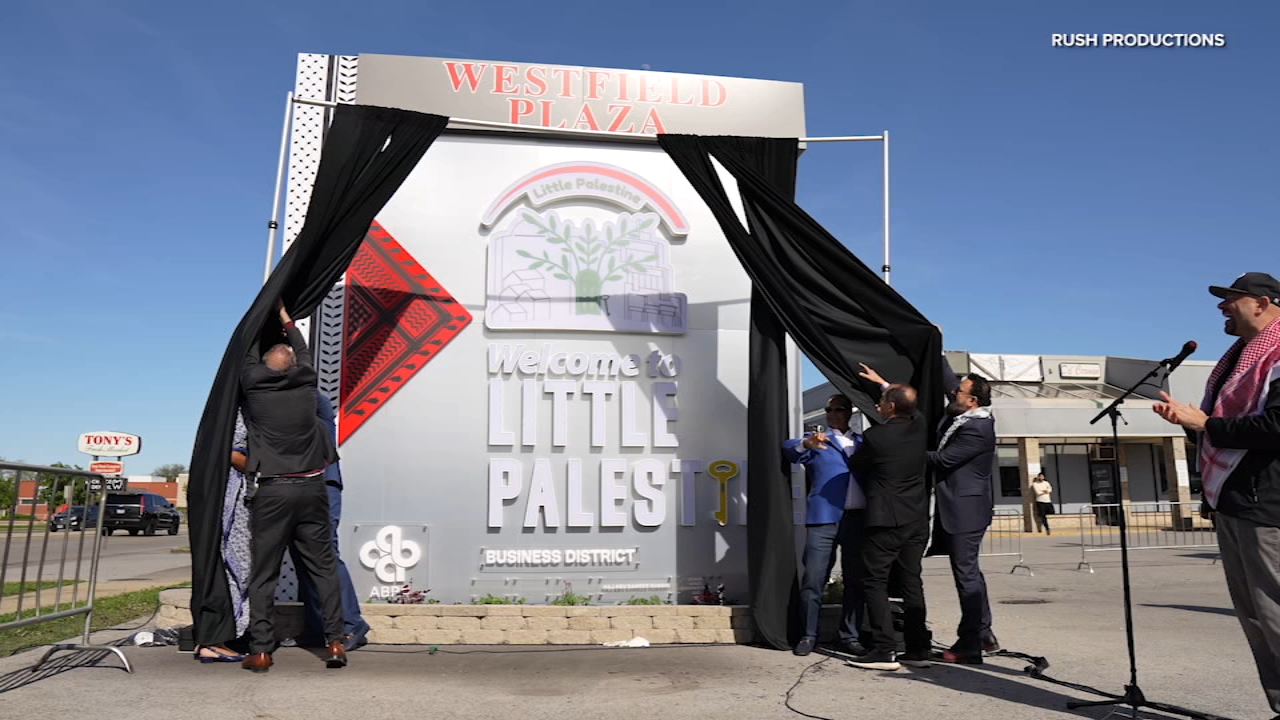
POLICY WIRE — Bridgeview, Illinois — For decades, the Chicago suburb of Bridgeview has quietly served as a vital anchor for one of America’s most concentrated Palestinian diasporas. It’s a place where Arabic isn’t just spoken; it’s woven into the very fabric of daily life, where baklava beckons from storefronts and the call to prayer drifts across residential blocks. So, when local officials recently inaugurated a second ‘Little Palestine’ sign at Westfield Plaza (a rather pointed geographical marker, one might say), it wasn’t merely a civic acknowledgment; it was a potent reaffirmation of identity, echoing far beyond municipal limits.
The latest sign, following a similar designation in another part of town, cements what many residents have known instinctively for generations: Bridgeview isn’t just ‘Illinois’; it’s a vibrant, living extension of a homeland many have never seen but deeply cherish. This isn’t just about street names or culinary traditions; it’s about a resilient community asserting its narrative in the American urban landscape, and doing so with increasing visibility. And in a global landscape bristling with geopolitical tensions, such local declarations often carry weight disproportionate to their immediate physical footprint.
Councilwoman Aisha Rahman, whose family emigrated from Ramallah in the 1960s, beamed during the brief, heartfelt ceremony. "This sign isn’t just a landmark; it’s a testament to the resilience and vibrancy of our Palestinian American community," she declared, her voice resonating with pride. "It’s a public declaration of who we’re, a celebration of the rich culture and unyielding spirit we bring to Bridgeview." Her sentiment, widely shared, underscored the profound emotional investment residents have in these symbols, transforming a simple piece of municipal signage into a cultural touchstone.
But the significance runs deeper than local pride. For Dr. Khalil Jabara, head of the Arab American Action Network, the unveiling was a moment of bittersweet reflection. "It’s a beacon of identity here, isn’t it, while our kin endure unimaginable hardships back home?" he observed, a thoughtful pause punctuating his words. "This isn’t just about place; it’s about persistent memory, unwavering solidarity, and a reminder to the world that Palestine persists, even in diaspora." Jabara’s comments highlight the dual nature of these designations: a local triumph, yes, but also a poignant link to a global struggle.
Still, Bridgeview’s demographic reality is undeniable. While precise figures are often grouped under broader categories, local community organizations estimate that well over 15% of Bridgeview’s roughly 17,000 residents identify as Palestinian American, making it one of the densest concentrations in the United States. This isn’t merely an anecdotal observation; it’s a statistical reality that has reshaped the town’s political, economic, and social contours. The presence of these communities, often maintaining strong ties to their ancestral lands, means that local happenings in places like Bridgeview can quickly become micro-expressions of macro-political currents. They’re not just street names, after all; they’re banners.
This designation, occurring amidst heightened tensions in the Levant, doesn’t merely acknowledge a local demographic; it underscores a profound global solidarity felt across the broader Muslim world. From the bustling souks of Lahore to the quiet mosques of Jakarta, the Palestinian cause remains a potent, unifying symbol. Such public expressions of identity in the West, therefore, resonate as powerful acts of cultural and political affirmation, often interpreted as moral victories against narratives that seek to diminish the Palestinian presence. For more on the persistent struggle and defiance, one might consider the Mediterranean’s latest gambit: the ‘Sumud’ Flotilla charting its perilous course to Gaza’s blockaded shores.
What This Means
At its core, Bridgeview’s double ‘Little Palestine’ designation signals a shifting paradigm in how diasporic communities assert themselves within the American political and cultural landscape. Economically, such recognition can solidify cultural tourism and niche markets, fostering a distinctive local economy that caters to and celebrates this specific heritage. Politically, it crystallizes the growing influence of Arab American voters, particularly in swing states like Illinois, whose voices — increasingly organized and vocal — demand attention from local, state, and even federal representatives. It’s a tangible manifestation of a demographic shift that’s been underway for decades, now reaching a critical mass where its cultural identity can no longer be overlooked or relegated to the periphery.
Behind the headlines, this also poses a subtle challenge to the broader U.S. foreign policy establishment. When a local municipality so overtly embraces a globally contentious identity, it reflects a domestic constituency increasingly willing to inject global issues into local discourse. It complicates easy narratives, forces a more nuanced conversation, and demands that politicians acknowledge the diverse — and sometimes conflicting — loyalties of their constituents. This is less about specific policy shifts and more about the slow, inexorable march of cultural politics into mainstream American life, mirroring the cracks in the monolith that test iron grips in other parts of the world. Ultimately, these signs aren’t just for navigating directions; they’re markers of identity, resilience, and a quiet, insistent political will.