


The IPL’s Relentless Clock: Sanju Samson’s Milestone Unpacks Cricket’s Economic Imperative
POLICY WIRE — NEW DELHI — In the clamorous, hyper-capitalized theater of the Indian Premier League, where player legacies are minted and sometimes unceremoniously melted down across mere overs, Sanju...

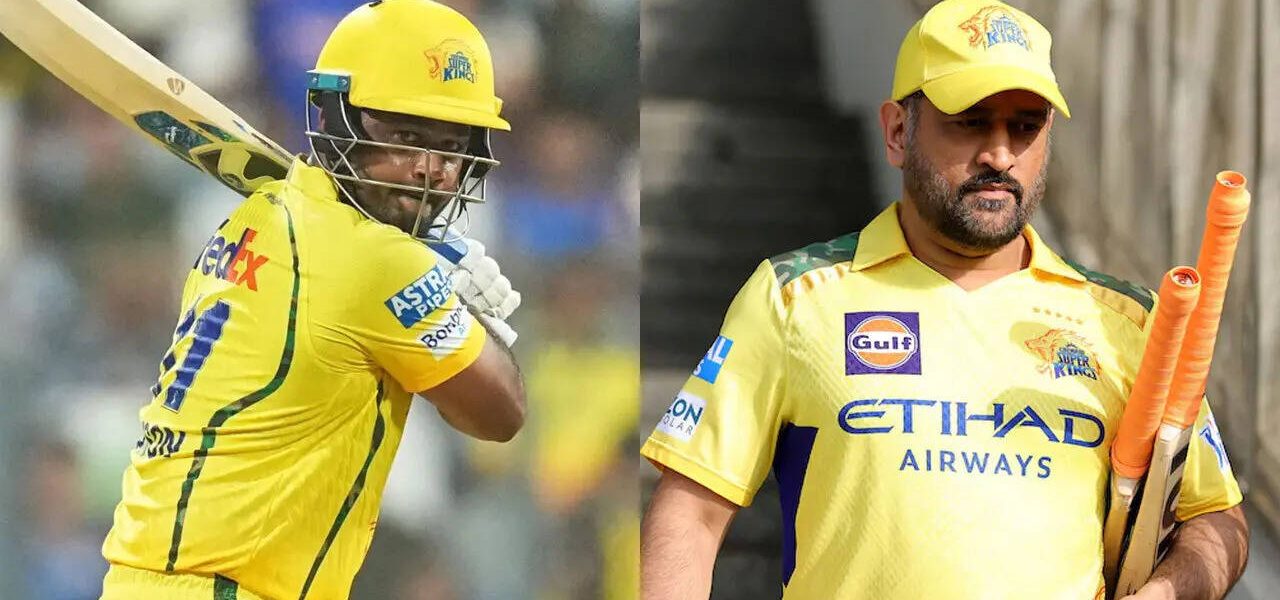
POLICY WIRE — NEW DELHI — In the clamorous, hyper-capitalized theater of the Indian Premier League, where player legacies are minted and sometimes unceremoniously melted down across mere overs, Sanju Samson’s recent athletic feat—surpassing batting legend M.S. Dhoni’s record for balls faced to reach 5,000 runs—wasn’t just a statistical blip. It was, rather, a stark, almost brutal, reminder of the league’s relentless churn, its insatiable demand for efficiency, and the subtle economic anxieties that underpin professional cricket in the subcontinent.
The MA Chidambaram Stadium in Chennai, usually a crucible of raucous fandom, bore witness to Samson’s latest installment of individual brilliance. He didn’t begin with a flourish, no. The right-hander, a skipper for Rajasthan Royals but here facing off against the Gujarat Titans, commenced his innings cautiously, watching Mohammad Siraj’s opening salvo tick by for a solitary run. But then, as the script often demands in this format, Samson shifted gears with the calculated aggression of a seasoned stockbroker making a high-stakes play. He assailed Kagiso Rabada, sending a clean boundary arcing into the stands, and in that single, decisive stroke, he hadn’t just scored runs; he’d inscribed his name further into the ledger of IPL history.
Samson’s ascent to 5,000 runs wasn’t merely about the total. It was about the velocity. He reached the landmark in a scant 3,555 balls, placing him third-fastest ever, nudging past celebrated names like Suresh Raina (3,620 balls), KL Rahul (3,688 balls), and, most Dhoni (3,691 balls). This isn’t just about faster scoring; it’s about optimizing impact, a metric crucial for franchise owners and advertisers alike. As one sports economist, Dr. Anya Sharma of the Indian Institute of Management, mused, “These milestones, while personal, underscore the hyper-capitalized nature of modern cricket, where every boundary translates into broadcast revenue and brand value. It’s a precise calculus, not just a game.”
Still, the spectacle wasn’t merely confined to individual glories. Gujarat Titans, captained by Shubman Gill, had won the toss and opted to bowl, a strategic gambit predicated on early pitch conditions. Their roster included Arshad Khan, bolstering their bowling options, while Chennai Super Kings introduced Urvil Patel, seeking equilibrium. These aren’t just team selections; they’re personnel decisions with immediate financial repercussions in a league where player valuations can oscillate wildly based on a single performance.
And what of the broader geopolitical landscape? The IPL, a glittering beacon of cricketing capitalism, inadvertently highlights some of the region’s enduring fault lines. While players from Afghanistan, like Rashid Khan (playing for Gujarat Titans), find immense platforms and financial security within the league, the conspicuous absence of talent from neighboring Pakistan remains a persistent, almost painful, silence. It’s a powerful economic engine, this IPL, yet one that can’t quite bridge all divides, not even for the universal appeal of the sport.
📄 POLICY WIRE WHITEPAPER PUBLISHED: PAKISTAN'S NATIONAL SECURITY POLICY PRIORITIES
👉 READ BY CLICKING HERE“The IPL isn’t merely sport; it’s a potent economic engine, a soft power projection that cements India’s global cultural footprint,” asserted Shri Anurag Thakur, India’s Minister of Youth Affairs and Sports, in a recent address. He wasn’t wrong. The league, with its staggering viewership and multi-billion-dollar valuation, projects a certain image of Indian economic dynamism and cultural hegemony across South Asia and beyond. But it’s also a mirror, reflecting both immense opportunity — and lingering political shadows.
What This Means
Samson’s achievement, viewed through a Policy Wire lens, transcends the cricket pitch. At its core, it speaks to the relentless market demands shaping modern sports, where efficiency and high-impact performance aren’t just desirable; they’re indispensable. For younger players, exceeding established benchmarks like Dhoni’s isn’t just about personal glory; it’s about validating a career trajectory in an unforgiving, high-stakes environment. The IPL’s economic whirlwind — a true economic whirlwind, many would say — continues to redefine athletic value, forcing rapid adaptation from its participants. This constant breaking of records, this ceaseless pursuit of faster, higher, stronger, isn’t just about competition. It’s about optimizing a global product.
The league also serves as an informal economic indicator for the region. Its ability to draw massive investment and viewership, including from the South Asian diaspora, underscores its cultural and financial gravity. For nations like Afghanistan, its presence offers a vital, almost irreplaceable, avenue for economic mobility for its athletes, while for Pakistan, the political impasse means a significant missed opportunity for both players and the national cricketing economy. It’s a cruel catch, isn’t it (the sort that can leave you pondering geopolitics over a boundary)? The IPL’s success isn’t just a story of cricket; it’s a compelling narrative of globalization, political economy, and the evolving nature of celebrity in the modern Muslim world and broader South Asia.