


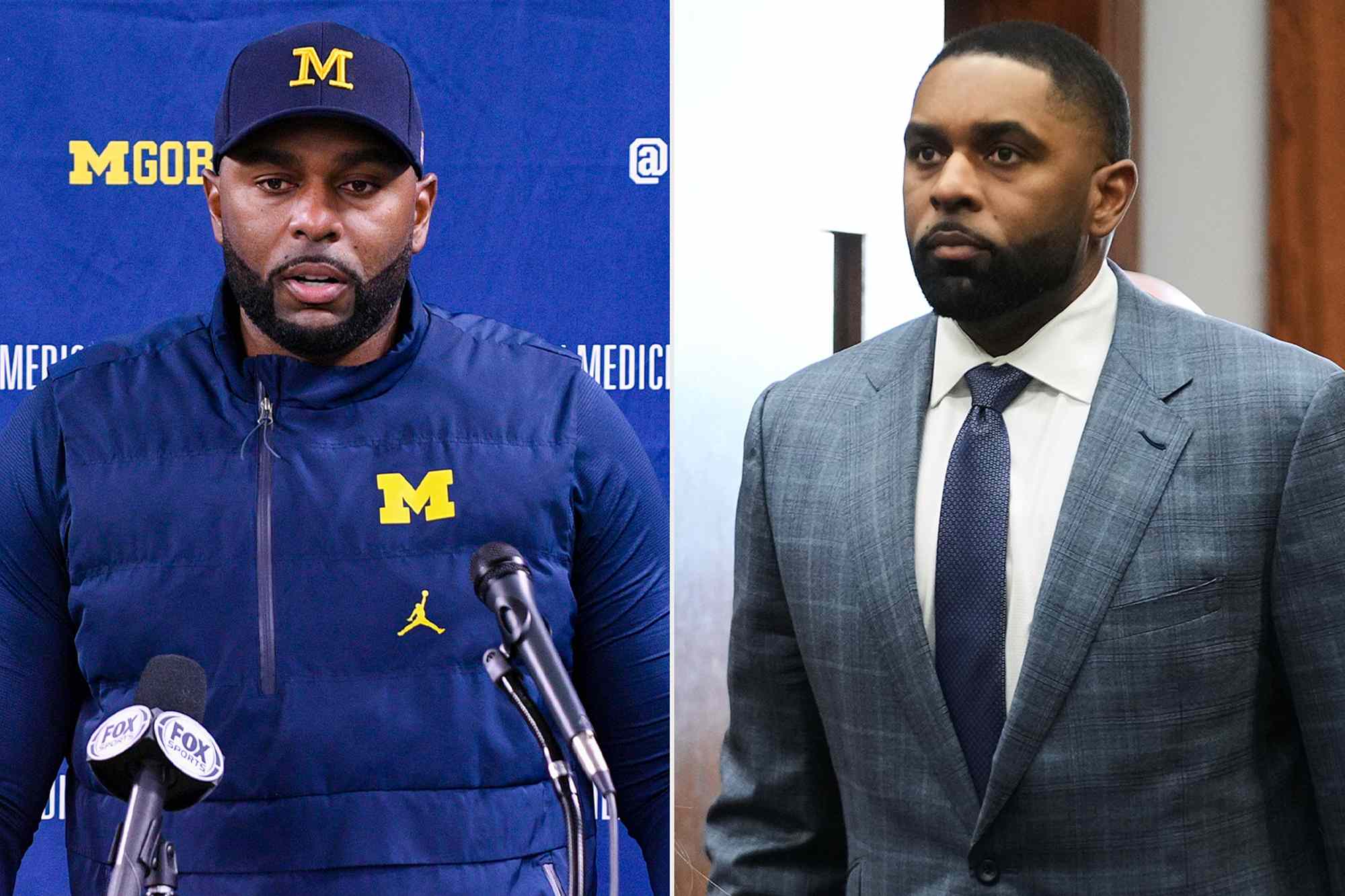
From Michigan’s Helm to Probation: The Quiet Reckoning of Sherrone Moore
POLICY WIRE — Ann Arbor, Michigan — Rarely does a coaching career, once heralded with such promise, plunge into such profound quietude. For Sherrone Moore, the former University of Michigan head...

POLICY WIRE — Ann Arbor, Michigan — Rarely does a coaching career, once heralded with such promise, plunge into such profound quietude.
For Sherrone Moore, the former University of Michigan head football coach, life after the maelstrom of gridiron glory and an ensuing very public debacle now largely plays out in the hushed vigilance of probation—a stark, almost brutal contrast to the roar of a stadium or the clamor of a press conference, a silence accentuated by a judge’s cutting remarks (and trust us, they were cutting) and the lingering echoes of a betrayal that convulsed one of college football’s most storied programs.
Many’d seen Moore as the heir apparent, a rising star groomed for greatness. Yet, the precipitous descent of his career, ignited by an alleged “inappropriate relationship” with a subordinate staff member, Paige Shiver, has bequeathed a chilling fable in its wake. A swift implosion.
The Descent from the Sidelines
But make no mistake, Moore’s story isn’t just about a lost job; it’s about a personal and professional implosion. Back in December 2025, the University of Michigan fired him, citing “credible” evidence of workplace misconduct. Within hours, the narrative shifted from professional malfeasance to criminal allegations. Fast. Just like that.
Police responded to a 911 call from Shiver’s Ann Arbor home, where she reportedly claimed a “male was at the location in the house attacking her.” Later, she’d identify Moore as the man who unlawfully entered her dwelling, allegedly threatening self-harm after she ended their relationship.
And that matters. The subsequent charges—third-degree home invasion, stalking, and entering without permission—sketched a canvas far darker than merely an affair. A plea deal in March saw Moore plead no contest to two misdemeanors: malicious use of a telecommunications device and trespass—a minor legal victory, perhaps, but one that certainly didn’t erase the stench of scandal.
At its core, this incident exposed starkly the often-unseen power dynamics within professional environments, especially those as high-pressure as collegiate athletics. Paige Shiver, speaking to Good Morning America in April, didn’t mince words.
“Here’s a man that had complete control over me,” Shiver claimed. “Over my emotions, over my career. And he knew that and he used it against me.”
Her account described a years-long relationship, one she alleged began shortly after she joined the university as an intern in late 2021. Upon his promotion to head coach, Shiver became his executive assistant, further ingraining the vexing power imbalance she described. How does one even untangle such a mess?
For a figure like Sherrone Moore, whose career was built on public trust and moral leadership in a competitive athletic environment, the cataclysm is galling. It’s a societal reckoning not dissimilar to how public figures in nations across the Muslim world, from Pakistan to Egypt, are often held to stringent ethical and familial standards, where personal indiscretion can translate into a precipitous and unequivocal termination of a professional life, irrespective of past achievements—turns out, even in America, folks care about integrity, shocking, we know. The spotlight on personal conduct, particularly in professional settings, isn’t just an American phenomenon; it’s a global expectation for those in positions of power.
But still, the University of Michigan acted decisively. University President Domenico Grasso released a statement, saying,
“This breach of trust by Coach Moore is painful for many in our community, first and foremost, the individuals directly involved in this situation. Yet our swift and decisive action reflects the University’s staunch commitment to a campus culture of respect, integrity and accountability.”
📖 THE POLICY DIGEST MAGAZINE: OCTOBER 2026 EDITION NOW LIVEExclusive Battle Damage Assessment by Sarah Adams, US-Iran Diplomatic Talks & Transnational Investigations👉 READ BY CLICKING HERE
That’s a significant shift in how such institutions grapple with high-profile misconduct. A Washtenaw County District Court judge sentenced Moore to 18 months of probation and a $1,000 fine (a pittance, some might argue), according to NBC News, also mandating mental health treatment and a no-contact order with Shiver.
Related: UEFA’s Prestianni Ban Ignites Deeper Debate on Football’s Fight Against Intolerance
What This Means
The Sherrone Moore debacle isn’t merely a tabloid headline; it’s a case study in institutional accountability and the shifting sands of workplace ethics. Once, such affairs might’ve been quietly managed, swept under the rug for the sake of reputation. Not anymore. Universities, particularly those operating in the public eye, are under unblinking surveillance to uphold their stated values, especially concerning power dynamics and sexual harassment—a high-stakes tightrope walk they can ill afford to stumble on.
This incident also accentuates the galling personal costs of such public disclosures. While Moore largely holds his tongue, serving his probation and reportedly undergoing mental health treatment, Shiver has spoken of feeling exploited and manipulated, experiencing a deeply harrowing tribulation that included terminating a pregnancy due to health complications.
So, for the University of Michigan, the quick firing and explicit denouncement signaled a zero-tolerance policy. It’s a message that resonates far beyond the athletic department, shaping how other institutions might handle similar situations. This isn’t just about football; it’s about the broader repercussions for employee safety and professional conduct across all sectors.
Perhaps the most poignant moment came during Moore‘s sentencing. Washtenaw County District Court Judge J. Cedric Simpson delivered a searing admonition, directly acknowledging Moore‘s wife, Kelli Moore, who stood by him throughout the proceedings.
“In my opinion, the person, quite frankly, Mr. Moore, that is saving you from the full wrath of this court is the one you betrayed,” Judge Simpson stated. “I don’t know where your wife, Kelli finds her strength.”
Few public figures survive such a fall with their reputation intact. While Moore now endures his quiet probation, the path back to any semblance of public life, let alone coaching, looms arduous. His journey serves as a potent reminder that the repercussions of power misused extend far beyond a professional contract, often leaving indelible and enduring personal scars for all involved. Who truly wins here?