


Blue Jays’ Risky Gambit: Unconventional Lineup Ignites Policy Debate on Talent Allocation
POLICY WIRE — Toronto, Canada — As the maple leaves cling stubbornly to their spring branches, defying the chill of an unpredictable season, so too does the Toronto Blue Jays’ strategic...

POLICY WIRE — Toronto, Canada — As the maple leaves cling stubbornly to their spring branches, defying the chill of an unpredictable season, so too does the Toronto Blue Jays’ strategic playbook defy conventional wisdom. A seemingly minor adjustment—the placement of a leadoff hitter—has quietly escalated into a microcosm of broader policy dilemmas: the allocation of talent, the efficacy of unorthodox leadership, and the public’s relentless scrutiny of both.
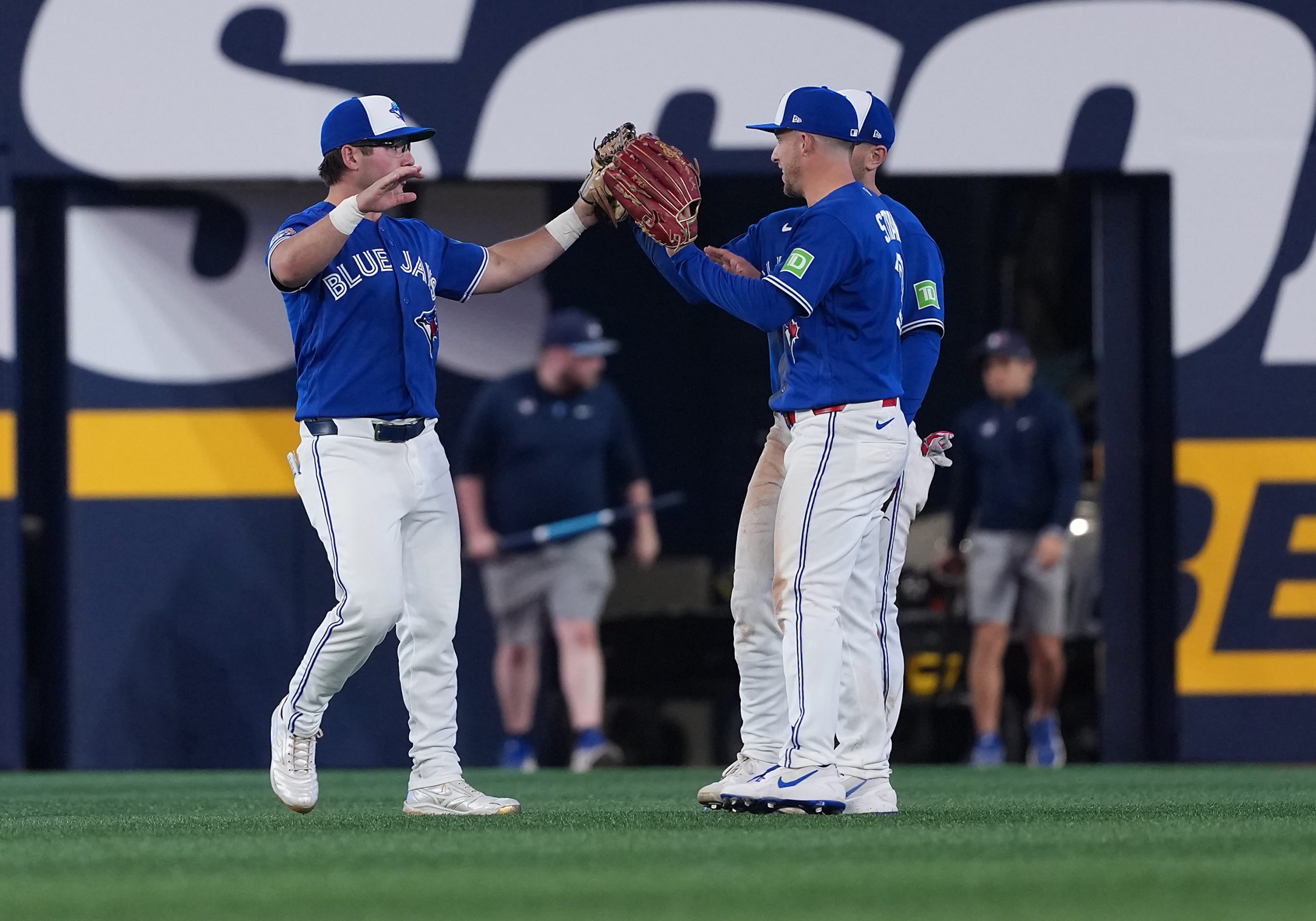
It wasn’t the triumphant celebration of a Friday night victory, punctuated by the jubilant embraces of Davis Schneider, Daulton Varsho, and Myles Straw against the Cleveland Guardians (a moment captured for posterity, to be sure). No, the true policy intrigue unfurled on a recent Sunday, not on the diamond, but in the dugout’s daily communique. The revelation? Ernie Clement, a player whose aggressive plate approach often borders on the impetuous, was penciled into the coveted leadoff spot. A gambit, certainly. For a team ostensibly contending, it felt less like innovation — and more like an exasperated shrug.
“We’re not in the business of tradition for tradition’s sake,” opined General Manager Ross Atkins, addressing reporters in a post-game briefing that felt more like a defensive policy white paper. “Every decision, particularly concerning player deployment, is rooted in an analytical framework designed to maximize our competitive advantage. It’s a dynamic optimization problem, isn’t it?” Atkins’ assessment, though delivered with his characteristic steely calm, scarcely masked the underlying tension surrounding the team’s often-questioned tactical shifts.
Still, the wisdom of placing a contact-happy, low-walk hitter atop the order, especially in a league increasingly prioritizing on-base percentage, proved a contentious point. Clement’s meager one walk through the season’s initial one-sixth – a data point confirmed by Major League Baseball’s annual Statistical Review – hardly suggested a harbinger of run-scoring efficiency. It’s the kind of short-term experimentation that, in other sectors, might invite accusations of fiscal irresponsibility or, worse, a fundamental misunderstanding of core metrics.
“The Blue Jays’ current strategy, particularly at the leadoff spot, reflects a broader systemic issue—a reluctance to fundamentally challenge entrenched methodologies, even when evidence suggests stagnation,” observed Dr. Tariq Aziz, a Karachi-based sports economist — and long-time commentator on talent management in the Muslim world. “In emerging economies, we often grapple with this—do you continually tinker with existing structures, or do you commit to a bold, transformative reform, even if it initially risks stability? It’s a leadership paradox, isn’t it? This isn’t just about baseball; it’s about institutional inertia versus disruptive innovation.”
And so, while the immediate focus remains on the diamond, the echoes reverberate far beyond. The Blue Jays’ apparent reluctance to explore more radical, albeit riskier, options for the leadoff role—a move, say, like deploying superstar Vladimir Guerrero Jr. there, a fantasy among a vocal segment of the fanbase—speaks to a cautious, perhaps overly cautious, managerial philosophy. Guerrero, after all, has built a formidable career, now 1,001 games deep, boasting a robust .289/.367/.494 slash line with 185 home runs and 28 steals. A testament to long-term talent cultivation, yes, but also a resource perhaps underutilized in its most potent form.
Behind the headlines, decisions like these become case studies. They invite comparisons to the cutthroat world of corporate restructuring or the delicate balance of geopolitical alliances. How do leaders make unpopular but potentially effective choices? What constitutes genuine innovation versus mere shuffling of existing assets? The firing of Boston Red Sox manager Alex Cora, along with much of his coaching staff, illustrates the brutal calculus at play—when results falter, heads inevitably roll, often swiftly and with little public explanation of the grander strategy. It’s a stark reminder that even in sports, the policy of failure can be unforgiving.
What This Means
At its core, the Blue Jays’ current approach underscores a prevalent tension in policy-making: the struggle between incremental adjustment and radical overhaul. While Clement’s leadoff stint might prove to be a short-lived experiment, it exposes a deeper organizational hesitancy to make truly disruptive moves. This isn’t just about runs scored; it’s about the psychology of leadership and the messaging it conveys to stakeholders—the players, the fans, and even potential recruits.
Economically, conservative roster management, particularly when it seems to overlook a better-performing option, can translate into suboptimal returns on massive player investments. For a franchise that represents a significant economic entity, every marginal gain (or loss) in efficiency carries substantial financial implications. When a team opts for a perceived ‘safe’ choice over a ‘bold’ one, it’s often indicative of a leadership team prioritizing stability over potentially higher, albeit riskier, upside. That’s a policy decision with long-term ramifications, affecting everything from revenue streams to brand perception. In a globalized sporting landscape, where talent is a finite and costly resource, how you manage it, even down to a batting order slot, communicates volumes about an organization’s strategic vision, or lack thereof. And frankly, it’s rarely just about the game itself.