


Albuquerque’s Enduring Scar: Another Life Extinguished Amidst Old Town’s Fragile Charm
POLICY WIRE — Albuquerque, New Mexico — It’s a perennial tableau, tragically familiar in America’s sun-drenched Southwest: the yellow tape, the flashing blue lights, the somber procession...

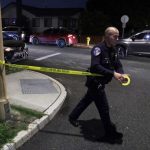
POLICY WIRE — Albuquerque, New Mexico — It’s a perennial tableau, tragically familiar in America’s sun-drenched Southwest: the yellow tape, the flashing blue lights, the somber procession of investigators sifting through the detritus of a night violently cut short. This past Sunday, just after 1:30 a.m., that grim ritual unfolded once more in Albuquerque’s historic Old Town, a district usually synonymous with turquoise jewelry, chile ristras, and the echoes of centuries past. But history, here, frequently gives way to harrowing present. A shooting near the intersection of Central Avenue and Rio Grande Boulevard left one individual fatally wounded, adding another grim tally to a city already grappling with a stubbornly high tide of violent crime.
Police responded, found the victim, whisked them off to a hospital—a medical futility, as it turned out. They didn’t make it. And just like that, another life was rendered a brief entry in a police blotter, another family irrevocably altered. Albuquerque Police Department (APD) officials, tight-lipped as ever in the immediate aftermath, offered only the barest bones of information, promising more details as they emerge. Still, for a city that’s seen its violent crime rate consistently outpace the national average—New Mexico’s violent crime rate, for instance, hovered around 780.8 incidents per 100,000 residents in 2022, nearly double the national average of 380.7, according to FBI Uniform Crime Reporting data—such incidents aren’t outliers; they’re symptoms.
“We’re grappling with a complex web of factors here, aren’t we? It’s not just about more officers on the street; it’s about housing, mental health, economic opportunity,” shot back Police Chief Harold Montoya when pressed last month on the city’s crime trends, articulating a sentiment many civic leaders now echo. His words, delivered with a weary resolve that belies the enormity of the challenge, highlight the systemic underpinnings of such street-level tragedies. But to those living in the city’s beleaguered neighborhoods, such nuanced explanations often feel like cold comfort.
“Every time I hear those sirens, my heart jumps. Is it my street? My kid’s school?” lamented Maria Rodriguez, a long-time resident of the nearby Westside, her voice laced with an understandable blend of fear and exasperation. “It’s not just a statistic; it’s our neighbors, our streets, our sense of peace being chipped away, piece by piece.” Her plaintive query encapsulates the pervasive unease that settles upon communities touched by such wanton violence. And it’s not just Albuquerque facing this—from Karachi’s bustling thoroughfares to Cairo’s ancient alleyways, urban centers globally contend with similar, intractable battles for public safety, a universal human demand.
Behind the headlines, a critical question lingers: what does this latest incident—one of many, regrettably—signal for Albuquerque’s future? Its Old Town, a magnetic draw for tourists and a cornerstone of local identity, now frequently finds itself in the crosshairs of a deepening crisis. It’s a paradox, isn’t it? A place of historical gravitas, yet simultaneously a canvas for contemporary urban strife. Policy makers often find themselves treading a precarious path, much like the delicate environmental balance around the Dead Sea, attempting to preserve what’s cherished while battling forces that threaten to overwhelm it. For Albuquerque, that’s precisely the quandary.
What This Means
This fatal shooting, while localized, sends reverberations through Albuquerque’s civic ecosystem. Politically, it re-energizes debates surrounding municipal funding for law enforcement versus social services—a familiar, often acrimonious, binary. Mayor Tim Keller’s administration, already under pressure to curb the city’s crime wave, will likely face renewed scrutiny and calls for more aggressive intervention. But a chorus of critics argue that policing alone isn’t the panacea for deep-seated societal ills, preferring a holistic approach to crime reduction, a sentiment explored further in Policy Wire’s previous reporting on policing challenges. Economically, the incident, particularly its proximity to Old Town, threatens to further erode tourist confidence, potentially impacting local businesses already navigating post-pandemic uncertainties. For a city that heavily relies on its cultural heritage and vibrant street life to draw visitors, persistent violence around key attractions is an existential threat.
Still, at its core, this incident underscores a broader societal challenge: how does a modern American city provide safety and opportunity for all its residents when systemic issues—poverty, addiction, access to mental healthcare—create fertile ground for such tragedies? It’s a question not unique to Albuquerque, echoing in major metropolises from Phoenix to Philadelphia, and indeed, across continents where burgeoning urban populations grapple with similar strains. For federal, state, and local policy makers, the Old Town shooting isn’t just a local police matter; it’s a stark reminder of the urgent, often intractable, policy dilemmas inherent in safeguarding the urban experience.