


Beyond the Scorecard: UNM’s Spring Game as a Microcosm of Collegiate Athletics’ Precarious Economy
POLICY WIRE — ALBUQUERQUE, N.M. — The final score, a tight 17-14 victory for Team Silver over Team Cherry, was, for many, an afterthought. Saturday’s intra-squad scrimmage at the University of...

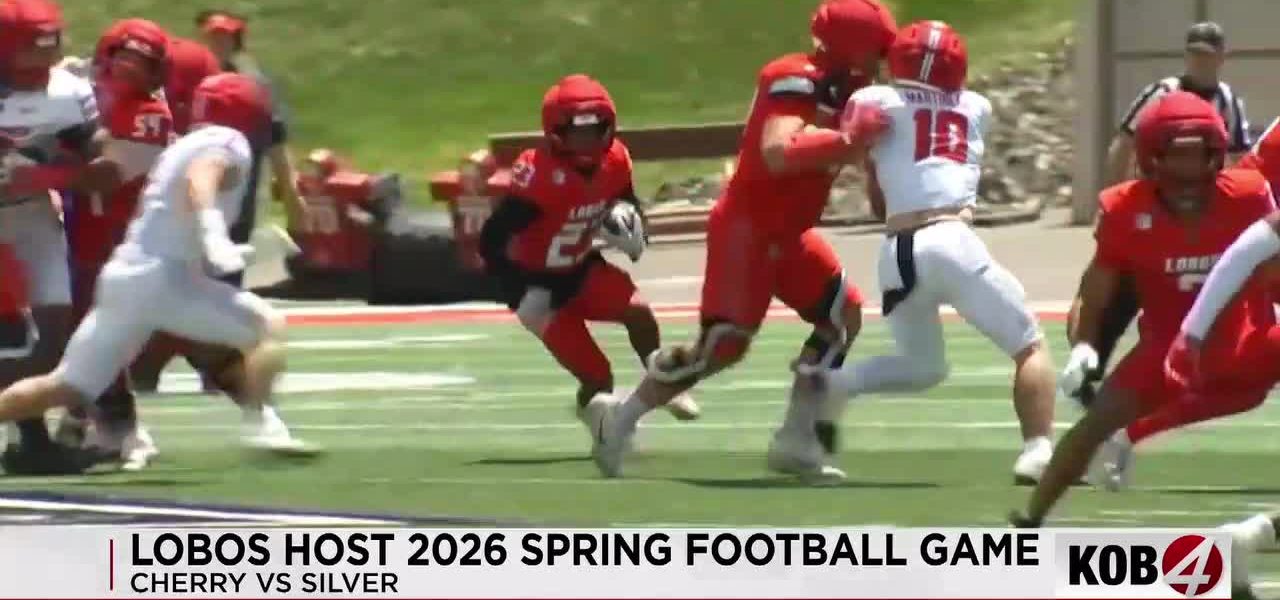
POLICY WIRE — ALBUQUERQUE, N.M. — The final score, a tight 17-14 victory for Team Silver over Team Cherry, was, for many, an afterthought. Saturday’s intra-squad scrimmage at the University of New Mexico’s University Stadium wasn’t merely a contest of athletic prowess; it was, rather, a carefully choreographed annual ritual — a fleeting, sun-drenched tableau of economic aspiration and global talent acquisition, thinly veiled by the pageantry of collegiate sport. It’s never just about the ball, is it?
Beneath the surface-level enthusiasm of fans catching glimpses of nascent talent and familiar faces, a more intricate drama unfolded. This wasn’t merely practice; it was a public audition, a marketing gambit, and a critical component of a complex financial ecosystem. Every snap, every tackle, every incomplete pass represented a fractional return on a substantial institutional investment. The spectacle, a mere appetizer before the autumnal main course, serves as a crucial barometer for the university’s athletic future — and, by extension, a subtle yet significant economic driver for Albuquerque itself. You see, these aren’t just student-athletes; they’re economic units.
Still, the stakes felt undeniably high, even for a game whose outcome held no bearing on conference standings. The coaching staff, prowling the sidelines with an almost surgical intensity, wasn’t just evaluating technique; they were scrutinizing potential, assessing market value, and identifying those who could eventually contribute to the university’s broader fiscal health. And let’s not forget the recruitment aspect; high school prospects, parents, and boosters were undoubtedly watching, making mental notes on the program’s perceived trajectory.
At its core, the spring game underscores a perennial truth: collegiate athletics, particularly at the Division I level, is a big business. “Our athletic programs aren’t just about Saturday victories; they’re an integral component of our institutional brand, a potent recruitment tool for both athletes and high-achieving academic students, and a significant economic driver for the city,” observed Dr. Garnet Chavez, President of the University of New Mexico, in a rare, candid remark to Policy Wire. Her words underscore the delicate balance between nurturing raw talent and maintaining fiscal solvency in an increasingly competitive landscape.
This economic reality extends globally, too. Consider the case of young Tariq Khan, a promising offensive lineman whose raw power and surprising agility were on display for Team Silver. Hailing from a family with deep roots in Karachi, Pakistan, Khan represents a growing trend in American collegiate sports: the internationalization of talent pools. Universities, eager to cast wider nets for athletic excellence and to diversify their student bodies, are increasingly looking beyond traditional domestic recruiting grounds. It’s a strategic move, offering both competitive advantages on the field — and cultural enrichment off it.
📄 POLICY WIRE WHITEPAPER PUBLISHED: PAKISTAN'S NATIONAL SECURITY POLICY PRIORITIES
👉 READ BY CLICKING HERE“You saw flashes today of the kind of talent we’re cultivating—talent that, frankly, represents a considerable investment,” shot back UNM Athletic Director, Roxanne Price, following the game. “We’re competing not just on the field, but in the global marketplace for these exceptional young people. Our scouts aren’t just looking in Texas; they’re exploring possibilities across continents, because that’s where the next competitive edge is found.” Her comments reflect a pragmatic approach to talent acquisition, acknowledging that the best athletes don’t always emerge from predictable zip codes. This global search is pivotal, given the ever-increasing demands on athletic departments to perform financially.
Behind the headlines of touchdowns and field goals lies a hard financial truth: according to the University of New Mexico’s most recent audited financial statements, the athletic department alone generated over $45 million in revenue last fiscal year, a 7% increase from the prior period, much of which is reinvested into facilities, coaching salaries, and—crucially—scholarships that attract players like Khan. This isn’t charity; it’s a meticulously calculated economic engine. And for players, it’s an opportunity, a ticket into a system that, while demanding, can also be transformative. The NFL’s brutal economic sub-stratum awaits many, but college is the proving ground.
What This Means
The UNM Lobos’ spring game, far from being a mere sporting exhibition, functions as a bellwether for several critical trends in higher education and the broader economy. Politically, it highlights the increasing public expectation for university athletic programs to be financially self-sustaining, if not profitable. Legislators and taxpayers often scrutinize athletic budgets, demanding accountability for lavish expenditures even as they celebrate on-field successes. Economically, the game is a vital component of the university’s larger brand strategy, attracting out-of-state students (both athletic and academic) and generating local commerce through game-day attendance, merchandise sales, and even property values around the campus. The subtle geopolitical undercurrent, exemplified by players like Khan, points to a future where collegiate sports rosters will increasingly mirror global demographic shifts, creating both opportunities and challenges for cultural integration and national identity. It’s a complex web, isn’t it? The spectacle of sport, it turns out, is rarely just about the game itself; it’s a theater for far grander, and often far more mundane, machinations.