
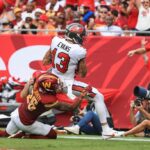

The Brutal Calculus of Talent: Titans’ Aggressive Play for ‘Violent’ Linebacker Reflects Global Imperative
POLICY WIRE — Nashville, United States — In the cutthroat calculus of professional sport, where human potential becomes a commodity and every roster spot a strategic asset, the Tennessee Titans’...

POLICY WIRE — Nashville, United States — In the cutthroat calculus of professional sport, where human potential becomes a commodity and every roster spot a strategic asset, the Tennessee Titans’ recent maneuver during the 2026 NFL draft speaks volumes. It wasn’t merely about securing another player; it was a brazen declaration of intent, a microcosm of the relentless, almost obsessive, global quest for what’s perceived as indispensable talent. General Manager Mike Borgonzi didn’t just pick a linebacker; he aggressively engineered a trade to acquire Anthony Hill Jr., a University of Texas product, whose attributes were distilled into three arresting descriptors: "long, fast, and violent."
Day two of the draft had barely receded into the rearview mirror. Still, Borgonzi, a man whose tenure has been characterized by a certain audacious resolve, wasn’t content. His decision to trade up nine spots with the Chicago Bears into the second round for Hill signals something beyond typical roster replenishment. It’s a high-stakes bet on a specific prototype, an athletic missile (as some have characterized him), designed to inject a potent, aggressive dynamism into the burgeoning defense orchestrated by Robert Saleh.
But why such a precipitous ascent up the draft board? "We’re excited to get Anthony Hill. It was a guy that we’ve done all our work on. Brought him in here on a top 30 visit, spent a lot of time with him," Borgonzi opined to the media, barely concealing his satisfaction. "He is the prototype linebacker in this defense: long, fast, violent — that we always talk about. You know, tremendous kid, great football character. We made some calls to try to go up, and you know, we felt that with some of the teams maybe ahead of us, it could be a chance that he goes. So, you know, we made the move to get the guy that we wanted." It’s a candor that belies the intense, secretive negotiations underpinning such transactions.
At its core, this isn’t just about football. It’s about the universal language of talent acquisition in a fiercely competitive environment. Teams, much like multinational corporations or nascent tech startups, are constantly scouring the globe — or, in this case, the collegiate landscape — for the next transformative asset. The vetting process is exhaustive, involving psychological profiles, physical examinations, and countless hours of film review. They’re not just buying a player; they’re investing in a future, hoping to mitigate the inherent risks associated with such colossal expenditures.
And Hill, for all his raw athletic prowess, remains a developing asset. "He’s got the motor, sure, and the physical tools are undeniable," a veteran scout, speaking anonymously to Policy Wire, observed. "But the NFL’s a different beast. The mental processing speed, the nuance of professional schemes — that’s the real test. It’s a steep learning curve, even for the ‘prototypes.’" This cold, hard assessment underscores the brutal realities of a league where the average career for a linebacker hovers around 2.9 years, a fleeting tenure for many, according to the NFL Players Association data.
This relentless pursuit of specific traits – length, speed, violence – mirrors a broader societal trend. From Silicon Valley’s hunt for coders with specific skill sets to nation-states competing for scientific minds, the demand for specialized human capital is omnipresent. For countries like Pakistan, grappling with youth unemployment rates that periodically crest above 10% (according to the Pakistan Bureau of Statistics), the lesson isn’t in gridiron tactics but in the systematic identification, development, and strategic deployment of its own human resources. How do you cultivate a "prototype" for the national economy, and then how do you ensure they don’t get poached?
So, while the Titans celebrate their latest acquisition, the broader implications are striking. It’s a zero-sum game, where one team’s gain is another’s missed opportunity. And every move, every trade, every draft pick is a calculated risk in an economy of athletic talent that operates with astonishing efficiency and occasionally, breathtaking ruthlessness.
What This Means
The Titans’ aggressive trade for Anthony Hill Jr. isn’t merely a sports headline; it’s a case study in the contemporary political economy of elite labor. Economically, it signifies the increasing premium placed on specific, measurable traits that translate directly to competitive advantage. Teams aren’t just drafting bodies; they’re investing in data-driven profiles, hoping for exponential returns on multi-million dollar contracts. It’s a supply-and-demand dynamic where scarcity of elite talent drives prices (and draft capital) skyward.
Politically, within the micro-governance of a sports franchise, Borgonzi’s move reflects a decisive, centralized authority willing to expend significant future assets (additional draft picks) for immediate, perceived gains. This mirrors a common dilemma in national policy: does one invest heavily in a few ‘sure bets’ or spread resources more broadly? the global appeal of American sports, exemplified by the reach of the NFL, subtly contributes to U.S. soft power, fostering cultural resonance in disparate regions, including the Muslim world, where football (soccer) traditionally reigns supreme. It’s a quiet form of cultural diplomacy, even if unintended.
This intense focus on athletic prowess, quantified — and commodified, raises ethical questions, too. What’s the societal cost of developing such a hyper-specialized talent pool, often at the expense of broader educational or societal investments? The drive for competitive excellence, as seen in the NFL, isn’t unique; it’s a universal human endeavor, manifesting differently across varied contexts, from global corporations vying for market share to emerging nations striving for economic parity. Ultimately, the story of Anthony Hill Jr. is less about a football player and more about the relentless, sometimes ruthless, machinery of modern talent acquisition.