

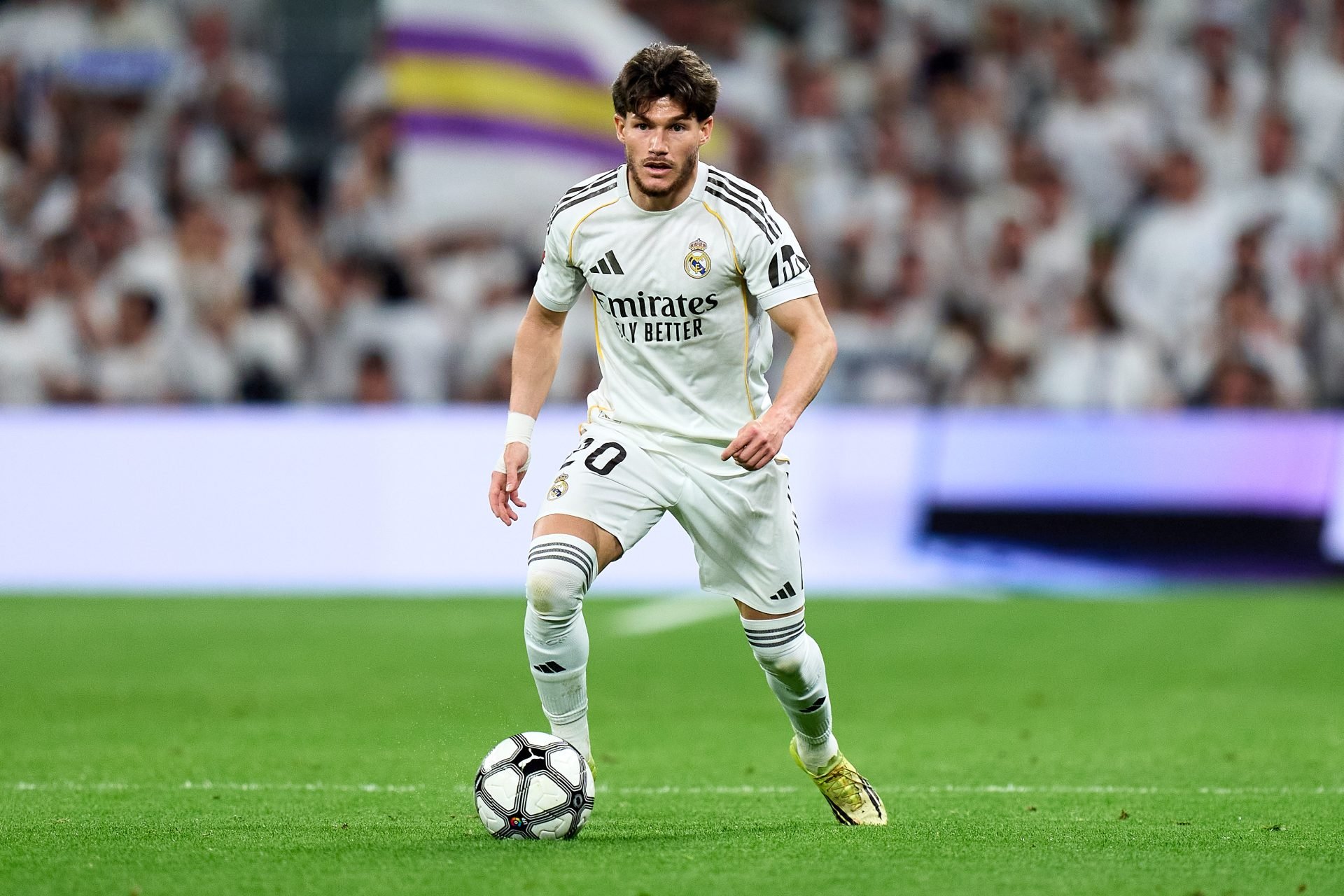
Iron Hand of Madrid: Perez’s Unyielding Edict Vetoes €30M Exit, Stifling Player Ambition
POLICY WIRE — Madrid, Spain — Sometimes, the quiet hum of ambition, even when backed by significant financial inducement and internal consensus, simply cannot overcome the immovable object of...

POLICY WIRE — Madrid, Spain — Sometimes, the quiet hum of ambition, even when backed by significant financial inducement and internal consensus, simply cannot overcome the immovable object of institutional dogma. Such was the fate of Fran Garcia, the Real Madrid defender whose January exit, a robust €30 million proposition from the English Premier League, evaporated not due to typical transfer market vagaries, but the singular, ironclad decree of Florentino Perez.
It wasn’t a sudden reversal of player form or a last-minute change of heart from the purchasing club. No, this veto originated from the very pinnacle of the Santiago Bernabéu hierarchy, casting a long, almost autocratic shadow over what appeared to be a straightforward transaction. For months, whispers had circulated about Garcia’s potential departure, a move that would’ve offered him more consistent playing time and Bournemouth a key defensive asset. Yet, the doors remained resolutely shut.
Behind the headlines, a compelling narrative unfolded: all parties, it seemed, were aligned. Fran Garcia, eager for minutes, was open to the switch. The coaching staff, led by manager Alvaro Arbeloa, had reportedly given their green light, confident that Garcia’s absence wouldn’t destabilize the squad’s delicate balance. Bournemouth’s interest wasn’t capricious either; their manager, Andoni Iraola, had prior experience with Garcia from their shared tenure at Rayo Vallecano, viewing him as a tailored fit for his tactical schema.
And the money? According to early reports from veteran football journalist Ramon Alvarez de Mon, the initial bid from Bournemouth for Garcia reached a formidable €30 million — a figure that underscores both the player’s market value and the Premier League’s formidable financial muscle. It wasn’t chump change, even for a club of Madrid’s colossal stature. Still, the deal withered.
At its core, the issue wasn’t financial or tactical. It was purely philosophical. Florentino Perez, a figure whose influence extends far beyond mere presidential duties, has long adhered to a strict, almost inflexible doctrine: no squad adjustments, neither incomings nor outgoings, during the January transfer window. It’s a strategy designed, presumably, to foster stability and avoid panic buying or selling, but it carries a steep price, particularly for players like Garcia, whose career trajectories risk stagnation.
“Our strategy isn’t mutable; it’s a foundational pillar,” Perez is understood to have conveyed privately, emphasizing his unyielding stance. “Mid-season market adjustments breed instability, — and that, frankly, is a luxury Real Madrid cannot afford. Consistency, not fleeting gains, defines our path.” This sentiment, while articulating a clear business philosophy, invariably clashes with the more fluid realities of professional sport and individual player aspirations.
Across the English Channel, the disappointment was palpable. Bournemouth’s manager, Andoni Iraola, whose interest in Garcia was well-documented, offered a nuanced observation on the missed opportunity. “Fran’s profile—his pace, his tactical acumen—he was precisely the piece we envisioned to fortify our backline,” Iraola lamented to reporters at the time. “It’s a genuine pity when all the pieces align, save for one crucial, external variable.”
This singular decision, emanating from the summit of one of Europe’s most storied institutions, isn’t just a football anecdote; it’s a stark reminder of centralized power’s reach, a dynamic familiar to observers across the globe, from Islamabad to Jakarta, where decisions from a solitary figure can frequently supersede widespread consensus, shaping fates with an almost imperial finality. It’s a testament to how even in the supposedly meritocratic world of elite sport, personal doctrine can dictate collective destiny.
So now, Garcia remains at Real Madrid, his role increasingly marginalized by competition from Ferland Mendy and the emergent Álvaro Carreras. The question looms: how long can a player of his calibre endure such a situation? It’s a classic conundrum in football’s gilded cage, where the prestige of a super club often means sacrificing regular playing time. But hey, it’s Real Madrid, right? Who wouldn’t want to be associated with such a global brand, even if it means warming the bench?
What This Means
This episode is far more than a simple transfer saga; it’s a potent illustration of power concentration within modern football and its ripple effects. Economically, Perez’s staunch position effectively rejected a significant €30 million inflow that could’ve been reinvested elsewhere or bolstered the club’s balance sheet. It reflects a club so financially robust it can unilaterally forgo substantial revenue in adherence to a principle, (a common enough occurrence, wouldn’t you say?) rather than immediate gain. This approach, while arguably fostering long-term squad cohesion, also runs the risk of alienating players who are denied opportunities for career progression elsewhere. It’s a paternalistic model of management that presupposes the club’s overarching wisdom trumps individual agency or even the tactical recommendations of its coaching staff.
Politically, within the microcosmic world of Real Madrid, it solidifies Perez’s status as the ultimate arbiter, his word an unassailable law. This top-down authority, where strategic dogma outweighs immediate opportunities, might offer stability but can also create an environment where dissent is implicitly stifled, and innovation or adaptation becomes challenging. For a player, it means that even with a clear pathway to regular football and a substantial fee on the table, their destiny can be held hostage by a rigid institutional philosophy. this insular decision-making contrasts sharply with the increasingly globalized nature of elite football’s fragile foundations, where player movement and market fluidity are (not exactly a revolutionary concept) often seen as essential components of progress.