


Alcaraz Out of French Open, Shakes Up Tennis Dominance
POLICY WIRE — Paris, France — The quiet clatter of medical scans, not the thunderous roar of a Grand Slam crowd, has delivered a seismic shock to the professional tennis world, hobbling its brightest...

POLICY WIRE — Paris, France — The quiet clatter of medical scans, not the thunderous roar of a Grand Slam crowd, has delivered a seismic shock to the professional tennis world, hobbling its brightest young star from one of the sport’s most hallowed courts.
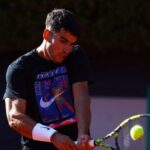
Carlos Alcaraz, the prodigious Spaniard who’s hoisted the last two French Open titles, confirmed his absence from Roland-Garros this year, a fiat stemming from an obdurate wrist injury. Few saw this specific gut-punch coming. Not with such certainty. Despite the whispers.
Just days before the official announcement, the world watched as Alcaraz pulled out of the Madrid Open, his home tournament. That fiat, however agonizing for his legions of Spanish fans, seemed a precursor to this larger, more impactful edict regarding the clay-court major.
“I’m trying to have a lot of patience these days, but I’m doing OK,” Alcaraz remarked recently in Spanish, his public persona attempting to project resilience. “I’m trying to stay positive.”
Still, the visible splint on his wrist, captured in a recent social media photo from a restaurant visit, screamed a bleaker truth than any carefully worded statement ever could. Almost as if official pronouncements aren’t always the full picture, eh?
His withdrawal isn’t merely about one player missing a tournament; it’s about a tectonic tremor in the sport’s current power dynamic. Alcaraz and Italy’s Jannik Sinner, you see, they’ve carved out a duopoly at the pinnacle of men’s tennis, becoming the twin engines of the men’s tour, a rivalry many had begun to compare to the legendary clashes of Federer, Nadal, and Djokovic.
Indeed, the math is stark: Alcaraz and Sinner have hoisted the last nine men’s Grand Slam trophies, a streak that began after Novak Djokovic’s U.S. Open victory in 2023, according to ATP Tour data. That’s a level of two-player dominance rarely witnessed, a stranglehold that’s frankly, pretty extraordinary.
For fans across the globe, from the packed stadiums of Melbourne to the burgeoning tennis communities in places like Lahore, Pakistan, these two players represent the sport’s compelling future. Their rivalry transcends traditional fan bases, attracting new eyes to the game. One injury. Affects all. Simple as that.
The absence of such a charismatic figure unquestionably cloaks the tournament in gloom. And it raises gnawing questions about the physical toll of modern tennis — a relentless, grinding schedule that seems to demand peak performance week after week, all while pushing athletes to their absolute limits — and whether the governing bodies are truly doing enough to safeguard their golden geese. Are we, as a sport, truly prioritizing player longevity over commercial expediency?
Related: Khushdil Shah’s Unlikely Heroics Shake PSL, Challenge Cricket’s Established Order
📄 POLICY WIRE WHITEPAPER PUBLISHED: PAKISTAN'S NATIONAL SECURITY POLICY PRIORITIES
👉 READ BY CLICKING HEREAnd yet, it also flings open a portal. For Sinner, specifically, it presents a golden opportunity, a chance to truly cement his burgeoning legacy (and maybe even snag that elusive French Open title). Roland-Garros remains the only Grand Slam missing from his rapidly expanding trophy cabinet. He’ll now enter as the undisputed favorite, freed from the immediate threat of his closest rival.
So, what’s next for the reigning French Open champion, huh? Intense rehabilitation. No doubt. Careful planning. Gotta ensure he doesn’t rush back — and risk further damage, that’s for sure.
What This Means
Alcaraz’s withdrawal triggers a genuine cascade of ramifications, touching every corner of the tennis ecosystem. Economically, major tournaments — these colossal sporting spectacles that drain coffers and captivate eyeballs — feast voraciously on star power, the kind of magnetic draw only a few elite athletes possess. While Roland-Garros is a marquee event regardless, the absence of its two-time defending champion and one-half of the sport’s most compelling rivalry will inevitably affect ticket sales, broadcast viewership, and sponsor engagement. It just will.
But from a competitive standpoint, the tournament suddenly feels gloriously more open, injecting a renewed sense of possibility for contenders who previously faced the insurmountable task of besting Alcaraz on his favored surface. Players like Alexander Zverev, Holger Rune, and even a resurgent Novak Djokovic (assuming he can actually find his form), will view this as a rare, shimmering window of opportunity.
Politically, within the sport’s governing bodies, this injury spotlights ongoing debates about player welfare — debates, it must be said, where one might charitably suggest a rather glacial pace of progress. Are the tours doing enough to protect their stars from burnout — and injury? The conversation isn’t new, but it gains renewed, almost desperate, urgency when a top-tier athlete, particularly one so young, is sidelined from a major event.
the narrative of men’s tennis shifts, abruptly. The Alcaraz-Sinner saga, so central to recent years, now has an unexpected intermission. It’ll really test how well the sport can keep the pot boiling and sustain its storytelling without one of its main characters on stage.
“This isn’t just a missed tournament; it’s a narrative interruption at the very peak of a burgeoning rivalry,” observes veteran tennis analyst Brad Gilbert. “For the game, it’s a temporary hiccup for sure, but also a chance for other players to step into the spotlight. That said, Alcaraz’s absence leaves a void that won’t easily be filled by any single player.”
Make no mistake, the immediate future of men’s tennis, particularly on clay, now rests heavily on Sinner’s shoulders and the ability of other top players to seize this utterly unexpected opportunity. But everyone, and I mean *everyone*, will be watching like hawks to see how quickly Alcaraz can rejoin the fray and reignite what has become the sport’s most captivating story.