


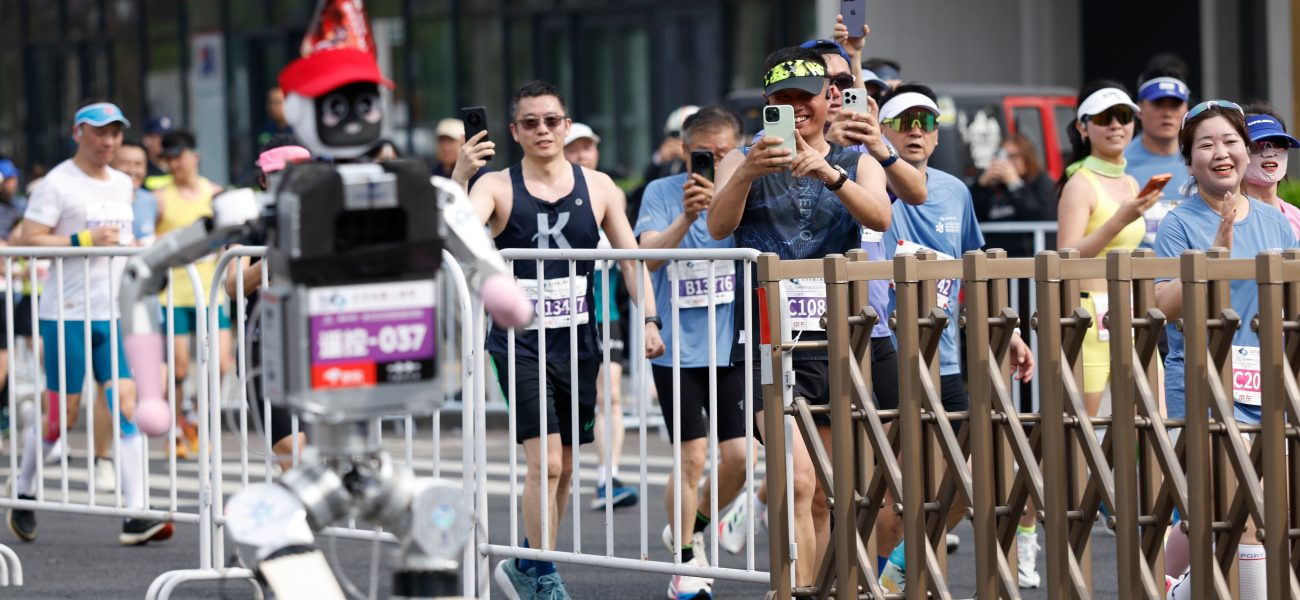
AI Humanoid Robot Shatters Human Half-Marathon World Record in Beijing
POLICY WIRE — Beijing, China — A groundbreaking moment in artificial intelligence and athletic endeavor unfolded recently in the Chinese capital, as an advanced humanoid robot officially eclipsed the...

POLICY WIRE — Beijing, China — A groundbreaking moment in artificial intelligence and athletic endeavor unfolded recently in the Chinese capital, as an advanced humanoid robot officially eclipsed the human world record for a half-marathon.
The unit, designated the ‘Cyberunner 5000’, completed the demanding 21.0975-kilometer course in an astonishing 57 minutes and 0 seconds. This incredible feat surpasses the previous human-held global best of 57 minutes and 31 seconds, set by Kenya’s Kibiwott Kandie in 2020, by a significant margin of 31 seconds.
Unprecedented Robotic Athleticism
Developed by the cutting-edge robotics division of Beijing Future Tech Innovations, the Cyberunner 5000 showcased unparalleled endurance and mechanical precision throughout the race. Its performance marks a pivotal shift in the ongoing dialogue between human physical capabilities and the rapid advancements in robotic engineering.
“This achievement is not just about raw speed; it’s a testament to sophisticated AI for dynamic balance, energy optimization, and real-time terrain adaptation,” stated Dr. Li Wei, lead engineer for the Cyberunner project. “We are witnessing the dawn of a new era where machines can truly compete with, and even surpass, human athletic benchmarks.”
The successful run, held under controlled conditions at a certified track, attracted global attention, sparking widespread discussion about the future implications of robotics in sports and daily life. The event highlighted China’s significant investment and progress in the field of intelligent autonomous systems.
Read More: China’s Pivotal Role Secures Iran-US Ceasefire Amid Strait of Hormuz Tensions
Implications for Future Competition and Training
While the immediate focus remains on the record-breaking run, experts are already considering how such robotic prowess could influence human athletic training and competition. The data gathered from the Cyberunner’s performance could provide invaluable insights into biomechanics, energy expenditure, and optimal running forms, potentially benefiting human athletes.
📄 POLICY WIRE WHITEPAPER PUBLISHED: PAKISTAN'S NATIONAL SECURITY POLICY PRIORITIES
👉 READ BY CLICKING HEREThe race against the clock, whether by humans striving for personal bests or robots optimized for peak performance, continues to captivate audiences worldwide. This historic run in Beijing firmly places robotics in the spotlight of athletic achievement.
Read More: Kumar Sangakkara’s Mentorship Philosophy: Empowering IPL Prodigy Vaibhav Sooryavanshi
The Rise of AI in Physical Feats
- Advanced Gait Systems: The Cyberunner employs sophisticated algorithms to mimic and optimize human running kinematics.
- Lightweight Composites: Constructed from aerospace-grade materials, ensuring both durability and minimal mass.
- Real-time Adaptive AI: The robot’s AI continuously adjusts its stride, balance, and power output based on environmental feedback.
This remarkable accomplishment underscores the accelerating pace of technological innovation, prompting both excitement and contemplation about the boundaries between human and machine capabilities in the 21st century.