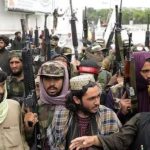


The Qur’an and the Sunnah establish a coherent framework for lawful warfare, which rests exclusively under the discretion of legitimate Muslim rulers. In Pakistan’s context, this doctrinal principle acquires profound significance, directly impacting internal security, national sovereignty, and the legitimacy of state power. This article integrates Islamic jurisprudence with an analysis of Pakistan’s national security paradigm to argue that FAK’s resort to violence represents fasād fil-ardh (disorder on earth) rather than jihad, echoing the early Khawarij who rebelled against legitimate Muslim rule. Furthermore, it highlights the immense sacrifices rendered by the Pakistani state and its armed forces in countering this existential threat.
The Pakistani State and Army: Sacrifice and Resolve in the Face of Terrorism
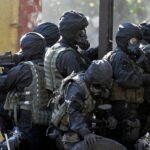
Before a theological deconstruction of FAK’s ideology, it is imperative to acknowledge the context in which this battle is being waged. For over two decades, Pakistan has been on the front line of a war imposed by terrorist networks, including FAK. The Pakistan Army, alongside other law enforcement agencies, has undertaken monumental counter-terrorism operations such as Zarb-e-Azb, Radd-ul-Fasaad and ongoing Azm-e-Istehkam. These operations were not merely military campaigns; they were a national endeavor to reclaim territory, restore the state’s authority, and, most importantly, protect the lives and ideology of the Pakistani people.
The sacrifices made in this war are staggering. Over 80,000 Pakistani civilians and security personnel have lost their lives to terrorism. From the hallowed grounds of Army Public School in Peshawar to the bustling markets of Quetta and the mosques of Peshawar, the FAK and its ideological kin have waged a war of terror against the very soul of the nation. The Pakistan Army has faced these challenges with unwavering resolve, with thousands of its soldiers and officers embracing Shahadat (martyrdom). Their blood is a sacred testament to the state’s commitment to eradicating the menace of fasād and protecting the nation’s future. This narrative of sacrifice fundamentally undermines FAK’s false claims of fighting for the people; they are, in fact, the butchers of the people they claim to represent.
Historical and Ideological Background of FAK
FAK emerged in the early twenty-first century from the remnants of militant networks that once operated along Pakistan’s western frontier. Its leadership, primarily composed of former tribal militants and religious students, adopted a violent agenda following Pakistan’s critical alliance with the global counter-terrorism coalition. Initially presenting itself as a movement for the enforcement of Sharia, FAK rapidly evolved into a violent insurgency targeting civilians, religious scholars, and state institutions, the very entities Islam commands to protect.
Ideologically, FAK’s rhetoric draws inspiration from transnational jihadist thinkers such as Abdullah Azzam and Sayyid Qutb, whose writings were misappropriated to justify rebellion against contemporary Muslim governments. While Azzam emphasized defensive jihad during foreign occupation, FAK’s ideologues extended his argument to declare war against their own state, an extrapolation devoid of Qur’anic or juristic legitimacy. This doctrinal transition, which employs takfir (excommunication) to justify killing fellow Muslims, mirrors the historical Khawarij who excommunicated and fought against the rightful Caliph ʿAlī ibn Abī Ṭālib.
The Islamic Doctrine of Jihad under State Authority
Islamic jurisprudence articulates a precise and ethically constrained doctrine of jihad. The Qur’an mandates that combat is permissible to fight those who are fighting you because you have been wronged.
“Permission [to fight] has been given to those who are being fought because they were wronged.” (Qur’an 22:39)
Surah al-Mā’idah (5:33) outlines divine punishment for those who “wage war against Allah and His Messenger and strive to spread disorder (fasād) on earth,” situating unlawful violence within the category of moral exploitation.
“Indeed, the penalty for those who wage war against Allah and His Messenger and strive upon earth [to cause] corruption is none but that they be killed or crucified…” (Qur’an 5:33)
The Prophetic teachings reinforce this framework. It is narrated that the Prophet said, “Whoever carries arms against us, is not from us.” (Sahih al-Bukhari 6874). Classical scholars institutionalized these teachings: al-Māwardī defined jihad as a collective obligation requiring the authorization of the Imam; al-Ghazālī affirmed that individual calls to arms constituted sedition; and Ibn Taymiyyah declared that rebellion brings greater harm than benefit.
The distinction between legitimate jihad and rebellion (baghawat) is a cornerstone of Islamic political theology. FAK’s self-declared “jihad” collapses under classical scrutiny: it lacks lawful authorization from the Pakistani state, violates the conditions of proportionality and justice, and targets Muslims and civilians contradicting the very ethical boundaries Islam enforces upon warfare.
Contradictions between FAK’s Ideology and Islamic Teachings
FAK’s narrative rests upon selective citation of Qur’anic verses and Hadiths, detached from their juristic context. By isolating texts, FAK constructs a self-serving theology that equates political dissent with divine command. This distortion directly conflicts with the Qur’anic command to obey lawful authority (Qur’an 4:59) and the prohibition of transgression in warfare (Qur’an 2:190).
“O you who have believed, obey Allah and obey the Messenger and those in authority among you.” (Qur’an 4:59)
📄 POLICY WIRE WHITEPAPER PUBLISHED: PAKISTAN'S NATIONAL SECURITY POLICY PRIORITIES
👉 READ BY CLICKING HERE
“Fight in the way of Allah those who fight you but do not transgress. Indeed, Allah does not like transgressors.” (Qur’an 2:190)
The Prophet (ﷺ) warned against fitna arising from those who recite the Qur’an but fail to internalize its meaning, an allusion often applied to the Khawarij (Sahih Muslim, 1066). FAK’s rhetoric mirrors this phenomenon: outwardly pious but inwardly subversive. Recognized ulema across the Muslim world from Al-Azhar to Pakistan’s own Darul Uloom Karachi have consistently refuted such interpretations, issuing fatwas that reject unilateral jihad declarations by non-state actors.
The Sanctity of Human Life and the Prohibition of Fasād fil-Ardh
“Because of that, We decreed upon the Children of Israel that whoever kills a soul unless for a soul or for corruption [done] in the land – it is as if he had slain mankind entirely. And whoever saves one – it is as if he had saved mankind entirely.” (Qur’an 5:32)
The Qur’an’s moral vision centers upon the sanctity of human life. FAK’s actions attacking mosques, schools, and public spaces fall squarely within the Qur’anic definition of fasād fil-ardh. Their campaign not only violates the ethics of warfare but also negates the foundational Islamic principle that values life as sacred.
The Pakistani State’s Religious and Constitutional Mandate
Pakistan’s constitutional and religious framework provides a robust counter-narrative to FAK’s theological claims. Article 227 of the Constitution stipulates that all laws must conform to the Qur’an and Sunnah, thereby embedding Islamic jurisprudence within the state’s legal architecture. This affirms that Pakistan, as a sovereign Islamic state, holds exclusive authority to interpret and implement jihad within lawful boundaries.
The Council of Islamic Ideology (CII) and leading religious institutions like Darul Uloom Karachi have repeatedly declared that no individual or group may unilaterally declare jihad. Fatwas have consistently classified attacks on Pakistan’s security forces and civilians as harām and acts of rebellion.
Therefore, Pakistan’s counter-terrorism strategy, including the National Action Plan, is not merely a security imperative but a religious obligation. Operations to eliminate fasād derive moral legitimacy from both constitutional and Islamic mandates, reinforcing the principle that defending social order and civilian life is itself a form of righteous struggle.
Conclusion
The ideology of Fitna al-Khawarij (FAK), though cloaked in the dialect of religion, fundamentally contradicts Islam’s teachings on jihad, state authority, and the sanctity of life. By usurping divine sanction and defying the lawful governance of Pakistan, FAK replicates the pathology of the early Khawarij, sowing discord under the pretense of piety.
The Pakistani state, backed by its constitutional mandate and the unanimous consensus of its religious scholars, stands on the solid ground of Islamic theology. The sacrifices of the Pakistan Army and the nation’s citizens in this long war are not in vain; they represent a collective defense of both the nation and the true, peaceful spirit of Islam. In theological, legal, and strategic terms, the fight against FAK is a jihad in its true sense, a struggle to uphold order, justice, and the divine law against the forces of corruption and chaos. By defeating this violent ideology, Pakistan safeguards its sovereignty and restores Islam’s authentic image as a faith of peace, justice, and order.
Author