

AJK Day: Celebrating Freedom and the Kashmiri Spirit
Every year on October 24, the people of Azad Jammu and Kashmir observe their Founding Day, which represents their collective determination to live in dignity, peace, and justice. Established in 1947,...
This day is extremely symbolic and political in the backdrop of the Kashmir conflict. It reminds the world that, despite living in a divided territory, the Kashmiri people have developed a peaceful, functional society, in contrast to the situation across the Line of Control in Indian Illegally Occupied Jammu and Kashmir (IIOJK), where persecution and deprivation of rights are commonplace.
AJK: Progress Through Stability
Despite its limited size and difficult terrain, AJK has achieved significant strides in governance and human development. With a population of over 4.5 million, it has one of the highest literacy rates in South Asia, at roughly 77%, surpassing numerous other regions in Pakistan and much above that of IIOJK. Every year, the development agenda prioritizes education, healthcare, and local government.
The AJK Annual Development Programme for 2025-26 earmarked more than Rs 49 billion, with more than half going to infrastructure, one-third to social sectors like education and health, and the remainder to productive sectors like agriculture and energy. The government is also seeking to unlock approximately 8,000 megawatts of hydropower potential, demonstrating vision and ambition.
Schools, universities, clinics, and roads in Muzaffarabad, Mirpur, and Rawalakot demonstrate a people-centered approach to development. Citizens have political engagement thanks to an elected legislative assembly, an independent judiciary, and a vibrant local press. These institutions demonstrate Pakistan’s commitment to regional peace, growth, and participatory government.
Despite the hardships, the inhabitants of AJK live without curfews, military lockdowns, and censorship. They live with dignity, knowing their rights and identities. Their narrative is about empowerment and nation-building.
IIOJK: Freedom Denied; Voices Silenced
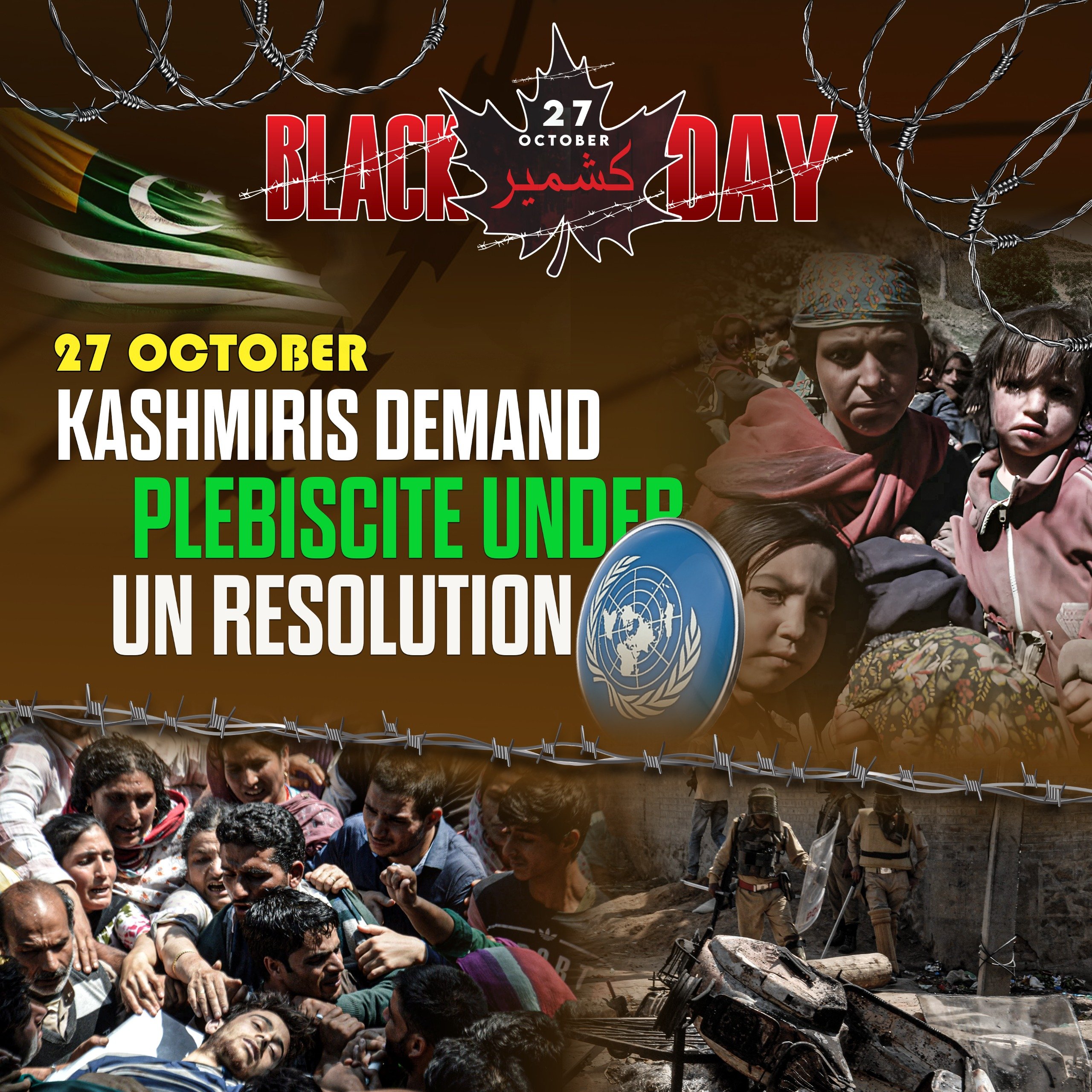
Across the border in IIOJK, the situation remains dire. Since India’s unlawful abrogation of Articles 370 and 35A in August 2019, the area has been under almost continual military lockdown. According to the United Nations, more over 900,000 Indian troops supervise an eight million-person population, making it the world’s largest militarized zone.
Amnesty International, Human Rights Watch, and the United Nations Office of the High Commissioner for Human Rights have all recorded significant breaches, including extrajudicial murders, arbitrary detentions, torture, sexual assault, and collective punishment. Thousands of Kashmiris remain imprisoned under harsh legislation such as the Public Safety Act and the Unlawful Activities Prevention Act, which permit imprisonment without trial.
Enforced in IIOJK since 1990, the Armed Forces Special Powers Act (AFSPA) grants sweeping powers and near-total immunity to security forces operating in “disturbed” regions. For 35 consecutive years, this draconian law has enabled the militarization and suppression of civil rights in the region. According to reports, more than 95,000 Kashmiris have been slaughtered since 1989, with over 22,000 women widowed and over 107,000 children orphaned. During so-called cordon and search operations, whole neighborhoods were demolished. The communication blockage that followed the 2019 shutdown hampered education, healthcare, and journalism.
The Modi government’s demographic engineering plans, which include awarding residence certificates to non-Kashmiris, pose a danger to the region’s Muslim-majority character. These activities contradict international law and UN Security Council decisions that affirm Kashmiris’ freedom to determine their own future.
Two Realities, One Struggle
The distinction between AJK and IIOJK is unambiguous and moral. On one side of the Line of Control is an area based on inclusion, representation, and wellbeing. On the other side is an occupied territory where fear replaces freedom and military force replaces political discourse.
People in AJK elect their politicians, enjoy their culture, and are confident in their future progress. The same objectives are criminalized at IIOJK. Even the press and civil society are under surveillance. The contrast is not only political, but civilizational: one side represents empowerment and optimism, while the other represents occupation and misery.
The United Nations and human rights groups have frequently urged for independent investigations into the IIOJK’s ongoing violations, while AJK continues to be recognized for its development record and peaceful government.
A Call to Justice and Global Awareness
AJK’s Founding Day is not just a celebration of independence, but also a reminder of unfinished business. It represents the Kashmiri people’s right to self-determination, which is recognized under international law and supported by the United Nations.
The world cannot stay apathetic to the plight of the people of IIOJK. Silence simply encourages those who continue tyranny. The contrast between AJK’s stability and IIOJK’s turbulence challenges the international community’s conscience.
Kashmiris on both sides of the Line of Control are one people with a shared destiny. They want peace, fairness, and the ability to create their destiny. The example of AJK demonstrates what Kashmir may become if liberty, progress, and self-respect are allowed to thrive.
Conclusion
As AJK commemorates its founding day, its flag flies as a sign of endurance and optimism. It reflects a promise fulfilled and a vision maintained: that a free and dignified society can be established despite political divisions.
While the people of IIOJK stay silent under occupation, the people of AJK continue to demonstrate that growth and peace are attainable with independence. Their voyage exemplifies the Kashmiri people’s right to self-determination. The difference between the two places should alert the world to a basic truth: freedom brings wealth, but oppression brings only sorrow.
Author