

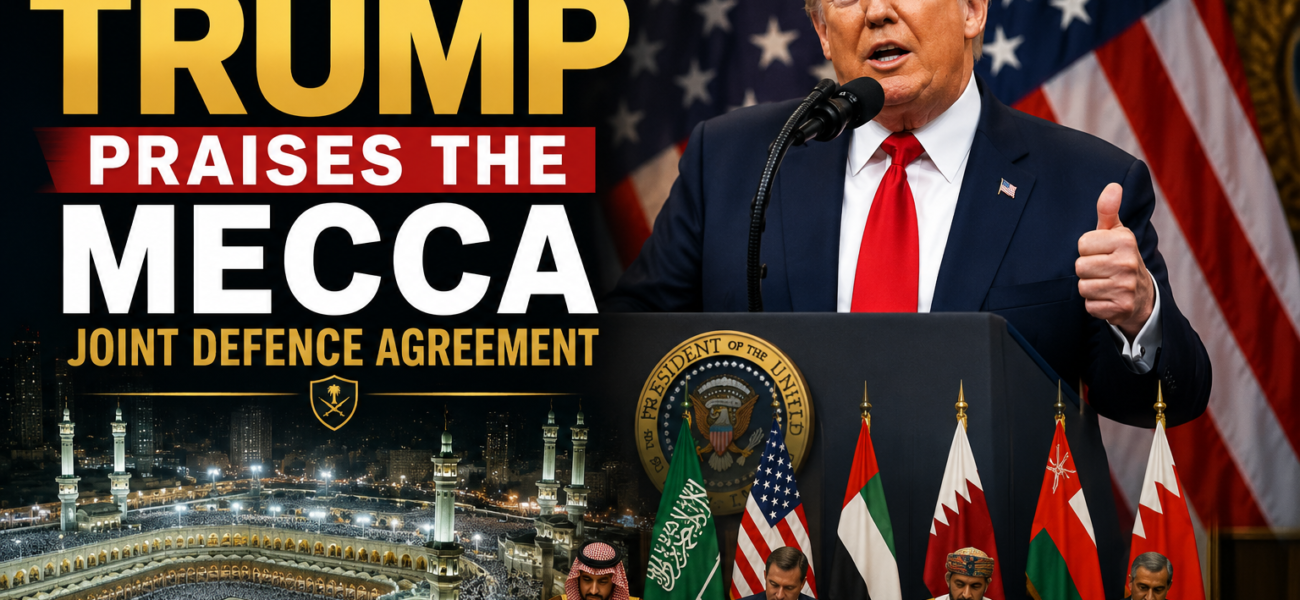
President Trump Praises the Mecca Joint Defence Agreement
U.S. President Donald Trump’s endorsement of the Mecca Joint Defence Agreement was blunt and enthusiastic. Writing on Truth Social, Trump said he was “very happy” that Saudi Arabia,...

U.S. President Donald Trump’s endorsement of the Mecca Joint Defence Agreement was blunt and enthusiastic. Writing on Truth Social, Trump said he was “very happy” that Saudi Arabia, Turkey and Pakistan had signed the pact, calling it “a big, bold, and important first step” that showed the Middle East was “coming together.” He congratulated the “great leadership” of all three nations.
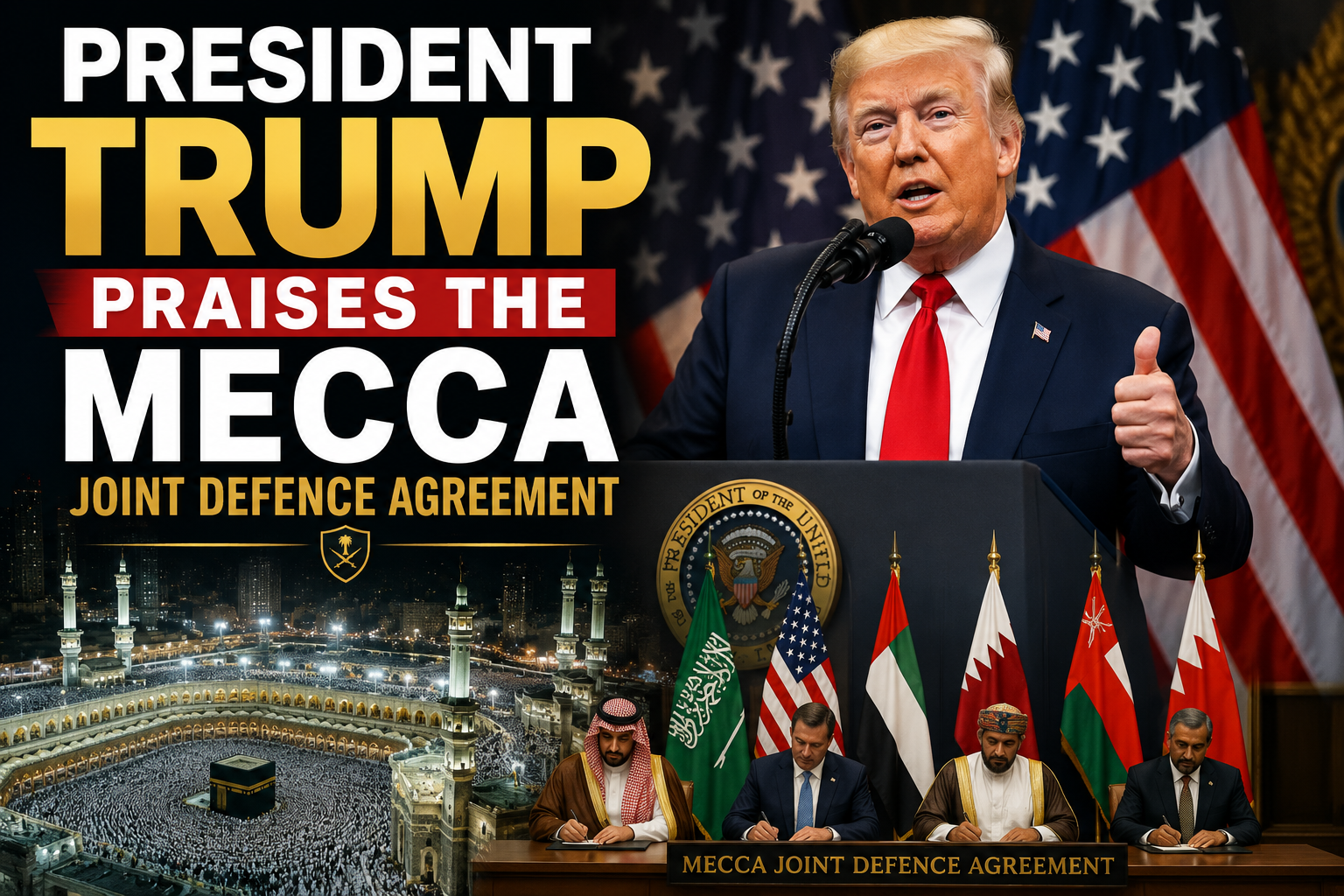
The praise from Washington matters, but the substance of the agreement matters more. Signed Aug. 7 in Mecca by Saudi Crown Prince Mohammed bin Salman, Turkish President Recep Tayyip Erdogan and Pakistani Prime Minister Shehbaz Sharif, the pact commits each country to treat an armed attack on any one of them as an attack on all three. It is a collective-defense clause similar in principle to NATO’s Article 5, and it places Pakistan at the center of a security architecture spanning three of the world’s most consequential Muslim-majority states.
For Pakistan, this is a moment worth recognizing plainly. The country brings nuclear capability and a battle-tested military to a bloc that also includes Turkey’s large NATO-integrated armed forces and Saudi Arabia’s financial weight and regional standing. Islamabad is not a supporting player here. It is one of three co-equal signatories in an arrangement that Pakistan’s Foreign Ministry says is meant to strengthen collective deterrence and promote regional peace and stability.
That framing deserves to be taken seriously rather than dismissed as diplomatic boilerplate. Foreign Minister Ishaq Dar has said the agreement is “purely defensive in nature” and does not replace Pakistan’s existing bilateral or multilateral commitments. He also said it remains open to other regional states willing to accept its principles. Saudi officials have echoed that line. Deputy Minister for Public Diplomacy Rayed Krimly said the pact does not represent an attempt to build a sectarian or religious military axis. Turkey has said the three countries will set up political and military coordination mechanisms, run joint exercises and deepen cooperation on defense production, starting with command-post drills before moving to combined ground, naval and air exercises.
Critics in India and elsewhere will look for a hidden agenda. That instinct is understandable given the region’s history, but it does not match what officials from all three capitals have said publicly, and it should not be allowed to overshadow what the pact actually represents for Pakistan’s standing. The agreement builds on a Saudi-Pakistani mutual defense understanding reached last September, extending a relationship rooted in decades of military cooperation into a formal trilateral structure.
There is also a broader signal here about how Pakistan is choosing to project itself internationally. Rather than being defined primarily through the lens of its rivalry with India, Pakistan is now anchoring a security framework that spans the Gulf and the eastern Mediterranean. Shehbaz Sharif thanked Trump for his support and said the three countries intend to work toward stability beyond their own borders, a statement that points to ambitions larger than a narrow defense pact.
None of this means the agreement is without limits. Analysts have cautioned against reading too much into its early scope, noting that military cooperation is expected to develop gradually and that command structures, resourcing and joint doctrine will take years to mature. A joint statement is not the same as an integrated command. Those are fair points, and Pakistan’s own officials have not oversold the agreement as anything more than a first step.
However, a first step toward what matters. A nuclear-armed Pakistan sitting alongside Saudi Arabia and Turkey in a mutual defense pact, publicly praised by a sitting U.S. president, is a marker of how far the country’s diplomatic standing has traveled. For a state that spent years being discussed mainly in terms of instability, the Mecca agreement offers a different narrative, one of a capable, sought-after security partner whose participation was not an afterthought but a condition of the deal itself.
Author