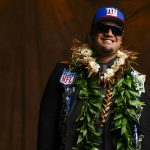



2026 NFL Draft: Rookie Class Poised to Redefine Franchises, Spark Immediate Impact
POLICY WIRE — Las Vegas, Nevada — The roar of the crowd had barely dissipated, but murmurings of seismic shifts across the National Football League are already echoing, months ahead of the new...

POLICY WIRE — Las Vegas, Nevada — The roar of the crowd had barely dissipated, but murmurings of seismic shifts across the National Football League are already echoing, months ahead of the new season. Make no mistake. The 2026 NFL Draft delivered its usual dose of surprises — and strategic gambles. None perhaps more telling than the Las Vegas Raiders’ decision to take quarterback Fernando Mendoza with the first overall pick, a genuine roll of the dice in a high-stakes poker game.
Many presumed the Raiders would fortify their offensive line or perhaps snag a game-breaking defender, especially with veteran signal-caller Kirk Cousins still under contract. But the franchise clearly saw something transcendent in Mendoza— a dazzling, almost audacious vision that flies in the face of conventional wisdom and underscores a long-term vision over immediate need — signaling a monumental shift in their foundational strategy. “We believe in building for tomorrow, not just for Sunday,” posited a confident Raiders General Manager David Ziegler shortly after the pick. “Fernando’s got all the tools, — and we’re prepared to let him develop into the cornerstone of this franchise.”
That’s a significant shift. According to Yahoo Sports’ Justin Boone, Mendoza’s projected for 2,743 passing yards, 18 touchdowns, and 14 interceptions in 13 starts as a rookie, alongside 251 rushing yards and a score. Quite the rookie campaign if he pulls it off, huh?
And yet, not every quarterback selection carried such a weighty immediate expectation. The Los Angeles Rams, for instance, opted for Ty Simpson at 13th overall, a choice widely seen as a prudent succession plan for the 38-year-old Matthew Stafford (who, let’s be honest, isn’t getting any younger). There’s no immediate pressure for Simpson to step into the starter role; instead, he’s insurance, a long-term project. For more on that particular gamble, one might recall the Rams’ Ty Simpson Pick Raises Eyebrows, Tests McVay’s Leadership.
Running backs quickly took center stage after the quarterbacks. The Arizona Cardinals wasted no time, snatching Jeremiyah Love at third overall. He’s a three-down workhorse. Exceptional vision. Breakaway speed. Exactly what a rebuilding team hungers for.
Poor Tyler Allgeier, a free-agent acquisition, already finds himself in a familiar shadow, a cruel twist of fate for any back. “Love’s dynamism changes our entire offensive outlook,” Cardinals Head Coach Jonathan Gannon commented. “He’s got the ability to be an RB1 from day one, — and that excites us.”
Later in the first round, the Seattle Seahawks added another Notre Dame product, Jadarian Price, at 32nd overall. Price, who played behind Love in college, brings a physical running style and tackle-breaking prowess, rendering him a compelling prospect despite a less-than-voluminous college resume.
Wide receivers, always a hot commodity, permeated the mid-to-late first round. The Tennessee Titans grabbed Carnell Tate at fourth overall, a big-bodied ‘X’ receiver (the kind who bullies defensive backs) with exceptional contested-catch ability and precise route running. He’s projected by Boone to secure 72 receptions for 1,002 yards and 5 touchdowns in his debut season, signaling immediate fantasy relevance. Can’t argue with that!
The New Orleans Saints picked Jordyn Tyson at eighth overall, a versatile weapon who separates well and should be a reliable target for his new quarterback. Then came the Philadelphia Eagles, who snagged Makai Lemon at 20th overall, a scrappy playmaker whose toughness and contested catch ability are notable. This pick, some argue, suggests potential future movements for existing Eagles talent, a topic often explored when Eagles Seize Draft Value After Unexpected Rams Gambit Reshapes Top Picks.
Further down the board, the Cleveland Browns picked dynamic athlete KC Concepcion at 24th, and the New York Jets added Omar Cooper Jr. at 30th overall, a receiver whose contact balance and ability to fight for extra yards draw comparisons to players like Deebo Samuel Sr. The diversity in their skill sets, man, it’s a testament to the league’s evolving offensive strategies.
The NFL’s scouting networks, increasingly global in their reach, are recognizing talent from unexpected quarters — from sun-baked fields in Europe to bustling academies in South Asia, mirroring the growing interest in American football from regions as diverse as Europe and parts of South Asia — influencing the global talent pool for future drafts. Communities in countries like Pakistan are seeing a steady rise in NFL viewership, drawing young athletes and fans who are keen to understand the nuances of the game and its strategic plays.
So, while the Jets also took tight end Kenyon Sadiq at 16th overall, and Geno Smith provides an upgrade at quarterback, Sadiq will face stiff competition for targets, sharing the field with talents like Garrett Wilson and Breece Hall. That’s a Herculean task for any rookie tight end, no matter how promising.
What This Means
This draft class, more than many in recent memory, illuminates a fascinating tension between immediate impact and long-term strategic planning. Several teams, like the Raiders, are making bold plays for future franchise cornerstones, seemingly willing to endure short-term growing pains for a shot at sustained greatness. Others, such as the Cardinals with Love, are clearly targeting instant production to jumpstart their rebuilding efforts.
The sheer volume of first-round receivers accentuates the modern NFL’s aerial dominance and the critical need for playmakers who can win in space. These picks aren’t just about filling roster spots; they’re about recalibrating offensive blueprints and setting the tone for their respective divisions for years to come. Will these bold bets pay off, or will they become cautionary tales?
Ultimately, this draft class isn’t just about individual talent; it’s a collective statement on the future direction of the league — a Rorschach test for general manager philosophies across the league, if you will. “The teams that marry raw talent with a coherent, patient development plan are the ones that will truly thrive from this crop of rookies,” opined veteran NFL analyst Mike Florio, offering a forward-looking assessment. “We’ll see dynasty builders and flash-in-the-pans, but the groundwork for the next decade of NFL football was laid on this draft night.”