


Celtics Trade: Jaylen Brown Exposes Sports Business Truth
Jaylen Brown's Celtics trade reveals the harsh business side of professional sports. Discover why transparency and respect are often ignored, impacting employees worldwide.

POLICY WIRE — Boston, USA — When millions of dollars exchange hands and allegiances shift with the capriciousness of a Wall Street algorithm, the talk of loyalty often rings hollow. We hear it a lot in professional sports—a sentiment draped over the raw, naked mechanics of a multibillion-dollar industry. But every now and then, the human element—that messy, inconvenient thing—barges through the boardroom’s polite veneer. And when it does, it usually leaves a scorch mark. Just ask Jaylen Brown.
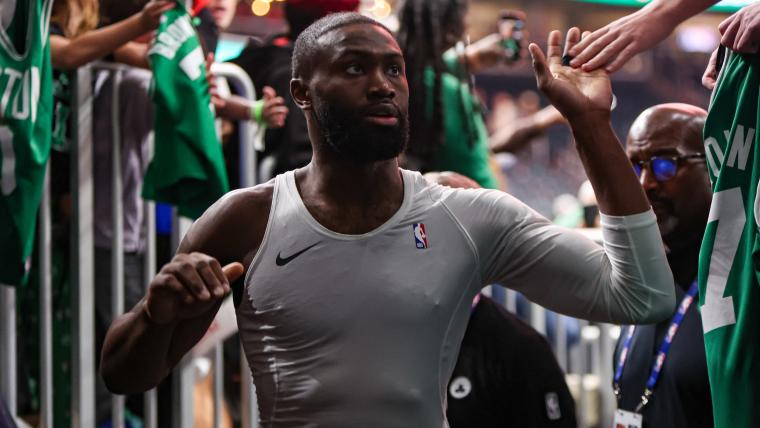
It wasn’t a bad locker room; it wasn’t a public dispute. It was just business, Boston insisted. But for the player at the center of it all, a man instrumental in hoisting banners, it felt a whole lot like being treated as disposable. His departure from the Boston Celtics, trading green for the 76ers’ blue — and red, wasn’t just a personnel swap. It became an unexpected, potent lesson in the unforgiving economics of talent, an impersonal machine chewing through a decade of dedication. [QUOTE_PLACEHOLDER]
And Brown, bless his heart, didn’t hold back. His words cut right through the press release platitudes, revealing a deep gash where trust once was. Speaking during a livestream event, he laid bare the corporate nonchalance he experienced firsthand. I wasn’t thrilled with how the conversation was facilitated. I did feel like it was a lack of respect. At one point it was fine, — and then out of nowhere it just went left. I definitely think there’s more to it. There definitely is more to it. I know Brad is getting a lot of criticism, but I just wish more of it could have been explained. I just wish they had the respect to tell me exactly what it was, and I would have understood and respected that. It’s a blistering indictment, really, not just of a sports franchise, but of any institution that values its assets over its people.
The business side of sports can feel like a game of high-stakes poker where some players don’t even realize they’re being bet. Consider this: the average tenure of an NBA player with a single franchise, according to analysis of past roster data, rarely exceeds 3.5 years for those who aren’t career superstars. For Brown, he’d already surpassed that—way surpassed it—playing a major role for Boston for nearly a decade. Yet, that doesn’t shield anyone from the transactional currents that dictate everything.
What’s truly galling, — and what really got under Brown’s skin, was the sheer lack of transparent dialogue. The superstar, the one who helped bring a championship, discovered his fate largely through rumor mills and corporate maneuvering. He even confessed his bewilderment on social media. I’m still processing how this all went down. I’m excited and disappointed at the same time. It’s the kind of quote that perfectly captures the modern professional’s paradox: immense wealth, little control, and an abundance of mixed emotions.
Because ultimately, these aren’t just athletic commodities. They’re individuals with lives, families, — and feelings. Brown spoke volumes about his commitment: I earned my respect from this city. I never asked for shortcuts or special treatment. I simply showed up every day, put my head down, and accepted every challenge. That’s a powerful statement from a man who expected—maybe naively—that consistent performance and dedication would yield more than just another trade chip.
📄 POLICY WIRE WHITEPAPER PUBLISHED: PAKISTAN'S NATIONAL SECURITY POLICY PRIORITIES
👉 READ BY CLICKING HEREAnd let’s not forget the sheer scale of the deal itself. ESPN, ever the purveyor of breaking news in the sports world, described it thus: Jaylen Brown has a new home, as the Boston Celtics agreed to send the former NBA Finals MVP to the Philadelphia 76ers in a blockbuster trade Wednesday, sources told ESPN’s Shams Charania. The 76ers are sending Paul George, two first-round picks (2028, 2031) and two second-round selections (2028, 2030) to Boston to complete the deal, sources said. It’s not just a handshake and a pat on the back; it’s an entire economy in motion, fueled by futures and projections. A lot of folks just see the splashy headlines, but we know there’s usually more to it. Always.
But the raw, human side of Brown’s disappointment resonates far beyond the glossy arenas of American sports. You see a similar disconnect in corporate boardrooms, or within global supply chains that span continents. Think about the legions of textile workers in Lahore or the programmers in Karachi, whose jobs and futures can hinge on the impersonal dictates of a multinational firm’s quarterly report or a sudden strategic pivot. Their loyalty, hard work, and years of service, like Brown’s, can suddenly be deemed a replaceable variable in a profit-loss calculation. The scale changes, sure, but the feeling of sudden, unexplained discard? That’s universal. We’ve seen these dynamics play out in countless industries, regardless of geography or specific trade.
What This Means
Jaylen Brown’s candor—raw and unvarnished as it was—serves as a political micro-lesson. It exposes the ongoing tension between capitalist imperatives and the lingering human need for respect and transparency. The sports world, a hyper-accelerated microcosm of broader market forces, constantly battles this friction. Teams are public trusts in a sense, yet operate with all the cold efficiency of private equity. What Brown asked for wasn’t more money or fame; it was simply a better explanation, a more respectful exit from a long-term relationship. This isn’t just about a basketball player; it’s about a global trend. Organizations, whether they’re athletic franchises or international conglomerates, routinely face crises of trust when they fail to manage the human implications of purely business decisions. Ignoring the emotional capital invested by individuals, even high-earning ones, ultimately breeds cynicism and erodes public faith, both in the specific entity and in the larger systems they represent. For the Boston Celtics, it’s a public relations hit, yes, but for the rest of us, it’s a stark reminder that even at the highest echelons of professional achievement, the craving for basic human decency remains powerfully resonant. We ought to pay attention to that, particularly as global economic shifts continue to reshape the employee-employer dynamic everywhere—from Boston to Bangladesh.
And it’s a dynamic we see echo everywhere from international diplomacy to local city council decisions. A perceived slight, a lack of transparency, a dismissal of earned respect, it can derail goodwill faster than any scandal. But will they learn? That’s the question.