

Wisconsin’s Republican Civil War: A Son-in-Law’s Bid Tests Trump’s Sway
POLICY WIRE — Washington, D.C. — Wisconsin, of all places, has become the proving ground for a curious new wrinkle in the grand, meandering narrative of the modern Republican Party. It isn’t about...

POLICY WIRE — Washington, D.C. — Wisconsin, of all places, has become the proving ground for a curious new wrinkle in the grand, meandering narrative of the modern Republican Party. It isn’t about cheese, or beer, or even that state’s penchant for political drama—not directly, anyway. It’s about a name, a famous affiliation, and the somewhat awkward reality that even a tacit nod from Mar-a-Lago doesn’t always pave a smooth path to victory, or even internal party harmony. For a GOP still navigating its post-Trump identity, this particular congressional primary, quietly brewing in the Badger State, might just be the most telling litmus test of the season.
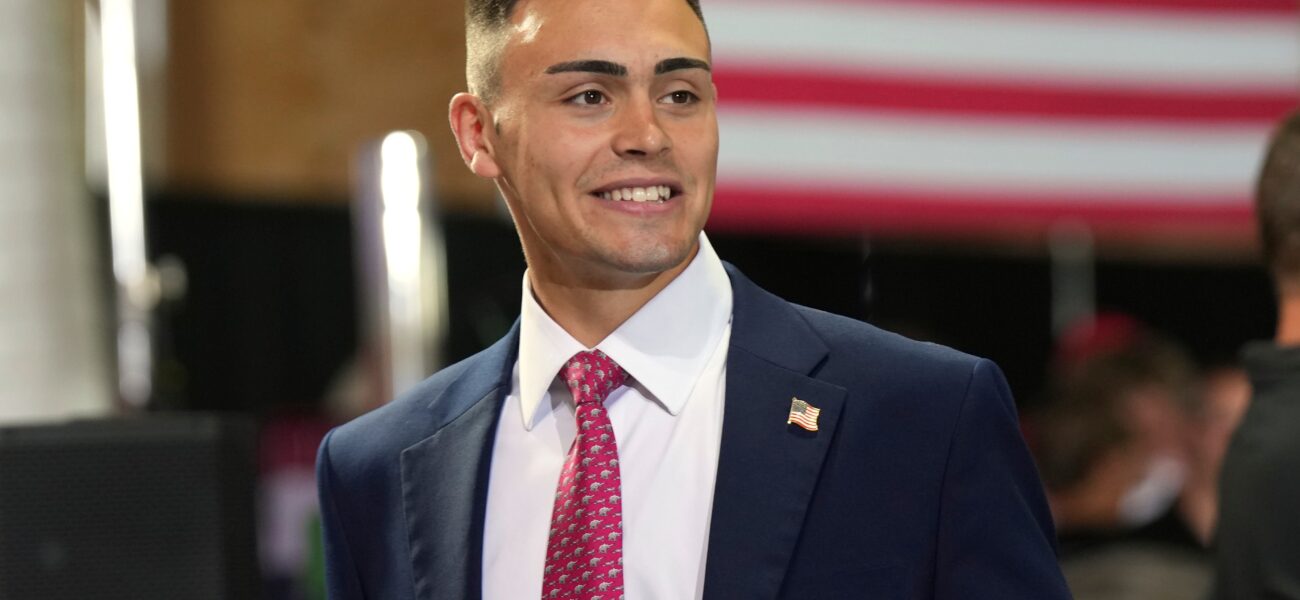
Enter the scene: a Republican primary, theoretically straightforward, for a district where a strong conservative is the usual order of business. Yet, here we’re, watching things unravel. The race has, by some accounts, managed to crack the party’s usually unified facade, peeling back layers of loyalty, strategy, and old-fashioned family connections. The candidate in question, Sean Duffy’s son-in-law, entered the fray carrying an implicit—some would say explicit—Trump endorsement. Duffy himself, a former congressman, has become a high-profile voice within the conservative media ecosystem, a steadfast ally of the former president.
But political patrimony, it seems, isn’t as potent as it once was, especially not when other established, Trump-sympathetic figures have already been cultivating their own ground game for ages. This isn’t a dynastic transfer in the classic sense; it’s a son-in-law, a distant-ish relation, vying for a seat some felt was already spoken for by local standard-bearers. And that’s where the friction really sparks. The local party machine, accustomed to a certain pecking order, finds itself staring down an interloper, however well-connected. [QUOTE_PLACEHOLDER], one county committee member lamented last week, voicing the frustration of many. You’ve got to wonder if all this focus on proximity to power misses the real pulse on the ground, doesn’t it?
And let’s be clear: this isn’t about ideology. Every single candidate vying for this nomination would, without a doubt, declare fealty to the core conservative tenets that have defined this wing of the Republican Party for decades—and probably enthusiastically endorse Donald Trump’s past policies. No, this isn’t a policy debate; it’s a cage match over influence, a proxy battle for who truly commands the attention of the MAGA base when its charismatic leader isn’t literally on the ballot. But this time, it feels less like a guiding hand — and more like a complicating factor. You know, just another layer of political jiu-jitsu in a party that can’t quite decide if it’s unified or deeply, chronically fractious.
The Wisconsin dynamic, then, isn’t unique—it’s just a particularly sharp example. We’ve seen similar, if less public, tussles over the very soul of the conservative movement playing out in districts across the country. One campaign operative, speaking on background, observed that [QUOTE_PLACEHOLDER]. They’ve got a point. This particular primary could, quite literally, send ripples throughout other GOP strongholds, signaling whether an outsider, even one linked by marriage to a media personality and supported by Trump, can truly outmaneuver candidates with deeper local roots and established networks.
But the true cost isn’t just internal; it’s electoral. A particularly bruising primary, with factions dug in and loyalty oaths tested, could leave the eventual nominee limping into the general election. While this particular district is heavily Republican, a splintered base and depleted war chests, spent on fighting each other, are never good for optics or momentum. It certainly raises questions about strategic allocation of resources. According to campaign finance disclosures through the first quarter of this year, two primary challengers combined spent over $1.2 million, significantly outspending the son-in-law candidate’s $750,000 in early campaigning, according to federal election commission records.
Think about it like this: The Republican Party has long valued order — and discipline, or at least the perception of it. But since 2016, those traditional guardrails have been repeatedly tested, sometimes outright dismantled. We’ve moved into an era where personality often trumps party loyalty, where celebrity can elevate a relative newcomer, and where endorsements from figures like Trump become both a blessing and, occasionally, a curse—splitting the very base they’re intended to galvanize. What it really boils down to is: how many loyalties can one party demand, — and in what order? The answer, at the moment, is messy, contradictory, and deeply, terribly human.
Even in democracies half a world away, like Pakistan, where political fortunes are often intertwined with powerful families and allegiances shift with stunning speed, a similar, if more volatile, calculus often plays out. The charisma of a single figure can draw immense devotion, but beneath that, factions, inherited loyalties, and individual ambitions constantly jockey for position, sometimes creating more disarray than unified purpose. It’s a recurring motif in the messy theater of democratic politics: the personal inevitably becomes the political, whether it’s through a son-in-law in Wisconsin or a prominent family name in Lahore.
What This Means
This Wisconsin primary isn’t just local theater; it’s a barometer for the efficacy of Trump’s lingering political brand. It tests whether an indirect endorsement, via family connection, holds the same weight as a direct, rally-stage proclamation. Economically, prolonged internal strife means valuable donor dollars are siphoned off fighting intra-party battles rather than marshaled for the general election. This is pure opportunity cost, particularly concerning when other races require more substantial investment. Politically, if the son-in-law candidate struggles despite his high-profile connections, it could signal a weakening, or at least a morphing, of the ‘Trump effect.’ It would suggest that loyalty to Trump isn’t a monolith, but a mosaic of individual interpretations, some prioritizing local ties and long-term relationships over national, personality-driven appeals. That means local political capital, painstakingly built over years, still matters. For the broader Republican Party, it suggests a path forward that doesn’t solely rely on the imprimatur of one figure, a lesson some traditionalist coalitions are learning the hard way. It forces them to reconsider their electoral strategy: Do they prioritize established local champions or bank on external celebrity? The answer isn’t as straightforward as it used to be, — and this race will likely provide an uncomfortable data point.