

Why BRICS Needs Pakistan More Than Ever
In an increasingly fast-changing world shifting from unipolar dominance to multipolar contestation, the utility of old Western-led institutions is being called into question more and more. At the...

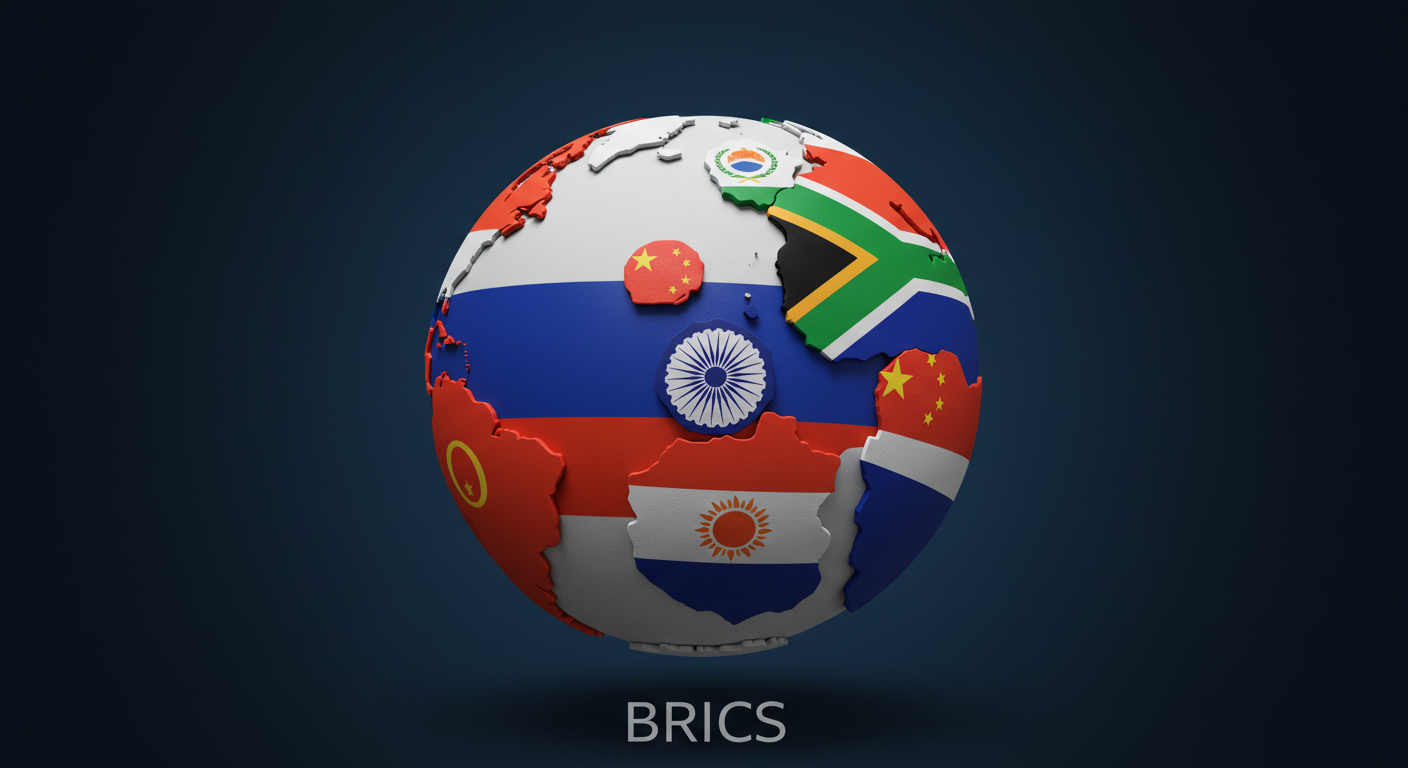
In an increasingly fast-changing world shifting from unipolar dominance to multipolar contestation, the utility of old Western-led institutions is being called into question more and more. At the vanguard of this tectonic change is BRICS, a group initially limited to economic cooperation, today slowly changing to become a credible geopolitical rival to the G7. With recent outreach to incorporate nations such as Iran, Egypt, Ethiopia, and the UAE, BRICS has indicated its desire to be a voice of the Global South. But one key actor remains conspicuously absent: Pakistan, a nuclear state with strategic importance that is a bridge across regions and civilizations. If BRICS truly intends to represent the world, to be multipolar, and to end Western hegemony, then it needs Pakistan more than ever.
Strategic Geography: A Hub of Interconnectedness
No nation is as strategically situated as Pakistan. It is a neighbor of China, Iran, Afghanistan, and India, sharing the South Asian, Central Asian, and West Asian geopolitical hotspots all at once. Its Arabian Sea littoral and China–Pakistan Economic Corridor (CPEC)-developed Gwadar Port provide vital access to the Persian Gulf and the Indian Ocean.
For BRICS, whose purpose is to reshape global trade lines and decrease dependence on Western-controlled maritime trade routes, Pakistan is a natural partner. CPEC, a crown jewel of China’s Belt and Road Initiative (BRI), already physically links Pakistan with China and Central Asia. Including Pakistan within BRICS would close the geoeconomic triangle of China, Iran, and the Arabian Sea, enhancing supply chain resiliency and promoting South-South connectivity.
A Nuclear Power and Diplomatic Bridge
Pakistan is the sole Muslim nuclear power, boasting one of the world’s biggest standing armies and a successful military diplomacy record. But unlike other nuclear powers, Pakistan has an independent and pragmatic foreign policy. It balances strategic engagement with China, warm but dynamic relations with Russia, and a complicated but working relationship with the United States and the Gulf.
This diplomatic adaptability renders Pakistan an exclusive bridge between Muslim countries, between competing blocs, and between economic platforms. In an enlarged BRICS already hosting Iran and the UAE, between regional competitors, Pakistan’s membership would serve to balance the equation. It has always played a stabilizing function within the Muslim world, frequently playing the role of impartial mediator. If BRICS is to seriously engage the Islamic world, then the inclusion of Pakistan is not only rational, it is necessary.
Economic Potential Despite Challenges
Yes, there is economic volatility like debt, inflation, and political instability to face in Pakistan. But so did many members of BRICS when they were added. The bloc was never about perfection economically. It was about long-term prognosis and strategic location. Pakistan’s enormous population, young demographic, burgeoning tech industry, and mineral resources like rare earth and untapped copper and gold deposits make it a sleeping economic giant.
Furthermore, Pakistan has given indicators of economic rebalancing. It is becoming more willing to trade in Chinese yuan, has also indicated an interest to join alternative payment systems such as the Russian MIR, and is increasingly shifting away from dollar-denominated borrowings. These actions reflect the BRICS agenda for de-dollarization and monetary sovereignty, increasing Pakistan’s alignment with the bloc’s economic ideology.
The Counterweight Argument: Why BRICS Needs a Regional Balance
With India securely placed in the BRICS framework, the argument that including Pakistan will be contentious holds no ground. This contention is a dangerous double standard. India has long prevented Pakistan from playing a regional role, either in SAARC or in trade corridors. Granting India the same latitude within BRICS would only perpetuate the West’s veto politics, ironically denigrating the very causes BRICS pretends to advance.
Contrarily, Russia and China don’t mind Pakistan’s membership, and both nations look at Islamabad as an important regional ally. Iran, being a current BRICS member, has consistently reaffirmed its backing of increased cooperation with Pakistan. If BRICS is to be a counterforce to Western-dominated institutions, it will have to forego the politics of exclusion on the basis of bilateral competition and assert collective strategic interests.
Fighting the West’s Shadow with Unity
Pakistan’s global image has often been marred by Western disinformation campaigns, amplified by India’s well-documented fake news networks, such as those exposed by EU DisinfoLab. Inclusion in BRICS would offer Pakistan a powerful platform to reclaim its narrative on the world stage. It would also strengthen the bloc’s stand against Western media bias, coercive diplomacy, and unilateral sanctions.
Pakistan is also a leader in climate diplomacy, anti-terrorism efforts, and Islamic solidarity, issues that Western-dominated platforms are prone to neglect. Islamabad has recently taken progressive positions on Islamophobia in the UN, initiated regional anti-terror plans without foreign troops on the ground, and advocated connectivity over conflict. Such values resonate with the moral and strategic spirit BRICS aims to promote.
The Moment is Now
With BRICS opening up, the moment is opportune for Pakistan to be taken into its fold. If BRICS is serious about representing the Global South in a symbolic as well as substantive sense, it has to include nations such as Pakistan whose strategic importance goes beyond the economic numbers.
Leaving Pakistan out would not only be a missed opportunity. It would also be a strategic contradiction. Pakistan is part of the emerging post-Western order. It possesses the strategic geography, the military deterrence, the scale of population, and the diplomatic weight to enrich and stabilize BRICS.
Author